Can Taiwanese buy property in Thailand? Yes, a condominium unit, and the numbers say many already have.
// Short answer
A Taiwanese buyer can own a Thai condominium unit outright, in their own name, on the same title instrument a Thai owner receives. Two provisions of the Condominium Act bound it and neither mentions nationality: Section 19 bis caps foreign holders at 49% of the area of all the units in that building, and Section 19 ter asks for evidence that the purchase money came in from abroad in foreign currency. This is also the one destination on this site where Taiwanese buying is measured rather than assumed. REIC counted 1,036 units transferred to Taiwanese buyers in 2025.
Rules and figures as of September 2026. Thai transfer statistics are REIC's, compiled from Department of Lands records and published in REIC's own releases: full-year 2025 on 20 April 2026, Q1 2026 on 16 June 2026 and H1 2026 on 11 September 2026. The destination rules come from each market's own statute and from this site's sourced cluster pages. The Taiwan side is stated as published by the foreign exchange declaration regulations on the Ministry of Justice law database and by the Ministry of Finance and the National Taxation Bureau of Taipei. This is a description of published rules, not legal, tax or foreign exchange advice, and it does not describe any way around any rule. Confirm your own position with your own bank and a qualified adviser before committing to anything. Every figure links to its source.
On this page
- Can a Taiwanese citizen buy a condominium in Thailand?
- How much of a Thai condominium building can foreign owners hold?
- What has to be proved about the purchase money in Thailand?
- How many Thai condominiums did Taiwanese buyers take?
- Where do Taiwanese buyers buy, and what happened in 2026?
- What do Taiwan's own rules ask, and what should a buyer settle first?
Can a Taiwanese citizen buy a condominium in Thailand?
Yes. A Taiwanese buyer may own a condominium unit in Thailand as registered freehold, in their own name, provided the building has headroom under the 49% foreign ceiling and the purchase money is evidenced as having arrived from abroad in foreign currency. There is no nationality test in the statute.
Section 19 of the Condominium Act B.E. 2522 lists the categories of foreign nationals and foreign juristic persons who may hold ownership of a condominium unit. The list is about status and evidence, not about which passport a buyer holds. A buyer from Taipei and a buyer from Frankfurt meet the same two gates in the same order.
The title document is the same Chanote a Thai owner receives. There is no separate foreign title instrument. What differs is the entry in the building's foreign ownership register, which is what the 49% ceiling is measured against.
Land outside a condominium is a different regime and this page does not cover it. The plain-English version of the whole condominium regime: Thailand foreign freehold, explained. The statute itself: Section 19 of the Condominium Act.
Sources
How much of a Thai condominium building can foreign owners hold?
Not more than 49% of the area of all the units in that building. The ceiling is set by Section 19 bis of the Condominium Act, it is measured in floor area rather than in number of doors, and it applies per registered building rather than per development.
Read it as arithmetic and the consequences are immediate.
- Size decides consumption. A building with 5,000 m2 of total saleable area has 2,450 m2 on the foreign side. A 36 m2 unit there uses about three quarters of one percentage point of the ceiling. A 120 m2 unit uses nearly two and a half.
- Per building, not per project. One tower on a two-tower site can sit at the ceiling while the other still has room. They are separate buildings for this purpose.
- A resale can be neutral. Where the unit is already registered to a foreign owner, transferring it to another foreign buyer leaves the building's foreign-owned area unchanged, so a near-full building can still be open to you.
The document that reports the number, and how to read the date on it: the foreign quota letter, explained.
Sources
What has to be proved about the purchase money in Thailand?
That foreign currency of not less than the price of the unit was brought into Thailand for the buyer. Section 19 ter asks for the evidence, and the receiving Thai bank's Foreign Exchange Transaction form, the FET, is that evidence. It names the sender, so the sender should be the buyer.
The mechanics, in order:
- The money is sent in foreign currency, not in baht from abroad.
- The receiving Thai bank issues the document, not the bank the money was sent from. That is true wherever the wire originates.
- A single inward transfer of USD 50,000 or more gets a FET form as a matter of routine. Below that, the same bank issues a credit advice letter, which the Land Department accepts for the same purpose.
- The sender name is expected to match the buyer's passport name, and the purpose field should name the unit and the project.
Without that evidence the Land Department will not register the unit to a foreign buyer on freehold title, whatever the sale contract says. The document in full: the Thailand FET certificate, explained.
Sources
How many Thai condominiums did Taiwanese buyers take?
1,036 units in 2025, worth THB 4,699 million, on REIC's full-year table. That was fourth of the ten nationalities REIC publishes, on both units and value, with units up 23.9% and value up 9.3% on 2024. It was 7.0% of the 14,899 units transferred to foreign buyers nationwide.
REIC compiles these from Department of Lands transfer records and publishes the top ten nationalities ranked by value. The full-year 2025 release is dated 20 April 2026.
| Measure, full-year 2025 | Taiwan | All foreign buyers |
|---|---|---|
| Units transferred | 1,036 | 14,899 |
| Change in units on 2024 | Up 23.9% | Up 2.2% |
| Value | THB 4,699 million | THB 60,921 million |
| Change in value on 2024 | Up 9.3% | Down 10.7% |
| Total floor area | 37,001 m2 | 615,098 m2 |
| Average per unit | THB 4.5 million, 35.7 m2 | THB 4.1 million, 41.3 m2 |
Two readings follow from the same table. Taiwan was one of the few groups whose value rose while the national total fell. And dividing REIC's own value by its own floor area gives about THB 127,000 per square metre for Taiwanese purchases, against about THB 99,000 across all foreign buyers, the highest of the ten alongside Singapore. That is a derived figure, not one REIC prints.
The prior year, as reported by The Nation from the same source: 836 units and THB 4,299 million in 2024, up 57.1% on units. The press linked that surge to visa-free entry for Taiwanese travellers, which is the press reporting a reason rather than REIC stating one.
Sources
Where do Taiwanese buyers buy, and what happened in 2026?
REIC does not publish a province split for Taiwanese buyers, so this site does not state one. CBRE, reported by The Nation on 19 August 2026, placed Taiwan third among Bangkok super-luxury buyers behind Japan and the United Kingdom. In 2026 the volume fell: 334 units in the first half, down 11.6% year on year.
| Period | Taiwan units | Taiwan value (THB million) | Average per unit | Change in units, year on year | Rank by value |
|---|---|---|---|---|---|
| Full-year 2025 | 1,036 | 4,699 | THB 4.5 million, 35.7 m2 | Up 23.9% | 4 |
| Q1 2026 | 136 | 688 | THB 5.1 million, 35.4 m2 | Down 31.0% | 4 |
| H1 2026 | 334 | 1,465 | THB 4.4 million, 33.9 m2 | Down 11.6% | 5 |
Context from the same releases: foreign transfers nationwide fell 17.3% on units in Q1 2026 and 8.8% across the first half, so the Taiwanese decline in Q1 was steeper than the market's and the half-year decline was milder than Q1 alone. REIC published no explanation and this page does not offer one.
The small average unit at a high price per square metre is what the data shows. Anything beyond that, about which districts or which buildings, is not in the REIC release. The broader picture across every nationality REIC publishes: Thailand's foreign condo buyers by nationality.
Sources
What do Taiwan's own rules ask, and what should a buyer settle first?
Two things on the Taiwan side, and five checks before signing. A foreign exchange transaction of NT$500,000 or more is declared, and an individual whose annual aggregate of foreign exchange purchased or sold passes the equivalent of USD 5 million needs central bank approval for further remittances.
Those thresholds come from the Regulations Governing the Declaration of Foreign Exchange Receipts and Disbursements or Transactions, amended 26 December 2022 and in force from 1 January 2023. A single remittance by an individual above the equivalent of USD 500,000 also has its supporting documents checked by the bank. Both figures are stated as published. Neither this page nor any other on this site describes or evaluates any way around them.
On the tax side, income from outside Taiwan is brought into basic income once a filing unit's overseas income reaches NT$1 million in a year, under the Income Basic Tax Act. Thai rent and a Thai sale gain are overseas income for that purpose. The full set of rules, with the thresholds and the deduction: sending money from Taiwan for a property purchase.
The practical order is the one most buyers reverse. Settle whether the full purchase amount can reach Thailand, in your own name, by the dates a Thai contract will fix, before you choose a unit.
Which leaves the order of work. Five things, before a signature:
- The funding route, confirmed in writing by your own bank and a qualified adviser, for the full amount, in your own name, on the actual payment dates, before a deposit moves.
- The foreign quota letter, naming the building, stating total saleable area, area registered to foreign owners, the resulting percentage, a date and a signature. One at due diligence, a fresh one dated close to the transfer day.
- The unit's own status. Ask the juristic person in writing whether this unit is already registered to a foreign owner.
- The Chanote, checked at the Land Office, for what is transferred and from whom.
- The debt-free certificate from the juristic person, without which the transfer does not proceed.
Have a Thai lawyer make the purchase conditional on the funding and the registration documents before any money moves. A contract signed first turns an open question into a dated obligation. The full document sweep: the Thailand condo due diligence checklist.
Sources
- Ministry of Justice law database: Regulations Governing the Declaration of Foreign Exchange Receipts and Disbursements or Transactions, Arts. 2, 4, 5 and 6 (amended 26 December 2022)
- National Taxation Bureau of Taipei, Ministry of Finance: income basic tax and income from sources outside Taiwan
- Brinkman Data: Thailand condo due diligence
// Buying abroad?
Every listing in your budget, ranked on net yield, appreciation and resale. Any market with public listing data; book a free call first so I can confirm your city has the data.
See the $499 report, page by pageFrequently Asked Questions
Can a Taiwanese citizen own a condominium in Thailand in their own name?
How many Thai condominiums did Taiwanese buyers take in 2025?
Is there a separate rule for Taiwanese buyers in Thailand?
Which Thai provinces do Taiwanese buyers choose?
Are Taiwanese purchases in Thailand still rising in 2026?
Does buying a Thai condominium give a Taiwanese buyer a visa?
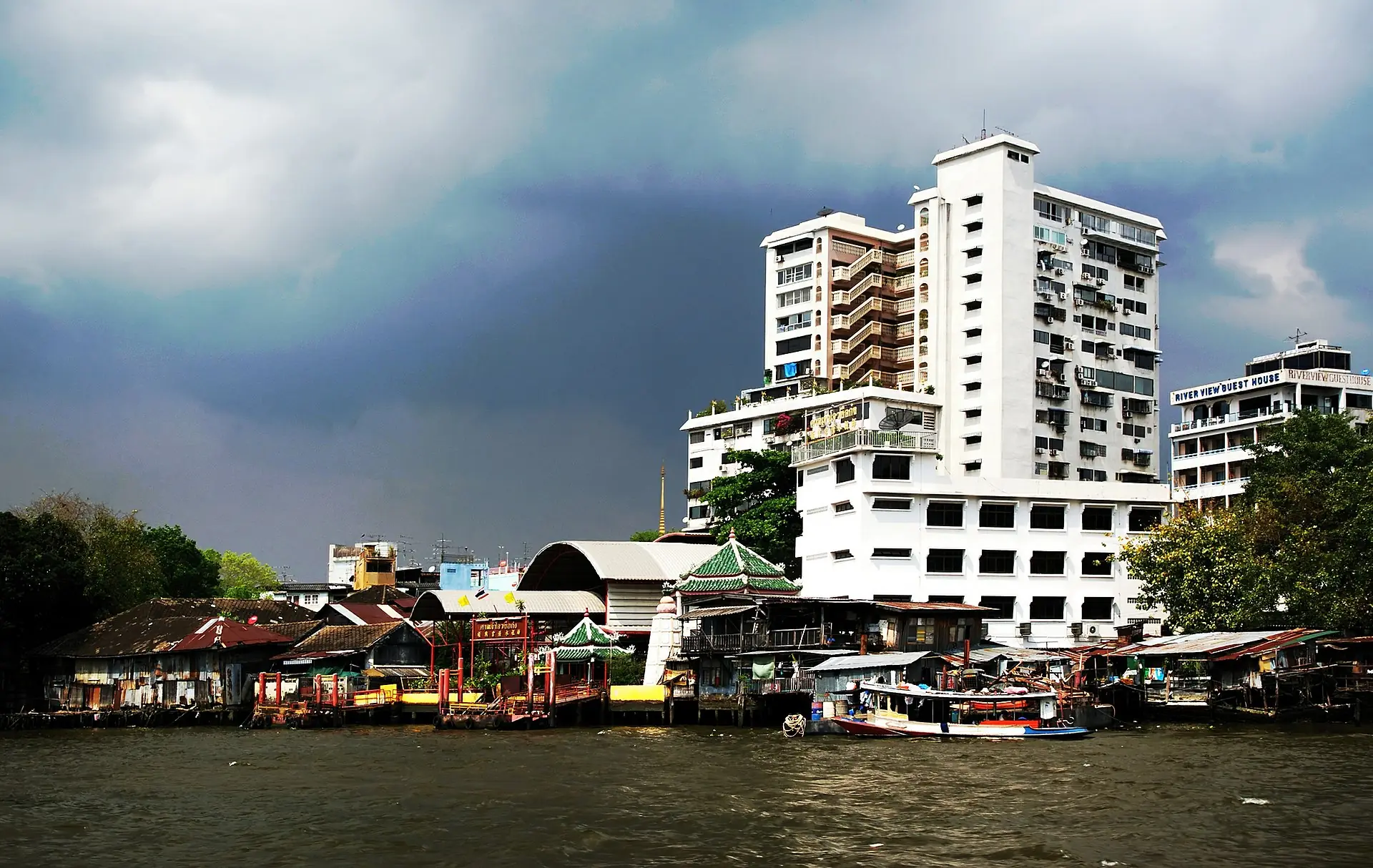
Header photo: Unknown, CC0, via Wikimedia Commons. All credits: image credits.