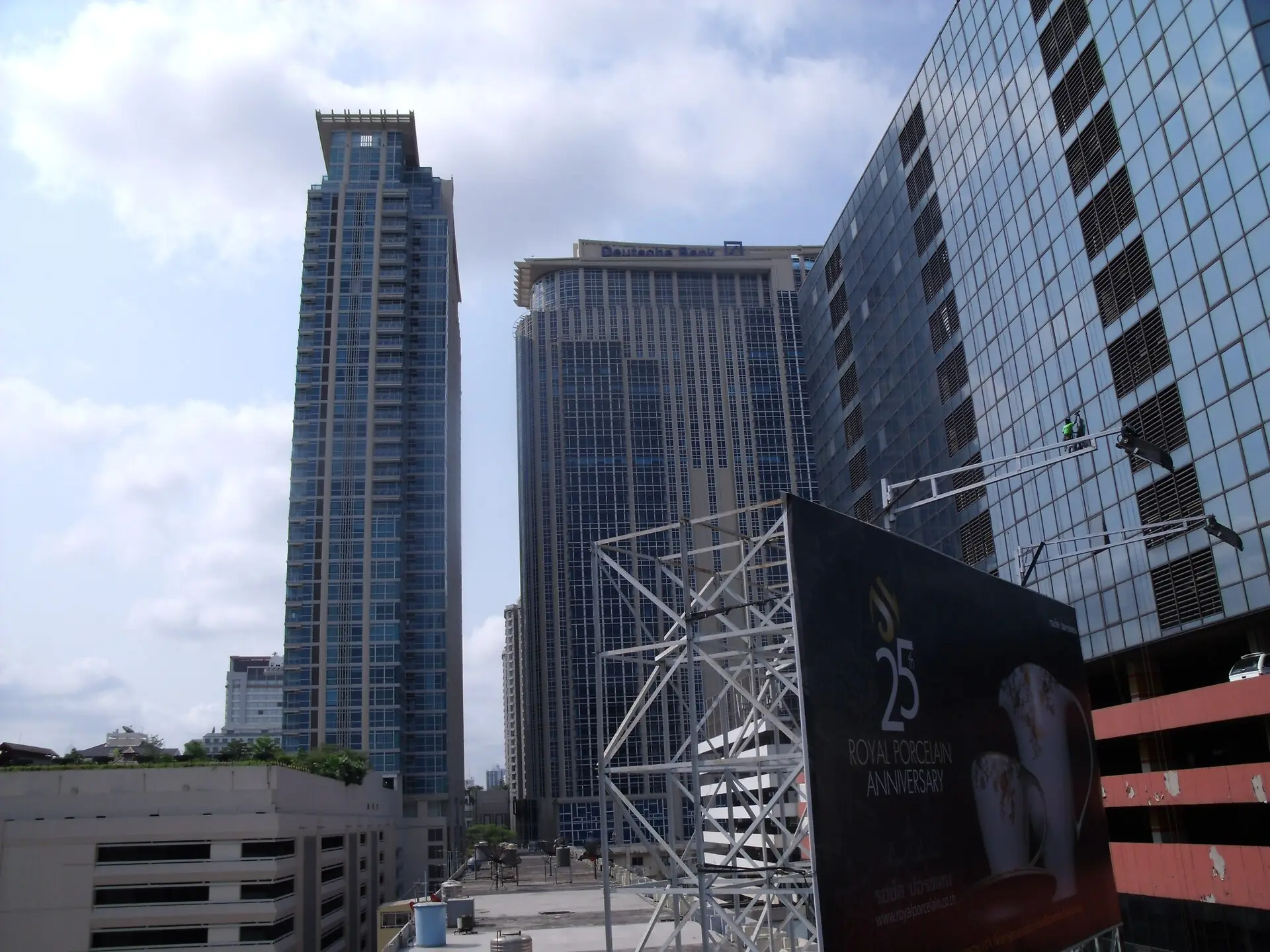
What Section 19 of the Condominium Act actually says about foreign ownership.

// Short answer
What does Section 19 of the Condominium Act say?
Section 19 of the Condominium Act B.E. 2522 lists the five categories of foreign nationals and foreign juristic persons who may hold ownership of a condominium unit in Thailand. It does not contain the 49% figure. The ceiling sits in the next provision, Section 19 bis, which caps aggregate foreign holdings at forty-nine percent of the area of all the units in that condominium, measured as at the building’s registration under Section 6.
The 49% rule is quoted constantly and cited almost never. This page puts the provisions back where they belong: which section says a foreign national may own a unit, which one carries the 49%, what the 49% is a percentage of, when it is measured, what evidence the Act asks for, and what the Act requires when an owner stops qualifying. Every statement below was read out of the Office of the Council of State’s consolidated Thai text of the Act, linked at the foot of the page, and checked against the Thai wording rather than an English translation.
Which section of the Condominium Act governs foreign ownership?
Two sections do different halves of the job, and conflating them is the single most common citation error in English-language material on this subject.
- Section 19 answers who. It lists five categories of foreign nationals and foreign juristic persons who may hold ownership of a condominium unit. If a buyer is not in one of the five, the section does not reach them at all.
- Section 19 bis answers how much. It is the aggregate ceiling: foreign holders under Section 19 may together hold not more than forty-nine percent of the area of all the units in that condominium.
One detail worth carrying away: in the consolidated Thai text of the Act, the words “forty-nine percent” appear exactly once, and they appear in Section 19 bis. Every other place the figure shows up in a brochure, a listing or a forum post is somebody paraphrasing that one sentence.
Is the 49% measured on units or on the area of the units?
On area. The Thai wording of Section 19 bis is “not exceeding forty-nine percent of the area of all the units in that condominium”. The measure is area of units, meaning the privately owned space, not the common property, and not a headcount of doors.
The practical consequence is that a building is not 49% foreign when 49% of its units have foreign owners. A tower whose large units all sold to foreign buyers and whose studios all sold to Thai buyers can be at the ceiling with well under half its doors in foreign hands. The reverse also happens. Ask the building for the ratio in square metres, because square metres is the unit the statute is written in.
This is also why two units in the same building can get different answers on the same day. The question is never “is there quota left”, it is “is there enough quota left for this many square metres”. The same arithmetic is worked through on the foreign freehold quota page.
| The provision | What it decides | Also written as |
|---|---|---|
| Section 19 | Who may own. Five categories of foreign nationals and foreign juristic persons who may hold ownership of a condominium unit. The words forty-nine percent do not appear in it. | — |
| Section 19 bis | How much. Foreign holders may together hold not more than forty-nine percent of the area of all the units in that condominium, measured as at the time the condominium was applied to be registered under Section 6. | 19/2 |
| Section 19 ter | The evidence the transferee must show, and the transferor’s declaration of the proportion of unit area already held by foreign owners in that building. | 19/3 |
| Section 19 quater | The competent official’s verification of the ratio, and the registration of the rights and juristic act. | 19/4 |
| Section 19 quinque | Disposal on disqualification: written notification within sixty days, disposal within not more than one year. | — |
| Section 19 septem | Disposal by a foreign national outside Section 19 who acquires a unit by inheritance. The same sixty-day notification, the same one year. | — |
On a narrow screen, scroll the table sideways for the remaining column.
Section 19(2) is not the ceiling either — it is the investment-promotion category inside Section 19. The Latin ordinals and the renumbering are both translators’ conventions, not citations from the instrument, and they point at the same provisions.
When exactly is the quota measured?
Section 19 bis fixes the denominator at a specific moment: the time the condominium was applied to be registered under Section 6 of the Act. That is the registered unit-area schedule of the building as it stood at registration.
So the bottom of the fraction is historic and fixed. What moves is the numerator, the area currently held by foreign owners, and it moves every time a unit changes hands. A building that had room last year may not this year, and a building that was full may have space again after a foreign owner sells to a Thai buyer. There is no permanent state. There is only the ratio on the day the competent official checks it.
What are the qualifying categories under Section 19?
Five, in the order the Act sets them out:
- Permanent residents. Foreign nationals permitted to have residence in the Kingdom under the immigration law.
- Investment-promotion entrants. Foreign nationals permitted to enter the Kingdom under the law on investment promotion.
- Certain Thai-registered juristic persons. Those described in Sections 97 and 98 of the Land Code, registered as juristic persons under Thai law.
- Promoted foreign juristic persons. Juristic persons treated as foreign under Revolutionary Party Announcement No. 281 of 24 November B.E. 2515, holding an investment promotion certificate.
- The foreign-currency route. Foreign nationals or foreign juristic persons who bring foreign currency into the Kingdom, or withdraw from a non-resident baht account, or withdraw from a foreign currency deposit account.
Category five is the one almost every overseas buyer uses. The first four require a status most buyers do not have and are not seeking. If you are wiring money in from abroad to buy a unit, you are qualifying under Section 19(5), and everything the Act asks of you flows from that.
What does the Act require as evidence that the money came from abroad?
Section 19 ter sets out what the transferee must show the competent official. For a category-five buyer it is evidence of bringing foreign currency into the Kingdom, or of withdrawal from a non-resident baht account, or of withdrawal from a foreign currency deposit account, in an amount not less than the price of the unit to be purchased.
Read that benchmark carefully, because it is the detail buyers most often get wrong. The Act names no fixed currency threshold. The number that has to be cleared is the price of that specific unit. Bring in less than the unit costs and the evidence does not meet the wording, however large the transfer was in absolute terms.
Note also what the Act does not say. The words “FET” and “Foreign Exchange Transaction form” appear nowhere in it. The FET is a banking artefact, produced by a Bank of Thailand-authorised bank to record the inward transfer, and it is how a buyer proves the thing Section 19 ter asks about. The statute asks for evidence; the FET is the evidence. How the FET certificate is issued, and the wire wording that makes it match the title.
What does the Land Department check before it registers the transfer?
The Act splits this into two steps, and neither of them is a duty on the building’s manager.
- The transferor declares. Under Section 19 ter, the person applying to transfer ownership notifies the competent official of the name of the foreign transferee, together with the proportion of unit area already held by foreign owners in that building.
- The competent official verifies. Under Section 19 quater, once the official has received the documents required by Section 19 ter and is satisfied they are correct, and that the foreign holding ratio — counting both existing foreign owners and the transferee — does not exceed the rate in Section 19 bis, the official registers the rights and juristic act.
That chain is worth knowing because of what it implies about the document buyers are usually handed. The letter from the condominium juristic person stating the current foreign ratio is administrative practice, and Land Offices ask for it, but it is not a certificate the Act names. The certificate the manager is required to issue under the Act is a different one: the debt-free certificate under Section 29, confirming the unit carries no arrears on common expenses, which the manager must issue within fifteen days of a request once the arrears are paid. What the foreign quota letter is and how to get one · the debt-free certificate the Act does name.
-
1
The buyer is inside Section 19Qualification is personal. Category five is the one almost every overseas buyer uses: bringing foreign currency into the Kingdom, or withdrawing from a non-resident baht account, or from a foreign currency deposit account. A buyer who cannot evidence any of the five categories is outside the section regardless of the building’s ratio.
-
2
The money arrives, in an amount not less than the price of the unitSection 19 ter sets the benchmark, and the Act names no fixed currency threshold. The number to clear is the price of that specific unit. The words FET and Foreign Exchange Transaction form appear nowhere in the Act — the statute asks for evidence, and the FET is the evidence.
-
3
The transferor declares the building’s positionUnder Section 19 ter the person applying to transfer notifies the competent official of the name of the foreign transferee, together with the proportion of unit area already held by foreign owners in that building. It is not a duty on the building’s manager.
-
4
The competent official verifies, then registersUnder Section 19 quater, once the official has the documents Section 19 ter requires and is satisfied they are correct, and that the ratio — counting both existing foreign owners and the transferee — does not exceed the rate in Section 19 bis, the official registers the rights and juristic act.
Four ways the two come apart: the ratio moved, the area does not fit, the buyer is not in Section 19, or the evidence does not meet the wording. Each of those is checkable before money moves. None of them is checkable from a listing.
Why can a unit be offered as foreign quota and still not transfer to a foreigner?
Because “foreign quota” describes a hope about a building, and Section 19 quater describes a test applied to a transaction on a particular day. Four ways the two come apart:
- The ratio moved. Another foreign buyer registered first. The area is measured as it stands when the official checks it, not when the unit was listed.
- The area does not fit. There is headroom under the ceiling, but less than this unit’s registered area. A smaller unit would go through; this one does not.
- The buyer is not in Section 19. Qualification is personal. A buyer who cannot evidence any of the five categories is outside the section regardless of the building’s ratio.
- The evidence does not meet the wording. Funds remitted in the wrong name, or in an amount below the price of the unit, do not satisfy Section 19 ter, and Section 19 quater is conditioned on Section 19 ter being satisfied.
Each of those is checkable before money moves. None of them is checkable from a listing. The due-diligence sequence that checks them in the right order.
What does the Act require if a foreign owner stops qualifying?
Section 19 quinque covers it, and the timetable is explicit. The section lists five triggers: an acquisition by inheritance or otherwise that takes the building past the Section 19 bis ratio; revocation or invalidity of the residence permit behind a category-one owner; a deportation order affecting an owner in categories one, two or five; withdrawal of investment-promotion permission to stay for a category-two owner; and revocation of the investment promotion certificate behind a category-four juristic person.
On any of those, the owner must notify the competent official in writing within sixty days of the triggering event, and must dispose of the unit within not more than one year from the date of acquisition, revocation or order, as the case may be. For the first trigger only the excess area must be disposed of. For the other four, all units held must go. If disposal does not happen, the Act empowers the Director-General of the Land Department to sell.
There is a companion provision for the buyer who was never in Section 19 at all. Section 19 septem covers a foreign national outside Section 19 who acquires a unit by inheritance as a statutory heir, a legatee or otherwise: the same sixty-day written notification, and disposal within not more than one year of acquisition.
Has the 49% rule changed, and is the 75% proposal law?
The consolidated official text records three amending Acts: No. 2 of B.E. 2534, No. 3 of B.E. 2542 and No. 4 of B.E. 2551. Section 19 was amended by the 1991 Act, its fifth category by the 1999 Act, and Section 19 bis by the 2008 Act. In that consolidated text as published, Section 19 bis still reads forty-nine percent, and no later amending Act to the Condominium Act appears in it.
A proposal to raise the ceiling to seventy-five percent, alongside longer lease terms, has been publicly discussed. It has not been enacted into the Act as published. Treat any figure other than forty-nine percent as a proposal until it appears in the consolidated text with an amending Act footnoted against it, which is exactly how the three existing amendments appear. That is the check, and anyone can run it on the PDF linked below.
SECTION 19 IS THE WHO. SECTION 19 BIS IS THE 49%
Who can own what across six countries. PDF. One email.
Get The Free SE Asia Ownership MapWhere is the official text of the Condominium Act published?
The Office of the Council of State maintains the consolidated Thai text of the Condominium Act B.E. 2522, with each amendment footnoted against the provision it changed, and the Department of Lands hosts it as a PDF. That document is linked in the primary sources at the foot of this page. It is thirty-one pages, the relevant provisions run from Section 19 to Section 19 undecim, and the footnote convention makes the amendment history checkable line by line.
English versions circulating online are unofficial translations published privately. They are useful and several are good, but they are not the instrument, and they differ from one another on numbering. If a claim matters enough to act on, check it against the Thai text, or have somebody check it for you.
Why is Section 19 bis sometimes written as Section 19/2?
The Thai statute numbers inserted provisions with Pali ordinals: thawi, tri, chattawa, bencha, cha, satta. Translators render these in at least two ways: the Latin ordinals bis, ter, quater, quinque, sex, septem, and a renumbering into 19/2, 19/3, 19/4 and so on.
Both are conventions, not citations from the instrument, and they point at the same provisions. The trap is a different one: Section 19 bis is not Section 19(2). Section 19(2) is a sub-clause inside Section 19 covering investment-promotion entrants. Writing “Section 19(2)” for the 49% ceiling names a real provision that says something else entirely, which is worse than naming none at all.
The mapping, for anyone reading across sources: Section 19 (who may own) · 19 bis (the 49% ceiling) · 19 ter (the evidence and the transferor’s declaration) · 19 quater (the official’s verification and registration) · 19 quinque (disposal on disqualification) · 19 septem (disposal by a non-qualifying heir).
What Section 19 does not cover that buyers assume it does
The section is narrow, and most of what a buyer worries about lives outside it.
- Land. Section 19 is about units in a registered condominium. It says nothing about houses or land, which sit under the Land Code and a different set of rules.
- Leasehold. A registered lease over a unit is not ownership under Section 19 and does not consume quota. It is a different instrument with a different clock. Freehold against leasehold, compared.
- Money leaving again. The Act is concerned with the evidence coming in. What you keep on the way out is a tax and exchange question, not a Section 19 question. Selling as a foreign owner, and the exit arithmetic.
- Whether the unit is any good. Section 19 decides whether your name can go on it. Nothing in the Act speaks to the building’s sinking fund, its charges, its rentability or who buys it from you in five years. The five-step framework that does.
That last point is the one worth sitting with. Clearing Section 19 is a gate, not a verdict. Plenty of units clear it and should still be walked away from.
Section 19 says whether you can. Here is whether you should.
Free. One email. Instant download.
- Whether your name can legally go on the title — the quota check, applied to a unit rather than explained.
- What every platform asks for the unit , and what is left after costs — not one listing’s headline.
- Who actually buys it from you in five years — the exit a saturated building takes away.
Independent research. Instant access. Unsubscribe in one click.