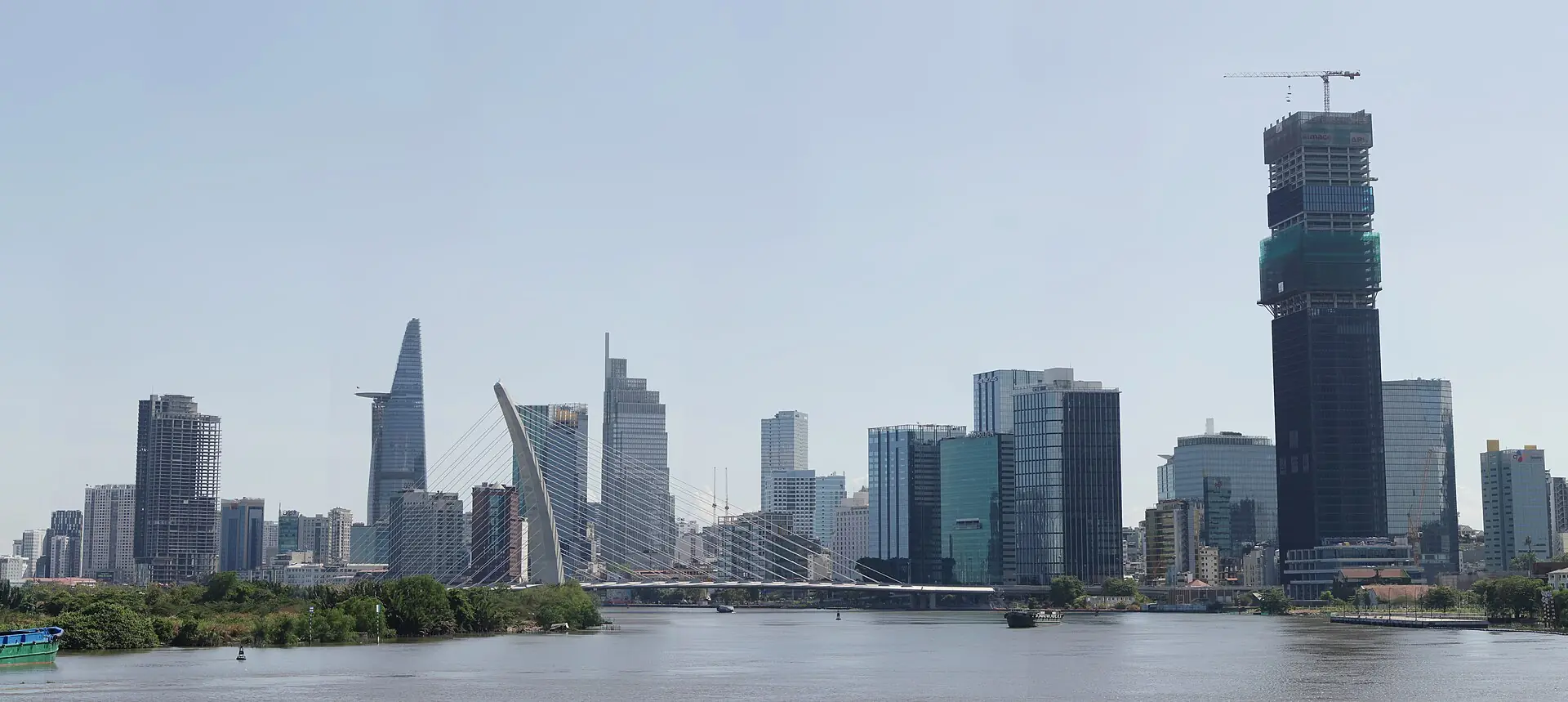
The Ho Chi Minh City skyline — what a foreign buyer can own under Vietnam's 30% cap
Vietnam · The Foreign-Buyer Reality

Buying property in Vietnam as a foreigner: what the sales gallery skips.
Buying Property in Vietnam as a Foreigner — The Reality. Brinkman Data SEO brand card.

A foreigner does not own land in Vietnam. Read that twice. The brochure says ownership; the law says the dwelling, for a term, inside an approved project, behind a quota — and the land was never on the table. This is not a Thailand condo with a 49% foreign quota you register a Chanote against, and it is not a Bali leasehold workaround. It is a third country, a third model, a third stack of ways to lose money. This hub gives you the model that actually exists, then routes you to the building-level checks that decide whether you end up a registered owner or a holder of contractual paper.

30%
foreign cap per building
50 yr
ownership term, renewable once
15–30
statutory pink-book issuance window

The Model In Four Facts

You own the dwelling. Never the land.

In Vietnam, all land is owned by the people and administered by the State. There is no private freehold of land — not for a foreigner, not for a Vietnamese citizen, not for anyone. Vietnamese nationals hold land-use rights. A foreigner gets something narrower: time-limited ownership of the dwelling only, inside an approved commercial housing project only, behind a building quota. This is not a criticism of the system; it is a published feature of it, set by the Housing Law 2023 and the Land Law 2024, both effective 1 January 2025. The operator reads the legislation before they wire. The tourist reads the listing.

The model resolves to four facts. One — you own the dwelling, never the ground. Two — only inside provincially-approved commercial housing projects, never on a standalone land plot, never in a defence- or security-restricted zone. Three — the term runs 50 years from certificate issuance, extendable one time by up to a further 50 on application before expiry. Four — a quota caps how many foreigners fit: no more than 30% of the units in any single apartment building, and no more than 250 landed houses per ward-equivalent area.

That fourth fact is the trap most foreign buyers walk into blind. They sign, they pay, they wait — and the building was already at 30% foreign ownership before their contract. The deposit is in. The certificate cannot issue. The whole architecture is laid out in the 30% foreign-ownership cap, and the clock that sits on top of it in the 50-year ownership term.

The Certificate, And The Thing That Isn’t One

The pink book is the asset. The contract is a promise of it.

The pink book — the Certificate of Land Use Rights and Ownership of Assets Attached to Land — is the document that puts your name on the dwelling. Until it issues, you do not have registered ownership; you have a contract. A contractual right is a claim against the developer. A registered certificate is ownership recognised against the world. The first depends on a counterparty performing. The second does not. Underwrite on the certificate, not the contract — the full breakdown sits at the pink book (ownership certificate).

Statute says the certificate should issue roughly 15–30 working days after a complete dossier reaches the registry. The operative word is complete. On off-plan stock especially, issuance can run months into years, because the developer has not yet discharged its own land and financial obligations to the State. Until it does, no buyer’s dossier in the building is complete and no pink books issue. You can be living in a furnished apartment you paid for in full and still hold no title.

Then there is the path that is not ownership at all: the nominee. The moment a foreign buyer hits a wall — full quota, ineligible project, a land plot they legally cannot have — the suggestion arrives softly to hold it through a Vietnamese individual. The certificate names that individual. In law, they are the recognised holder. You hold a private claim against a person, not a title against an asset. It survives until the holder dies, divorces, sells, or simply declines — and then it does not. Name it the instant it is offered, and walk: the nominee trap is the workaround dressed as ownership.

Where To Look

The city is the easy part. The building decides the deal.

Vietnam is not one market. Two towers on the same street can underwrite completely differently because the quota and the developer’s pink-book record live at the building level, not the city level. Start with the macro read in the Vietnam property market in 2026, then narrow to a sub-market that fits your operating model.

The long-let cities run on a different tenant pool than the beach markets. Ho Chi Minh City is where most of the foreign-eligible new supply actually sits — District 2 / Thu Thiem is the cleanest place in the country to get a unit titled to your name, while District 1 is the address-tax market with the thinnest yield. Hanoi is the steadiest long-let market on the list, anchored by diplomatic and international-school demand around West Lake. The coastal markets are the operator’s game: Da Nang is the seasonal beach-condo case with real high-season upside and an oversupply problem; Nha Trang is a resort short-let market tied to a narrow set of inbound tourist flows; and Phu Quoc is the thinnest, most speculative exit on the list. Choose your city with discipline; then choose your building with more.

78-page PDF · Instant download

Every number on this page, worked end-to-end.

The Vietnam Property Buyer’s Playbook walks the 30% quota, the 50-year clock, the pink book, the fee stack, and the exit math — the full framework this research page is built on.

Get The Vietnam Playbook — $39

The Money

Gross is the marketing. Net is what reaches your account.

The sales gallery quotes a rental projection. It is gross, optimistic, and built on a peak-season nightly rate held constant across 365 days. The number that reaches your bank account is net, after the Vietnamese rental-tax drag, the management cut, the building charges, and a realistic vacancy haircut. Vietnamese rental income above the threshold is taxed at roughly 10% on gross — 5% VAT plus 5% personal income tax — with income under 100 million VND a year exempt. A large share of high-yield sales-gallery units collapse to thin or negative net once that drag and a real vacancy band are applied. That collapse is the point. The full net-yield engine is at the net-yield math.

The acquisition side has its own stack the brochure leaves off the headline price: registration, the maintenance fund, VAT where it is not already in the price, and legal fees, all on top of the asking number. Model the all-in cost, not the sticker — the fee stack itemises every line. Treat any figure on this hub as a hypothetical example at a VND/USD rate near 25,400; recompute against the live rate before you commit to any number. Yields here are independent-research ranges, not a promise of any outcome.

How Foreign Buyers Lose Money

Every pathway has a failure mode. Read it before you wire.

The framework filters listings. The fee stack filters the cash math. The legal traps filter the deals that look clean on the brochure and break four years into the hold. None of these losses is the law’s fault — the law is published, knowable, and the operator reads it before they sign. The buyer who loses fell in love with the unit before checking whether a foreigner could own it, whether the quota had room, and whether the certificate would ever carry their name.

The highest-frequency failure is the off-plan gap: you pay staged installments against a project that does not yet exist, and if the developer runs out of capacity to finish, you hold a contractual claim against an entity that may have little left to pay it. The filter is track record — require evidence the developer has actually completed and handed over prior buildings, and has issued pink books to foreign buyers before. Off-plan risk walks the protections; the 5-step due-diligence framework turns the whole model into a repeatable kill-or-keep gate: eligibility and quota, the developer’s pink-book track record, net yield after tax, the exit-and-repatriation test, and a binary verdict. One failure on any vector is a kill, not a renegotiation.

And the trap almost no agent raises: getting the money out. Vietnam operates capital controls. To repatriate sale proceeds, you must prove the purchase money came in legally through the banking system in the first place. The discipline starts at purchase, not at sale. Document the inflow as legal capital from the first wire, keep the records, and confirm the outward-remittance path with your bank and lawyer before you buy. Pay through informal channels and you may own a fine apartment you cannot bank the exit on.

The Operator’s Position

Three questions, asked of every listing, in this order.

Stop reading Vietnam listings for the view. Start reading them for the certificate. A Capital Allocator runs three questions of every unit before the deposit, where a Lifestyle Buyer runs none and signs the third unit they were shown.

One — is the building’s foreign quota still open? A foreigner can own the dwelling for 50 years, renewable once, only up to the 30% cap for that specific building. If the cap is full, the listing is a unit you can rent but never title. Confirm in writing, dated, for the specific unit. Two — does this developer actually issue pink books? Eligibility on paper is not a title in your hand. Pull the developer’s record of issuing certificates to foreign buyers on prior completed phases. Three — can you get your money out? The documentation you create on the way in is the documentation you need to repatriate proceeds later. Read every listing through those three and most of the market screens itself out — which is exactly the point.

This hub is independent research opinion, not advice. If you want the operator to run those three questions against your actual shortlist, building by building, with the numbers underwritten rather than estimated, that is what the playbook is for.

// FAQ

Can a foreigner own property in Vietnam?
A foreigner can own the dwelling — an apartment or landed house — inside an approved commercial housing project, for a 50-year term that is extendable once. A foreigner cannot own land. All land in Vietnam is administered by the State; nobody holds private freehold of land. You hold the building, on a clock, behind a quota — not the ground under it.
What is the 30% foreign-ownership quota?
The Housing Law 2023 caps foreign ownership at no more than 30% of the units in any single apartment building, and no more than 250 landed houses per ward-equivalent area. If a building has hit the cap, your name legally cannot go on a certificate no matter how much you have paid. Confirm the building's current foreign-ownership count in writing, dated, before any deposit.
How long does foreign ownership last in Vietnam?
Foreign dwelling ownership runs up to 50 years from the issuance of the ownership certificate, extendable one time by up to a further 50 years on application made before expiry. The clock starts at issuance, and a buyer inherits your remaining term at resale, not a fresh 50 years. A foreigner married to a Vietnamese citizen may hold long-term, like a citizen.
What is the pink book and why does it matter?
The pink book is the Certificate of Land Use Rights and Ownership of Assets Attached to Land — the document that registers the dwelling in your name. Until it issues, you hold a contract, not registered ownership. On off-plan stock, issuance can run months to years until the developer discharges its land and financial obligations. Underwrite on the certificate, not the contract.
Is a nominee structure a safe way to own land in Vietnam?
No. Holding through a Vietnamese individual with a side agreement is not legal ownership. The certificate names that individual; in law they are the recognised holder, and you hold only a private claim against a person. It fails when the holder dies, divorces, sells, or declines. If anyone offers a path to own land or get around a full quota this way, treat it as a signal to walk.
Can I get my money back out of Vietnam after selling?
Vietnam operates capital controls. To repatriate sale proceeds, you must show the purchase funds entered the country legally through the banking system. The discipline starts at purchase: move funds through a documented bank channel, keep every inward-remittance record, and confirm the outward-remittance requirements with your bank and lawyer before you buy — not after you sell.

Related research

// Same math, other markets

BEFORE YOU WIRE ANYTHING

Three questions decide every Vietnam listing. Is the building’s 30% foreign quota still open — in writing, dated. Does this developer actually issue pink books. Can you document the money path out. Run them through the 5-step framework before a deposit moves.

Underwrite Before You Wire

The Vietnam reality, in one PDF.

The ownership model. The quota and the clock. The pink-book track-record test. The net-yield engine after the tax drag. The exit-and-repatriation path. The whole operator framework in one place.

Get The Vietnam Playbook $39

Or start free with the SE Asia Ownership Map — who can own what across six countries.

Instant PDF · 7-Day Guarantee · Secure Checkout

⚠ Disclaimer

Brinkman Data Analytics is an independent research service. Not financial, investment, tax, or legal advice. Vietnamese property law is jurisdiction-specific and governed by the Housing Law 2023 and Land Law 2024. Engage a licensed Vietnamese lawyer and a qualified tax adviser before acting. International real estate carries risk of partial or total loss of capital.

Get The Vietnam Playbook $39