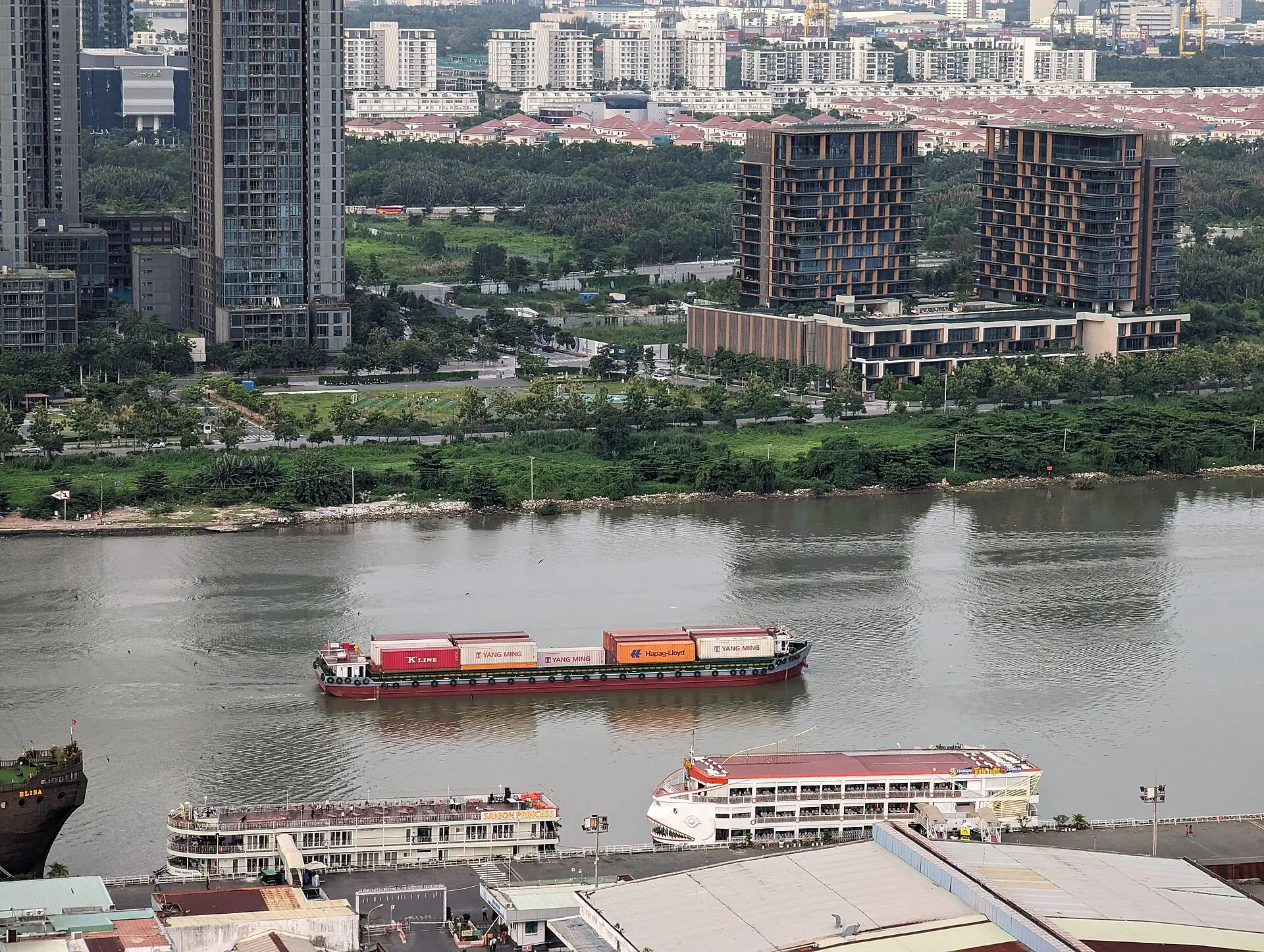
The Saigon riverfront — the document checklist that runs before any deposit moves
Vietnam Risk · Due Diligence

Vietnam property due diligence: the checklist you run before you wire.
Vietnam Property Due Diligence — The 5-Step Pre-Wire Checklist. Brinkman Data SEO brand card.

Most foreign buyers run no framework. They stand on the show-unit balcony, see the river, and put down a deposit before they have read a single certificate. The sales team has a framework — close the unit before the hard question. If you do not have one, you are operating inside theirs. This page is the boring discipline that converts a contract into a registered title: eligibility, the quota count in writing, the pink-book issuance path, no nominee, and a documented legal inflow. The pillar-level frame sits at the Vietnam foreign-buyer reality check.

5
steps before any wire
7
red flags, any one walks
30%
quota cap, confirmed in writing

Why The Order Matters

Due diligence is a gate, not a negotiation.

A foreigner does not own land in Vietnam. Under the Housing Law 2023 and the Land Law 2024 — both effective 1 January 2025 — what a foreigner can own is the dwelling, for a term, inside an approved commercial project. That single fact reorders everything. A unit you cannot legally register is worth zero to you regardless of price, yield, or view.

I check the quota register before I check the gym. The Lifestyle Buyer starts at the balcony. The Capital Allocator starts at the eligibility gate and refuses to spend a minute on the money until three binary checks come back as a documented yes.

None of what follows is a criticism of the Vietnamese system. The law is published, knowable, and the operator reads it before they wire. Every loss in this market is a buyer who skipped diligence — not a defect in the frame. The work below is the operator-level supplement to the 30% cap and the legal architecture, turned into a sequence you actually run.

Step One & Two

Eligibility, quota, and the track record almost nobody checks.

Step 1 — eligibility and quota. Three checks, each to a written yes. One: is the project on the province’s approved-for-foreigners list? Ask, in writing, for the document number and date of the decision that placed this specific project on the eligible list. Two: is the building’s 30% foreign quota still open? Foreign ownership is capped at ≤30% of the units in a building and ≤250 landed houses per ward-area — ask for the current count on letterhead. Three: is the developer’s underlying land title clean? A Vietnamese lawyer confirms the Land Use Rights position and that the financial obligations attached to it are met.

Step 2 — the pink-book track record. This is the single most important step, and the one almost no foreign buyer runs. The pink book is the certificate that makes you the registered owner; by statute it issues in 15–30 working days after a complete dossier, but in practice off-plan buyers wait months to years, because the certificate cannot issue until the developer clears its own obligations. So the question is not "will this building get finished?" Plenty get finished. The question is: has this developer actually issued pink books to foreign buyers on its prior completed phases? Ask for the prior-project list, ask the direct question in writing, talk to prior foreign buyers, and have a lawyer confirm the earlier building’s certificate status. The pink book is the finish line — not the keys.

A developer with zero foreign pink books issued is not a "maybe." It earns a higher discount demand, a completed-resale-only restriction, or a walk. The track record carries through to the off-plan risk in full.

Step Three & Four

The net after the tax drag, and whether you can ever get out.

Step 3 — net yield, not the brochure gross. Every projection the sales gallery quotes is gross, optimistic, and built on a peak-season nightly rate held across 365 days. The number that reaches your bank account is net, after the Vietnamese rental-tax drag — roughly 10% on gross, split 5% VAT and 5% personal income tax above the threshold — and a realistic vacancy haircut. Pull short-term and long-term comps, model the tax line, then document the resulting net yield standalone, never beside the asking price. A large share of "high-yield" gallery units collapse to thin or negative net once the real stack is applied. That collapse is the point.

Step 4 — the exit and repatriation test. A Vietnam apartment has two exit constraints a Western property never had: a clock on the title and capital controls on the money. Foreign ownership runs 50 years from certificate issuance, extendable once. Your future buyer inherits your remaining term, not a fresh 50. And to take sale proceeds out, you must prove the purchase money came in legally through the banking system in the first place. That discipline starts at purchase: move funds through a documented bank channel, keep every inward-remittance record, and confirm the outward path with your bank and lawyer before you buy. Pay cash through informal channels and you may own a fine apartment whose proceeds you cannot get home. See the foreign-buyer overlay for the full money-in, money-out logic.

78-page PDF · Instant download

Every number on this page, worked end-to-end.

The Vietnam Property Buyer’s Playbook walks the 30% quota, the 50-year clock, the pink book, the fee stack, and the exit math — the full framework this research page is built on.

Get The Vietnam Playbook — $39

The Seven Red Flags

Any single hit is a walk, not a negotiation.

Step 5 is binary. Pre-wire, run the listing against the seven signals. Any one of them warrants exiting the deal — you do not argue around the trigger, and you do not accept a verbal assurance.

  1. "Freehold" offered to a foreigner. A foreigner owns the dwelling for 50 years, renewable once, inside an approved project — not land, not in perpetuity. "Freehold" is either a nominee in costume or an agent who does not understand the product. Both are exits.
  2. Quota answered with reassurance instead of a number. If the count against the 30% ceiling is not put in writing, dated to your purchase, assume the answer is uncomfortable.
  3. "The pink book comes later" with no dated path. The certificate issues only after the developer discharges its land-use and financial obligations. "Later" with no documented status is an open-ended wait you are funding in advance.
  4. Unit outside an approved commercial project, or in a restricted zone. Eligibility is gate zero. At any price, an ineligible unit is a contract you can never register.
  5. No certificate ends up in your name. A "loan agreement," a side contract, or a nominee holding the rights is not an asset — it is paper against property registered to someone else.
  6. Off-plan developer with no completed, delivered projects. Renderings are not delivery. Track record is the filter.
  7. No documented legal-inflow path for your capital. Money out requires documented legal inflow. Document it from the first wire.

Run all five steps across a search window. Most units die at Step 1 or Step 2 — before you have spent a dollar, on legal grounds the sales gallery had no reason to volunteer. The handful that survive all five are the only ones worth a deposit. The Bali due-diligence framework runs the same logic in a different country.

The Bottom Line

The written-ask discipline is the whole game.

Every Step 1 question goes in writing and comes back in writing. Not because anyone is acting in bad faith — because a saved document is the only thing that survives a staff change, a sales-office reshuffle, or a dispute eighteen months later. Stop trusting the verbal. Start building the paper file. A confident sales team produces the documents in a day; a team that goes quiet has told you something.

That is the difference between a Capital Allocator’s purchase and a Lifestyle Buyer’s deposit slip. The Allocator knows the title is real, the developer delivers ownership, the income survives the tax drag, and the money can come back out — all of it documented before the booking deposit, while it still costs nothing to walk.

// FAQ

What does property due diligence in Vietnam actually involve for a foreigner?
It runs as a five-step gate. Step 1 confirms eligibility and quota: that the project is on the province's approved-for-foreigners list, that the building's 30% foreign quota is still open, and that the developer's land title is clean. Step 2 verifies the developer has actually issued pink-book certificates to foreign buyers on prior completed phases. Step 3 models net yield after the roughly 10% rental-tax drag. Step 4 tests the exit and the repatriation path. Step 5 is a binary kill-or-keep decision. Every Step 1 question should be asked and answered in writing.
How do I verify a Vietnam pink book before buying?
On completed stock, ask to inspect the existing certificate and have a Vietnamese lawyer confirm it is issued in the current owner's name with no pending transfers or annotations. On off-plan stock, no certificate yet exists for your unit, so verification shifts to the developer's track record: confirm in writing how many foreign buyers received their pink book on the developer's prior completed projects, and have a lawyer check the earlier building's certificate status. A developer that delivered registered ownership before is the best predictor that it delivers again.
What are the biggest red flags when buying property in Vietnam?
Seven signals each warrant walking away: 'freehold' offered to a foreigner; the foreign-ownership quota answered with reassurance instead of a written number; 'the pink book comes later' with no dated path; a unit outside an approved commercial project or in a restricted zone; a structure where no certificate ends up in your name; an off-plan developer with no completed, delivered projects; and no documented legal-inflow path for your capital. None of these is about anyone acting in bad faith. Each is a published feature of the system that a buyer who skipped diligence failed to check.
Do I need a Vietnamese lawyer to do property due diligence?
Yes. A licensed Vietnamese lawyer confirms the developer's Land Use Rights position and financial obligations, checks prior-project certificate status, and confirms the title and transfer pathway. This page is educational research, not legal advice. Engage a licensed Vietnamese lawyer and a qualified tax adviser before acting.
Why does the quota matter so much in Vietnam due diligence?
Foreign ownership is capped at no more than 30% of the apartments in a single building and no more than 250 landed houses per ward-area. If that ceiling is already reached at your purchase date, the registration office cannot record you as the owner no matter what you signed or paid. The cap is public and knowable. The failure mode is the buyer who never asked the developer, in writing, for the building's current foreign-ownership count before paying. The same quota also returns as an exit constraint: a full-quota building limits your future resale pool to local buyers only.

Related research

// Same math, other markets

PAPER FIRST, MONEY SECOND

Every Step 1 question goes in writing and comes back in writing — the eligible-project listing, the quota count against the 30% cap, the developer’s pink-book record. Most units die at Step 1 or Step 2, before you have spent a dollar. The off-plan-specific protections live in the off-plan risk breakdown.

Underwrite Before You Wire

The full checklist, in one PDF.

The 5-step framework. The seven red flags. The written-ask scripts. The quota letter, the pink-book track-record question, and the documented-inflow rule — the diligence the sales gallery has no reason to run for you.

Get The Vietnam Playbook $39

Or start free with the SE Asia Ownership Map — who can own what across six countries.

Instant PDF · 7-Day Guarantee · Secure Checkout

⚠ Disclaimer

Brinkman Data Analytics is an independent research service. Not financial, investment, tax, or legal advice. Vietnamese property law is jurisdiction-specific and governed by the Housing Law 2023 and Land Law 2024. Engage a licensed Vietnamese lawyer and a qualified tax adviser before acting. International real estate carries risk of partial or total loss of capital.

Get The Vietnam Playbook $39