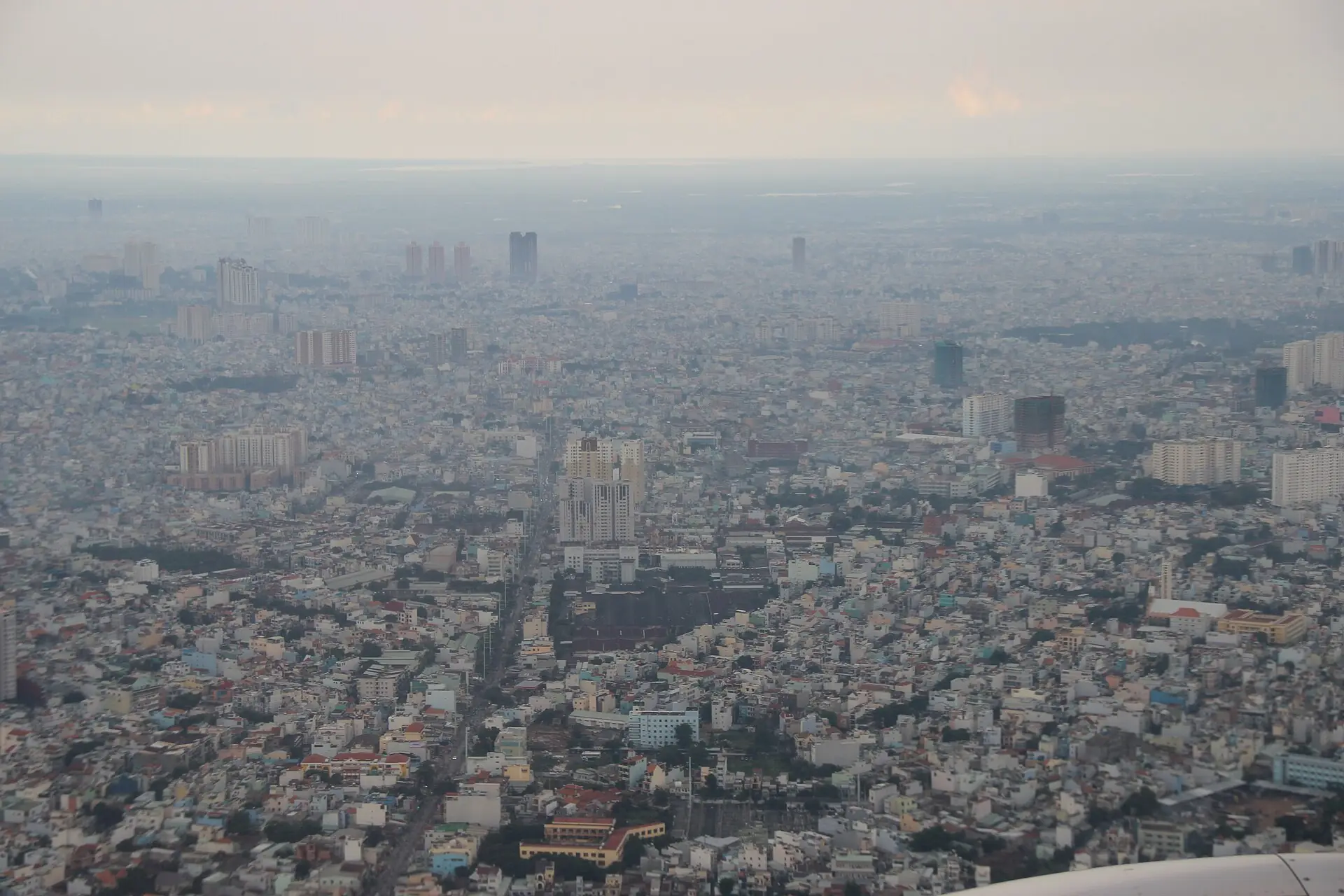
Ho Chi Minh City is two markets wearing one name. District 1 is the address-tax core — you pay for the postcode and the rent does not stretch to cover the price. Across the river, District 2 / Thu Thiem is where the foreign-eligible new-build inventory actually sits, with more appreciation runway and the cleanest path to getting a unit titled to your name. Both sit behind the same 50-year dwelling term and the same 30% building quota. The structural frame sits at the Vietnam foreign-buyer reality check.
The Prestige Core
District 1 is the established central business and prestige core — the highest price per square metre in the country and the thinnest yield. This is the address-tax market. The region-scout matrix places its five-year forward appreciation projection in the Med band, roughly 4–7% annualised, with a sticky expat-executive long-let tenant pool and the worst rent-to-price ratio in Vietnam.
The buyer who needs the rent to carry the asset should not be here. The math is the thinnest in the country, and that is structural, not a temporary dip. The buyer who wants a trophy central address with a low-churn corporate tenant pool, and who accepts the yield reality going in, is the right buyer for District 1. An allocator buys here only when the building’s quota and pink-book record are both clean and the entry price is a genuine anomaly.
Foreign-eligible, in-quota stock is genuinely scarce in the central core because much of it is older or non-commercial-project. The buildings that qualify command a premium on top of the premium. Run the net-yield math before you fall for the view.
The New Supply
Thu Thiem is the new prestige supply — master-planned, across the river, the destination for most of the city’s high-end new towers. Crucially, it is where the in-quota, foreign-eligible inventory actually is. The region-scout matrix places its appreciation projection in the High band, roughly 6–9% annualised over a five-year forward horizon, with a real long-let tenant pool of relocated executives and regional staff.
This is the cleanest place in the city to actually get a unit titled to your name. The trade is timeline certainty: new-build means pink-book issuance can run long, and appreciation depends on the broader master-plan delivery, which is outside your control. The projection band is an independent-research estimate, not a forecast and not a promise — independent sources project both higher and lower.
Because you are usually buying new-build from a developer here rather than a resale, the quota-plus-FX double-check bites hardest. Confirm the specific unit is still inside the 30% band before deposit — not “the building has space,” but “this unit is registrable to a foreigner.” The Hanoi comparison shows the alternative long-let posture in the north.
The Quota Gate
The most desirable central towers hit their 30% foreign cap years ago. What gets offered to a foreign buyer is frequently the resale of an already-foreign-held unit, which is fine, or a unit in a building where the foreign register is full, which you cannot title. The cap is checked at registration, not at deposit.
This is not a comment on any seller or agent. It is the structure. Get the answer in writing, dated, from the developer or management board: how many units in this building are already foreign-held, and how many remain under the cap. A building at 29% has room for a handful of buyers and you may be racing other foreigners for the last slots. A building at 30% has room for zero, and any deposit is buying a refund fight, not an apartment.
The mechanics of the cap, the eligible-project list, and the pink-book sequence are walked in full at the 30% cap. Confirm quota first; everything else is downstream of it.
78-page PDF · Instant download
The Vietnam Property Buyer’s Playbook walks the 30% quota, the 50-year clock, the pink book, the fee stack, and the exit math — the full framework this research page is built on.
Get The Vietnam Playbook — $39The Underwriting Filter
A hypothetical worked example: a USD 350,000 Thu Thiem two-bedroom translates near VND 8.9bn at the 2026 rate of roughly 25,400 — a figure you must recompute against the live rate and against the documentation you will need to repatriate proceeds later.
// FAQ
Related research
Buying Property in Vietnam as a Foreigner
the pillar that frames HCMC inside the 50-year dwelling model.
Read →
Hanoi Property
the northern long-let alternative — Tay Ho stability, Cau Giay value entry.
Read →
Vietnam Rental Yield
the net-after-fees math behind District 1's thin headline.
Read →
Vietnam Foreign Ownership Explained
the 30% cap, the eligible-project list, and the quota gate in full.
Read →
The SE Asia Ownership Map
free — who can own what across six countries, side by side.
Read →
// Same math, other markets
Philippines
Philippines: the 40% cap & the CCT title
The 40% foreign cap, the CCT title chain, VAT vs resale math — the full research cluster.
Bali
Bali: leasehold decay & the four pathways
Leasehold decay math and the four legal ownership pathways — the full research cluster.
Free PDF
SE Asia Ownership Map — who can own what across 6 countries
Email-gated. Instant download.
THE TITLE LANDS IN THU THIEM
Two Districts, One Clock
District 1 yield reality. Thu Thiem appreciation runway. The quota check. The repatriation path. One PDF, for the operator.
Get The Vietnam Playbook $39Or start free with the SE Asia Ownership Map — who can own what across six countries.
Instant PDF · 7-Day Guarantee · Secure Checkout
Brinkman Data Analytics is an independent research service. Not financial, investment, tax, or legal advice. Vietnamese property law is jurisdiction-specific and governed by the Housing Law 2023 and Land Law 2024. Engage a licensed Vietnamese lawyer and a qualified tax adviser before acting. International real estate carries risk of partial or total loss of capital.