Hanoi is the long-lease operator’s market. Tay Ho / West Lake is the steadiest long-let demand in the country — diplomatic, NGO, and international-school tenants who stay for years, not weekends. Southwest, Cau Giay / My Dinh trades that premium tenant pool for a cheaper entry and more inventory. Both sit behind the same 50-year dwelling term and the same 30% building quota. The structural frame sits at the Vietnam foreign-buyer reality check.
The Steady Core
Tay Ho / West Lake concentrates the country’s most durable long-let demand: embassy staff, NGO workers, long-term corporate relocations, and international-school families. Tenants stay for years. The diplomatic and international-school anchors give the area a demand floor that the tourist-driven coastal markets simply do not have. The region-scout matrix places its appreciation projection in the Med band, roughly 4–7% annualised over a five-year forward horizon, with the lowest operational complexity in this section.
This is the long-lease operator’s market — the buyer who values a predictable, low-churn tenant pool over a headline yield number. Short-let yield maximisation fights the grain here; the building stock and the tenant pool both favour long stays. The appreciation band is an independent-research projection, not a forecast and not a promise; independent sources project both higher and lower.
The boring, predictable let is the point, not a consolation. Operators take the demand floor with the low churn. Tourists chase the headline number in markets that cannot sustain it. Run the net-yield math on a multi-year Tay Ho lease before you compare it to a coastal nightly figure.
The Value Entry
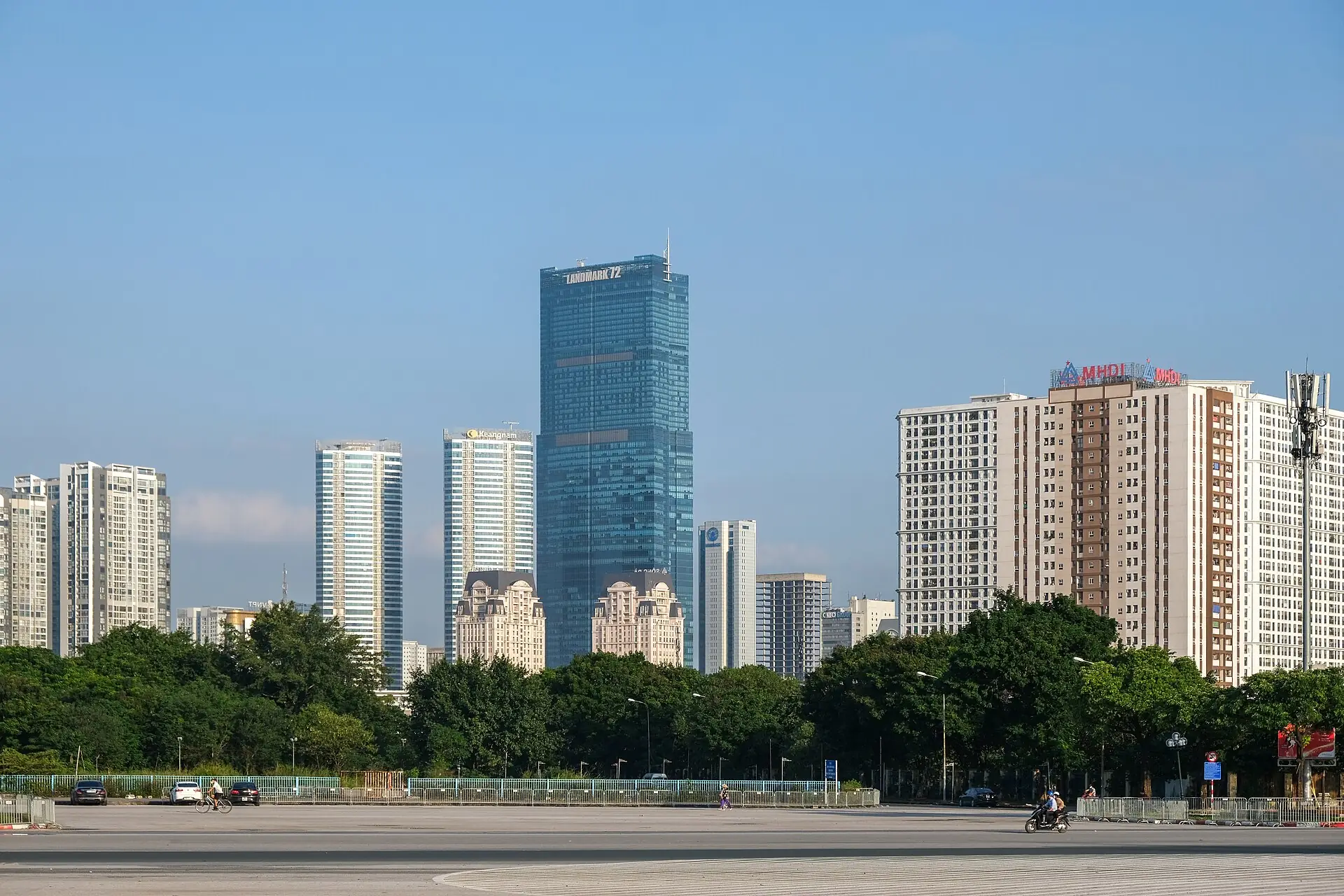
West and southwest of the centre, Cau Giay / My Dinh is where a lot of Hanoi’s modern foreign-eligible towers have gone up. The entry ticket is lower than Tay Ho, the tenant pool is broader and more local-professional than diplomatic, and there is more inventory to choose from — which means more competition on the let. The region-scout matrix places its appreciation projection in the High band, roughly 6–9% annualised, with resale liquidity rated weaker than Tay Ho’s.
This is a sensible first foreign purchase if the building checks out — modern in-quota stock at a lower ticket, blending long-let yield with appreciation runway. But you are not getting West Lake diplomatic tenants here. You are competing in a deeper, more price-sensitive pool, which means marketing the unit harder and underwriting to the lower occupancy band.
The supply overhang is the live risk. Several large developments compete head to head in this belt; a tower that looks well-let in 2026 can face three new neighbours by 2028. This is exactly where thin developers cluster, so apply a real developer-track-record filter — the generic off-plan risk is sharpest in oversupplied mid-market belts.
The Pink-Book Clock
The strongest Tay Ho long-let buildings are well understood, but issuance speed in Hanoi varies widely by developer. Always pull the developer’s pink-book track record for the specific tower. A clean long-let demand profile does not save you if the certificate takes years to land — until it issues, you hold a contract against the developer, not registered ownership recognised against the world.
This is developer-performance risk, generic to off-plan everywhere on earth. Underwrite the developer’s record of actually delivering certificates on prior completed projects, not the render of the lobby. The mechanics of the cap and the certificate sequence are walked in full at the 30% cap.
None of this is a criticism of any developer or agent. It is the structure of buying a new-build dwelling on a clock, behind a quota, before the certificate issues. Name the risk, then price it.
78-page PDF · Instant download
The Vietnam Property Buyer’s Playbook walks the 30% quota, the 50-year clock, the pink book, the fee stack, and the exit math — the full framework this research page is built on.
Get The Vietnam Playbook — $39The Underwriting Filter
A hypothetical worked example: a USD 230,000 Cau Giay two-bedroom translates near VND 5.8bn at the 2026 rate of roughly 25,400 — recompute against the live rate and against the documentation you will need to repatriate proceeds later. If you want the city comparison, the Ho Chi Minh City read sets out the southern alternative.
// FAQ
Related research
Buying Property in Vietnam as a Foreigner
the pillar that frames Hanoi inside the 50-year dwelling model.
Read →
Ho Chi Minh City Property
the southern alternative — District 1 prestige, Thu Thiem appreciation.
Read →
Vietnam Foreign Ownership Explained
the 30% cap, the eligible-project list, and the quota gate in full.
Read →
Vietnam Rental Yield
the net-after-fees math behind the steady Tay Ho long-let.
Read →
The SE Asia Ownership Map
free — who can own what across six countries, side by side.
Read →
// Same math, other markets
Philippines
Philippines: the 40% cap & the CCT title
The 40% foreign cap, the CCT title chain, VAT vs resale math — the full research cluster.
Bali
Bali: leasehold decay & the four pathways
Leasehold decay math and the four legal ownership pathways — the full research cluster.
Free PDF
SE Asia Ownership Map — who can own what across 6 countries
Email-gated. Instant download.
MATCH THE POOL, PULL THE RECORD
The Long-Lease Operator's City
Tay Ho long-let stability. Cau Giay value entry. The supply pipeline. The quota and pink-book check. One PDF, for the operator.
Get The Vietnam Playbook $39Or start free with the SE Asia Ownership Map — who can own what across six countries.
Instant PDF · 7-Day Guarantee · Secure Checkout
Brinkman Data Analytics is an independent research service. Not financial, investment, tax, or legal advice. Vietnamese property law is jurisdiction-specific and governed by the Housing Law 2023 and Land Law 2024. Engage a licensed Vietnamese lawyer and a qualified tax adviser before acting. International real estate carries risk of partial or total loss of capital.