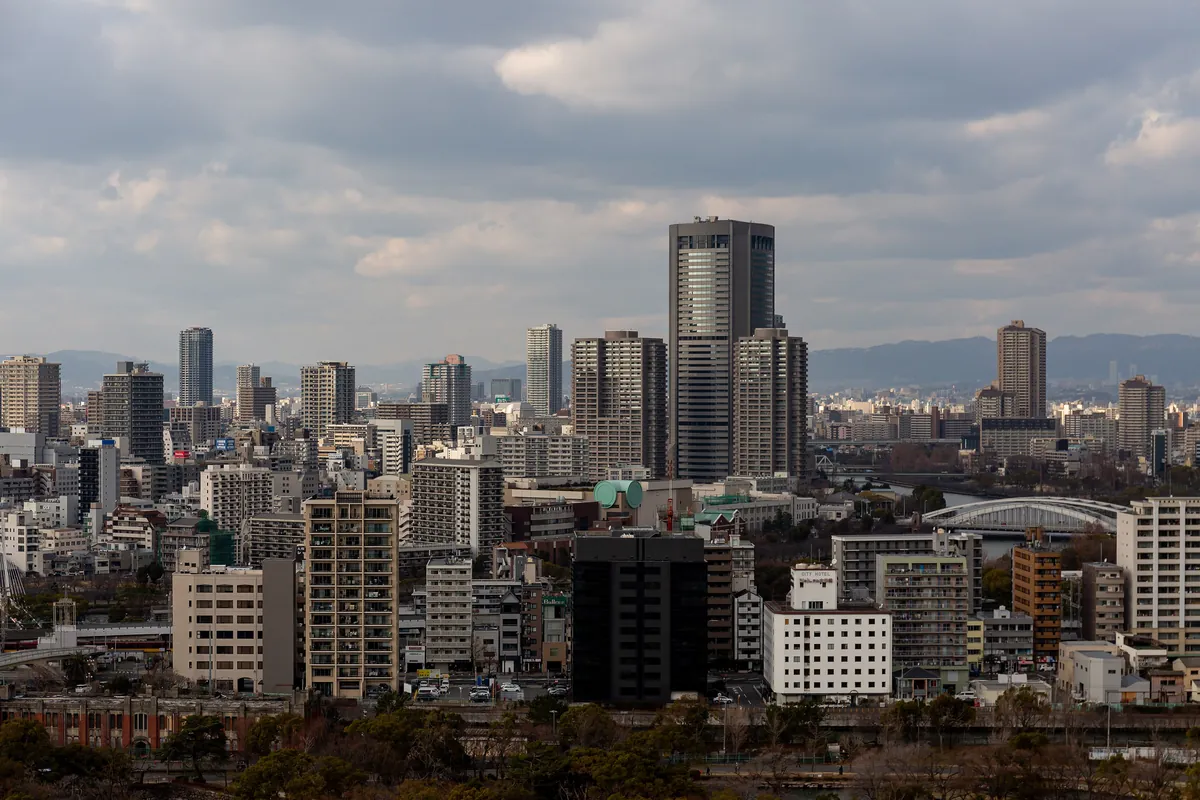
Can Taiwanese buy property in Japan? Yes, freehold, and the paperwork is what changed in 2026.

// Short answer
Yes. As of September 2026 no Japanese law restricts foreigners from buying land or buildings, and a Taiwanese buyer takes the same freehold ownership a Japanese buyer takes. What changed in 2026 is paperwork rather than permission. Almost every non-resident purchase now needs a report to the Minister of Finance within 20 days, and from 5 October 2026 every new owner declares a nationality. The work specific to a Taiwanese buyer is the money leg out and the tax return at home.
Rules and figures as of September 2026. Thai transfer statistics are REIC's, compiled from Department of Lands records and published in REIC's own releases: full-year 2025 on 20 April 2026, Q1 2026 on 16 June 2026 and H1 2026 on 11 September 2026. The destination rules come from each market's own statute and from this site's sourced cluster pages. The Taiwan side is stated as published by the foreign exchange declaration regulations on the Ministry of Justice law database and by the Ministry of Finance and the National Taxation Bureau of Taipei. This is a description of published rules, not legal, tax or foreign exchange advice, and it does not describe any way around any rule. Confirm your own position with your own bank and a qualified adviser before committing to anything. Every figure links to its source.
On this page
- Can a Taiwanese citizen buy property in Japan?
- What does a non-resident buyer have to report in Japan?
- Is there data on Taiwanese buyers in Japan?
- What does a foreign owner pay in Japan, on the way in and every year?
- What happens when a Taiwanese owner sells Japanese property?
- What do Taiwan's rules ask of a buyer sending money to Japan?
Can a Taiwanese citizen buy property in Japan?
Yes. As of September 2026 no law restricts foreign individuals or companies from buying land or buildings in Japan, and foreigners buy on the same terms as Japanese nationals, freehold land included. The rules that do exist are reporting duties and advance notice near designated sites. None of them is based on nationality.
The honest caveat is timing. In June 2026 the government postponed an expert panel's proposals on foreign real estate purchases from mid-summer to autumn 2026, and a bill to tighten the law on land near important facilities was being prepared for the autumn Diet session. No nationality-based restriction was in force when this page was written, which is exactly why the date on this page matters.
What a foreign owner holds, and every rule that touches it: foreign property ownership in Japan, explained.
Sources
What does a non-resident buyer have to report in Japan?
A non-resident who acquires Japanese real property files a report, Form No. 22, with the Minister of Finance through the Bank of Japan within 20 days of acquisition, in Japanese. Since 1 April 2026 this covers almost every purchase, including your own home, a holiday home, and a purchase from another non-resident.
- There is no minimum amount or area. A zero-yen acquisition and an inheritance are both reportable.
- The buyer can file, or an agent who lives in Japan.
- A foreign national counts as a non-resident unless they work at an office in Japan or have been in Japan for six months or more.
- Not filing, or filing a false report, can mean up to six months' imprisonment or a fine of up to JPY 500,000. A late report should still be filed, with a short explanation.
- An owner with no address in Japan must also name a contact person in Japan on the registration, with their consent and seal certificate. Line that up before settlement day, not on it.
The register itself, and what proves you own the property: Japan's property registration, explained.
Sources
Is there data on Taiwanese buyers in Japan?
None was found for this page. Japan's registration system records ownership rather than publishing a buyer count by nationality, and the research behind this site located no official Japanese series showing how many Taiwanese buyers there are or where they buy. Where a number cannot be sourced, this site does not publish one.
That is worth saying plainly, because the absence runs the other way from Thailand. In Thailand, REIC counts foreign condominium transfers by nationality from Department of Lands records, and Taiwan is fourth of ten. In Japan, no equivalent published series was located, so a page that named a Japanese market share for Taiwanese buyers would be inventing it.
One related change is dated and real. From 5 October 2026 anyone registering as a new owner of Japanese property, by purchase, gift or inheritance, declares a nationality to the Legal Affairs Bureau. It applies to Japanese and foreign owners alike and the nationality is not printed on the public register. Whether any statistics are published from it later is not something this page can tell you.
Where the evidence does exist: Taiwanese buyers in Thailand.
Sources
What does a foreign owner pay in Japan, on the way in and every year?
On purchase, prefectural acquisition tax at 3% on land and residential buildings acquired by 31 March 2027, registration and license tax at 1.5% on land and 2% on the building, stamp tax on the contract, and the broker's capped commission. Every year, fixed asset tax at 1.4% plus up to 0.3% city planning tax.
The two big purchase taxes are charged on the government's assessed value rather than on the price you pay, so you cannot work them out from the price alone. Ask the broker or the judicial scrivener for the assessed values before you sign. Several reduced rates expire on 31 March 2027.
Rent paid to a non-resident is Japan-source income, and the payer normally withholds 20.42% of the gross rent. Net rental income is then taxed at progressive national rates, through a return filed between 16 February and 15 March, and a non-resident must appoint a tax representative in Japan. Every line in one table: Japan property buying costs and Japan property tax for foreigners.
Sources
What happens when a Taiwanese owner sells Japanese property?
The gain is taxed separately from other income: 15% national income tax if the property was held more than five years as of 1 January of the year of sale, 30% if not, each plus the 2.1% surtax. When the seller is a non-resident, the buyer normally withholds 10.21% of the gross price and pays it to the tax office.
The withholding does not apply where the price is JPY 100 million or less and the buyer is an individual buying the home to live in. It is a prepayment, not the final tax, and the seller files a return to settle. There is no approval needed to take the proceeds out of Japan.
Mind the 1 January test. Five years counted to the day is not enough, because the holding period is measured to 1 January of the year of sale. Step by step: selling property in Japan as a foreigner.
Sources
What do Taiwan's rules ask of a buyer sending money to Japan?
A declaration on foreign exchange transactions of NT$500,000 or more, a bank check of supporting documents on a single individual remittance above the equivalent of USD 500,000, and central bank approval where an individual's annual aggregate of foreign exchange purchased or sold passes the equivalent of USD 5 million. Japanese rent and a Japanese gain are overseas income at home.
Those thresholds are set by the Regulations Governing the Declaration of Foreign Exchange Receipts and Disbursements or Transactions, amended 26 December 2022 and in force from 1 January 2023. They are stated here as published, and nothing on this site describes or evaluates any way around them.
At home, income from outside Taiwan is brought into basic income once a filing unit's overseas income reaches NT$1 million in a year, under the Income Basic Tax Act. Japanese tax paid and Taiwanese basic income tax are separate calculations and the interaction between them is a question for a Taiwanese tax adviser on your own facts. The thresholds in full: sending money from Taiwan for a property purchase.
Sources
// Buying abroad?
Every listing in your budget, ranked on net yield, appreciation and resale. Any market with public listing data; book a free call first so I can confirm your city has the data.
See the $499 report, page by pageFrequently Asked Questions
Can a Taiwanese citizen own land in Japan?
Do I need to live in Japan to buy property there?
How many Taiwanese buyers are there in Japan?
Is buying my own home in Japan exempt from the FEFTA report?
Is rent from a Japanese property taxed if I live in Taiwan?
Can I take the sale proceeds out of Japan?
Header photo: Balon Greyjoy, CC0, via Wikimedia Commons. All credits: image credits.