Cambodia rental yields: no confirmed published figure, so here is what to verify.
// Short answer
This page does not print a Cambodian yield number. The publisher most often cited for Cambodian yields could not be read directly to confirm its current figures, and every other range in circulation carries no named publisher and no data period. What a page can honestly do instead is set out what drives a Phnom Penh yield, what comes off a gross figure, and the questions that make any number you are shown checkable.
Rules and rates as of September 2026. Cambodia's capital gains tax on immovable property carries a commencement date that has moved more than once, so check every dated item again before you sign. Each section links its own sources.
On this page
- What is the average rental yield in Phnom Penh?
- What actually drives a rental yield in Phnom Penh?
- What comes off a gross yield in Cambodia?
- Can a foreign owner run a Cambodian condo as a short-stay rental?
- Is there rent control in Cambodia?
- What should you verify before trusting a Cambodian yield number?
What is the average rental yield in Phnom Penh?
No current published figure could be confirmed for this page. The publisher most often cited for Cambodian yields returned HTTP 403 to a direct read in September 2026, so its current figures could not be verified on the page itself. The other ranges circulating carry no named publisher and no stated data period.
That is a deliberate omission, not an oversight. A yield number without a publisher and a quarter attached is not a fact, it is a rumour with a decimal point. Several Phnom Penh ranges circulate, including district-level figures, and none of them could be tied to a named publisher with a data period that could be confirmed.
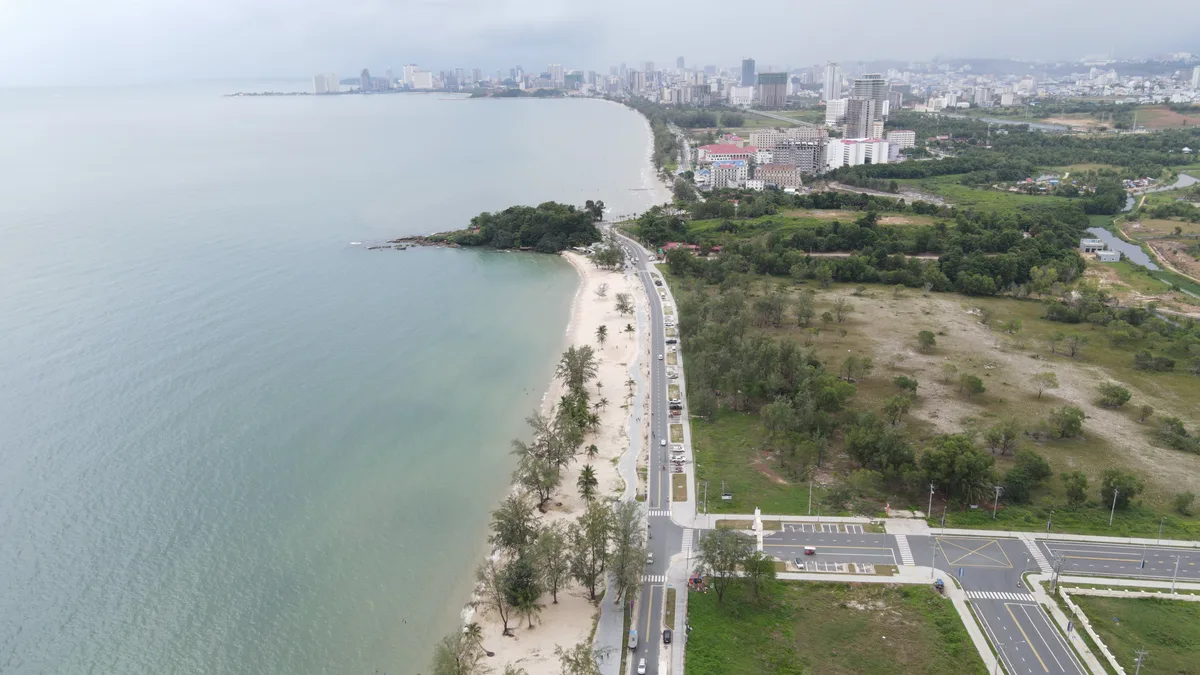
There is no usable Sihanoukville figure either, so none appears here. That is the Cambodian market where a stale or unsourced number would mislead most, given the volume of unfinished and vacant stock reported there since 2019.
If someone shows you a Cambodian yield, ask three things: who published it, for which quarter, and whether the rent behind it is an asking rent or an achieved one.
What actually drives a rental yield in Phnom Penh?
The unit, not the city. A yield is one building's achievable rent against one unit's real all-in cost, and the spread inside a single city is usually wider than the gap between cities. A citywide average tells you nothing about the unit you are being sold.
The inputs that decide it, in the order they bite:
- The achievable rent, not the asking rent. Published yields are typically built from asking prices and asking rents, which is a different number from what a unit has actually let for.
- The unit size and layout relative to what the local tenant pool rents. This is also what decides whether a building is near its 70 percent foreign-ownership area cap.
- The building. Its management, its internal rules, its maintenance schedule and its vacancy history.
- The currency. Cambodia's economy is heavily dollarised, which is why unit prices and rents are usually quoted in US dollars rather than riel. Press reporting of AMRO analysis and of the National Bank of Cambodia's own figures puts the dollarised share of broad money in the low-to-mid eighties percent; those reports were not read at source for this page, so no exact percentage is published here.
The building-level limit that shapes which units are even available to you: Cambodia's 70 percent foreign ownership cap.
Sources
What comes off a gross yield in Cambodia?
A gross yield is rent before any cost. In Cambodia the recurring deductions are the 0.1 percent annual immovable property tax, the building's maintenance contribution, tax on the rent, and the vacancy and management you actually experience rather than the ones in a brochure.
- Immovable property tax: 0.1 percent a year (Law on Taxation, Art. 150). The tax authority states a base of 80 percent of total property value and a threshold of KHR 100,000,000, declared between 1 January and 30 September.
- Maintenance of the common areas: a statutory obligation on special co-owners under Article 17 of the Law of 24 May 2010, divided in proportion to the value of each lot unless the internal rules say otherwise. No typical figure per square metre could be sourced, so ask the building for its schedule.
- Tax on the rent: 14 percent withheld where a resident taxpayer carrying on business pays a non-resident (Arts. 26, 27). Where the tenant is a private individual not carrying on business, no withholding agent arises under Article 26 and the treatment could not be established from a primary source.
- Vacancy, letting fees and furnishing replacement: not published anywhere, and the line that most often separates a modelled yield from a real one.
The tax side in full: Cambodia property tax for foreigners.
Sources
Can a foreign owner run a Cambodian condo as a short-stay rental?
Check two things before assuming yes. Cambodia's Law on Tourism, Article 32, empowers the Minister of Tourism to issue a Prakas setting which categories of tourism business need a licence, and no person may operate a licensable tourism business without one. Whether a private short-stay condo let is in scope depends on that Prakas.
The Prakas that would answer it could not be located for this page. So the honest position is the mechanism, not a verdict: the statute puts tourist accommodation services in the Ministry of Tourism's primary responsibility (Article 30(a)), and leaves the licensable categories to the Minister. Article 33 adds that a tourism licence does not displace commercial registration or other permits required by law, and Article 24 gives the Ministry the job of classifying accommodation services, with the system set by sub-decree.
Commercial hosting guidance for Cambodia states that no specific permit is needed to host on short-stay platforms while also advising that local authorities be checked. It cites no law, ministry or instrument, and it does not sit easily with the licensing mechanism above. It is noted here only so that the gap between market belief and the statute is visible.
The constraint most likely to bind you in practice is the building's own. Article 14 of the Law of 24 May 2010 gives special co-owners the same obligations as Cambodian co-owners and binds them to the internal rules of the co-owned building, and Article 13 bars using a unit in a way that disturbs other co-owners. Read the internal rules before you model short-stay income.
Sources
Is there rent control in Cambodia?
No rent-control or rent-increase-cap provision was located in any instrument read for this page. That is a statement about what was read, not a finding that none exists. The binding limits found on how an owner may use and let a unit are in the building's internal rules, which carry statutory force.
Article 14 binds special co-owners to the internal rules of the co-owned building and to the laws in effect. Article 13 bars using a private unit in a way that disturbs other co-owners. That is where a letting restriction, a minimum stay or a tenant-vetting requirement is most likely to live, and it is a document you can actually get before you buy.
What should you verify before trusting a Cambodian yield number?
Six things, and all of them are answerable before you pay anything. Who published the figure, for which quarter, on asking or achieved rents, for which unit size, in which building, and after which costs. A number that cannot answer those is not usable in a model.
- Publisher and date. A named publisher and a stated data period, or it does not go in the model.
- Asking or achieved. Published yields are usually built from asking prices and asking rents.
- Gross or net, and which costs came off. Do not convert a gross figure to a net one without showing the deductions.
- Unit size. A citywide average blends sizes that rent to entirely different tenants.
- The building's own numbers. Its rent roll, vacancy history and maintenance schedule beat any city average.
- The legal checks first. Floor, cap and title, before any yield question: what a foreigner can actually buy in Cambodia.
Sources
// Buying in Cambodia?
Every listing in your budget, ranked on net yield, appreciation and resale. Any market with public listing data; book a free call first so I can confirm your city has the data.
See the $499 report, page by pageFrequently Asked Questions
What is the rental yield in Phnom Penh?
Why does this page not print a Cambodian yield number?
What is the rental yield in Sihanoukville?
What costs come off a Cambodian gross yield?
Can I let a Cambodian condo on Airbnb?
Header photo: Kiensvay, CC BY-SA 3.0, via Wikimedia Commons. All credits: image credits.