Cambodia's 70 percent foreign ownership cap: 70 percent of floor area, not of units.
// Short answer
Foreign ownership in a Cambodian co-owned building is capped at 70 percent of the total surface area of all its private units. Two things get cited wrongly. The measure is area, not the number of units, so a building can be at the cap with far less than 70 percent of its units foreign-owned. And the figure is not in the 2010 law, which only delegates it: it is in Sub-Decree No. 82 ANK.BK, Article 2, of 29 July 2010.
Rules and rates as of September 2026. Cambodia's capital gains tax on immovable property carries a commencement date that has moved more than once, so check every dated item again before you sign. Each section links its own sources.
On this page
- How much of a Cambodian condo building can foreigners own?
- Is the cap 70 percent of the units or 70 percent of the area?
- Where is Cambodia's 70 percent cap actually written?
- How can a buyer check a building against the cap?
- Has Cambodia's 70 percent cap changed?
- What happens to a purchase that breaches the rules in Article 6?
How much of a Cambodian condo building can foreigners own?
Up to 70 percent of the total private-unit area. Sub-Decree No. 82, Article 2: legally qualified foreigners can have ownership rights in private units "not exceeding 70 (seventy) percent of the total surface size of all private units of the co-owned building". Common areas are not in that base.
Read the base carefully, because three different measures get confused with it. It is not the building's gross floor area. It is not the number of units. And it does not include the common areas. It is the summed surface size of the private units, and the foreign share of that total is what is capped.
The sub-decree took effect from the date of its signature, 29 July 2010, under its own Article 5.
Sources
Is the cap 70 percent of the units or 70 percent of the area?
Area. The sub-decree says total surface size of all private units. That distinction changes the answer for real buildings: if the foreign-owned units are the larger ones, the building reaches the legal cap well below 70 percent of the unit count. Never write "70 percent of the units".
Here is the arithmetic that makes the point, as an illustration of the rule rather than a description of any building. Take a building whose private units total 10,000 m2. The foreign share may reach 7,000 m2. Suppose foreign buyers took the large units, averaging 100 m2, and the locally owned stock averages 50 m2.
| Illustration | Area | Units |
|---|---|---|
| Foreign-owned at the cap, 100 m2 average | 7,000 m2, which is 70% | 70 units |
| Remaining stock, 50 m2 average | 3,000 m2, which is 30% | 60 units |
| Building total | 10,000 m2 | 130 units |
At the legal cap, foreigners hold 70 of 130 units, about 54 percent of the unit count. A buyer counting units would conclude the building had room left. It does not. Flip the unit sizes and the error runs the other way.
This is why the question to ask a developer is never how many units are sold to foreigners. It is how much area.
Sources
Where is Cambodia's 70 percent cap actually written?
In Sub-Decree No. 82 ANK.BK of 29 July 2010, Article 2, signed by the Prime Minister and approved by the Council of Ministers at its plenary session of 16 July 2010. It is not in the 2010 law. The law's Article 6 only delegates the figure to a sub-decree.
Article 6, second paragraph, of the Law of 24 May 2010 says a sub-decree shall determine the proportion and percentage of private units that can be owned by foreigners in a co-owned building. All 24 articles of the law were read for this page and no numeric cap appears in any of them. So any percentage a page publishes has to be cited to the sub-decree.
One false trail is worth killing, because it circulates. Article 17 of the 2010 law has nothing to do with any threshold. It is about maintenance of the common areas being divided in proportion to the value of each lot. There is no percentage in it.
Sub-Decree No. 82's own preamble names its legal chain, which is the citation trail for this whole topic: the Constitution, the Land Law of 30 August 2001, the Civil Code of 8 December 2007, Royal Kram No. NS/RKM/0510/006 of 24 May 2010, and Sub-Decree No. 126 of 12 August 2009 on the Management and Use of Co-Owned Buildings.
Sources
How can a buyer check a building against the cap?
On the certificate. Sub-Decree No. 82, Article 3, requires the Cadastral Authority, when issuing an ownership certificate for a private unit to a foreign owner, to write on it the proportion of that unit's surface size compared to the total surface size of all private units in the building.
That turns the cap from a claim into a document check. Two things to do with it:
- Read the proportion on the certificate, or on the draft certificate, for the unit you are buying.
- Ask the developer or the building's management for the foreign-held share of total private-unit area, in square metres, not in units. Then see whether the two numbers are consistent.
The certificate and every other entry on it: the Cambodian strata title, explained.
Sources
Has Cambodia's 70 percent cap changed?
Not as of September 2026. Both the Law of 24 May 2010 and Sub-Decree No. 82 were checked and neither the 70 percent nor its area basis has been amended. No source found states any figure other than 70 percent, and none puts a cap anywhere other than Sub-Decree No. 82, Article 2.
Later instruments in this area touch procedure rather than the cap. Sub-Decree No. 126 of 12 August 2009, on the management and use of co-owned buildings, predates it. Prakas No. 050 of July 2024 is reported to deal with registering units in buildings built before 19 December 1997; that Prakas was not read directly for this page, so it is noted as reported, not relied on.
BNG Legal's July 2024 briefing quotes the sub-decree's area language as current, which is the most recent professional confirmation found.
Sources
What happens to a purchase that breaches the rules in Article 6?
Article 11 of the Law of 24 May 2010 makes it null and void. Where a foreigner receives the transfer of or purchases a private unit in violation of Article 6, the transaction is void and the parties make restitution. Article 22 backed the transitional cases with court-ordered force-sale.
The cap sits under Article 6's own delegation, and the certificate is issued by the Cadastral Authority, so in practice the control point is registration rather than a later challenge. That is the same reason the floor rule and the border rule matter before you pay: the instrument that records your ownership is the instrument that applies the limits.
Article 22 is historical now. It gave foreigners who had bought in breach before the law took effect two years to rectify their position, failing which the competent authority applies to court to force-sell the unit. The law was promulgated 24 May 2010, so that window closed in 2012.
The floor rule, in full: Cambodia's ground floor rule, explained.
Sources
// Buying in Cambodia?
Every listing in your budget, ranked on net yield, appreciation and resale. Any market with public listing data; book a free call first so I can confirm your city has the data.
See the $499 report, page by pageFrequently Asked Questions
What is the 70 percent rule in Cambodia?
Is the Cambodian cap on units or on floor area?
Is the 70 percent cap in the 2010 law?
How do I find out how much of a building is already foreign-owned?
What if a sale would take a building over the cap?
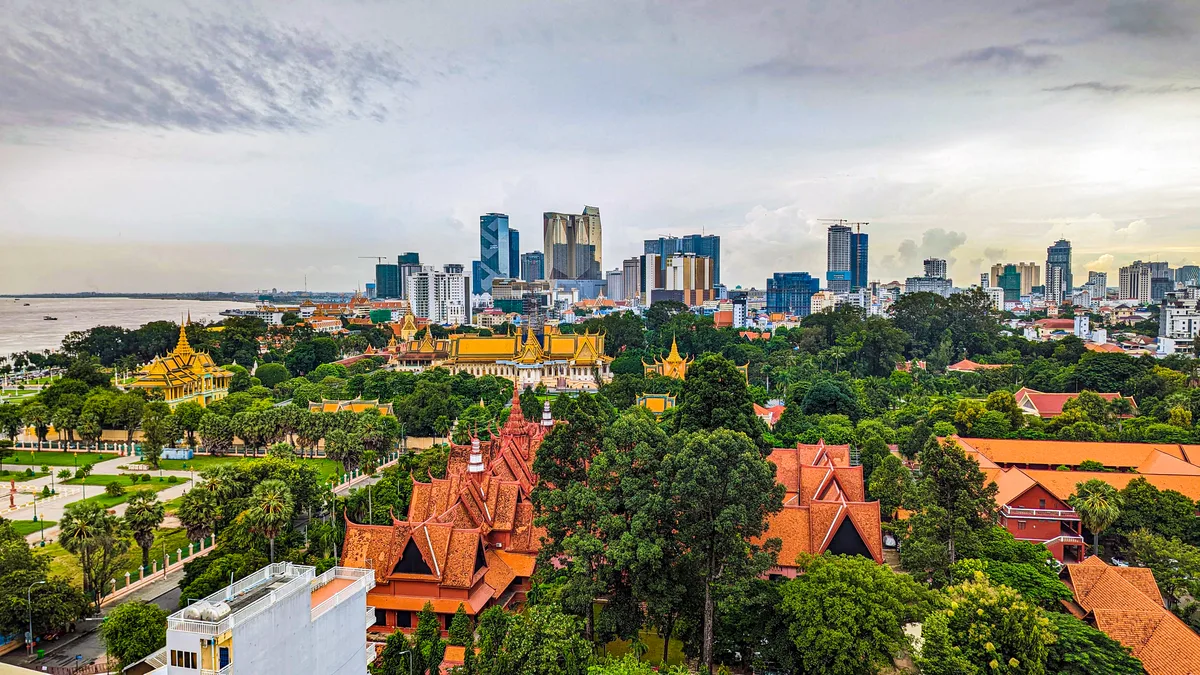
Header photo: Mao Piseth, CC BY-SA 4.0, via Wikimedia Commons. All credits: image credits.