Buying property in Croatia as a foreigner: EU buyers go straight in. Others need reciprocity and consent.
// Short answer
Yes. Citizens of EU member states, Iceland, Liechtenstein and Norway buy property in Croatia on the same terms as Croatians. Everyone else needs two things: reciprocity between their country and Croatia, and the prior consent of the justice minister for each purchase. Without that consent, the contract is void. Buying property gives no residence right.
Rules and rates as of September 2026. The consent rule for non-EU buyers ends for OECD nationals the day Croatia joins the OECD, which had not happened when this was written, and municipalities set their own property tax, so check the dated items again before you sign. Every figure links to its source.
On this page
- Can foreigners buy property in Croatia?
- Which countries meet Croatia's reciprocity test?
- Will joining the OECD change the rules for non-EU buyers?
- How does buying property in Croatia work, step by step?
- What does it cost to buy property in Croatia?
- What taxes does a foreign owner pay in Croatia?
- Does buying property in Croatia give residence?
Can foreigners buy property in Croatia?
Yes. EU and EEA citizens and companies acquire real estate on the same conditions as Croatian nationals, with no consent needed. Swiss individuals also buy without consent but supply a temporary residence certificate. All other nationals need reciprocity with Croatia and the prior consent of the minister responsible for justice.
The consent is decided in an administrative procedure and always relates to one specific transaction. Agricultural land is handled by a separate law. The rules in full: foreign property ownership in Croatia, explained.
Sources
Which countries meet Croatia's reciprocity test?
The Ministry of Justice publishes an undated table. It shows reciprocity met for the United Kingdom and Japan, and assessed state by state for the United States. Australia has no reciprocity for existing dwellings from 1 April 2025 to 31 March 2027. Canada, the UAE, Thailand and Singapore are listed as under verification.
Reciprocity is only the first test: a UK or US buyer still goes through the minister's consent procedure. The table also lists countries with no reciprocity. Statuses change, so check your own country on the ministry page before you make an offer.
Will joining the OECD change the rules for non-EU buyers?
Yes, when it happens. A new Article 358.a, adopted on 14 March 2025, treats citizens of OECD member states like Croatians, with no reciprocity test and no consent. It enters into force on the day Croatia joins the OECD. No source showed that had happened as of 22 September 2026.
The Croatian Government's OECD page says Croatia is in the final phase of the accession process. Until accession is confirmed, the reciprocity and consent regime applies to US, UK, Australian, Canadian and other non-EU buyers. Agricultural land stays excluded either way.
Sources
How does buying property in Croatia work, step by step?
Get an OIB tax number, check the land registry extract and cadastre, often sign a preliminary contract with a deposit, then the main contract with the seller's signature certified by a notary. Non-EU buyers obtain the minister's consent. Then payment, the seller's registration consent, the land registry application and the transfer tax assessment.
- OIB from the Tax Administration office where the property is.
- Due diligence on the land registry extract and the cadastre.
- Preliminary contract with a deposit, often.
- Main contract, seller's signature certified by a notary (javni bilježnik).
- Minister's consent, for non-EU buyers, before the contract takes effect.
- Payment, the seller's clausula intabulandi, and the land registry application.
- Transfer tax assessment, after the notary reports the contract.
No law requiring a lawyer was found. What the extract shows: the Croatian land registry extract, explained.
Sources
What does it cost to buy property in Croatia?
Real estate transfer tax of 3% of market value, paid by the buyer, on a resale. A new building sold before first occupation, or within two years of it, carries 25% VAT instead of transfer tax. Agent and legal fees are market practice, quoted by one agency at 3% plus VAT and 1% plus VAT.
There is no general first-home exemption from transfer tax. The full table: Croatia property buying costs.
Sources
What taxes does a foreign owner pay in Croatia?
An annual property tax since 1 January 2025 of €0.60 to €8.00 per m² of usable area, set by each municipality, unless the home is used as a permanent residence or let long term. Long-term rent is taxed at 12% after a flat 30% deduction. A gain on sale is taxed at 24% only if sold within two years.
Holiday lets are not exempt from the property tax. The detail: Croatia property tax for foreigners.
Sources
Does buying property in Croatia give residence?
No. Croatia has no golden visa or investor residence route. The Ministry of the Interior lists the purposes for temporary stay of third-country nationals, such as family reunification, study, work and digital nomads, and property ownership and investment are not among them.
Whether owning property could support a permit under "other purposes" was not found in any official source, so do not buy on that assumption.
// Buying in Croatia?
Every listing in your budget, ranked on net yield, appreciation and resale. Any market with public listing data; book a free call first so I can confirm your city has the data.
See the $499 report, page by pageFrequently Asked Questions
Can foreigners buy property in Croatia?
Can Americans buy property in Croatia?
Can UK citizens buy property in Croatia?
What happens without the minister's consent?
Does Croatia have a golden visa?
Can a non-EU buyer purchase farmland in Croatia?
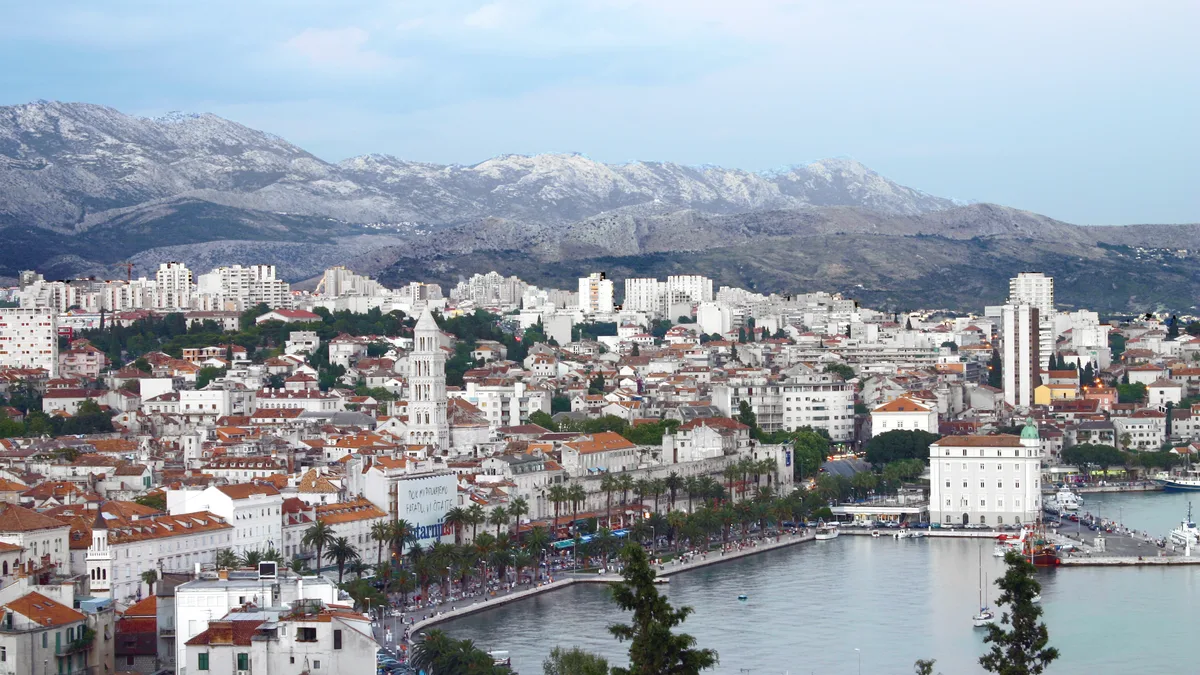
Header photo: Ryan Matzner and Rachel Pestik, CC BY-SA 3.0, via Wikimedia Commons. All credits: image credits.