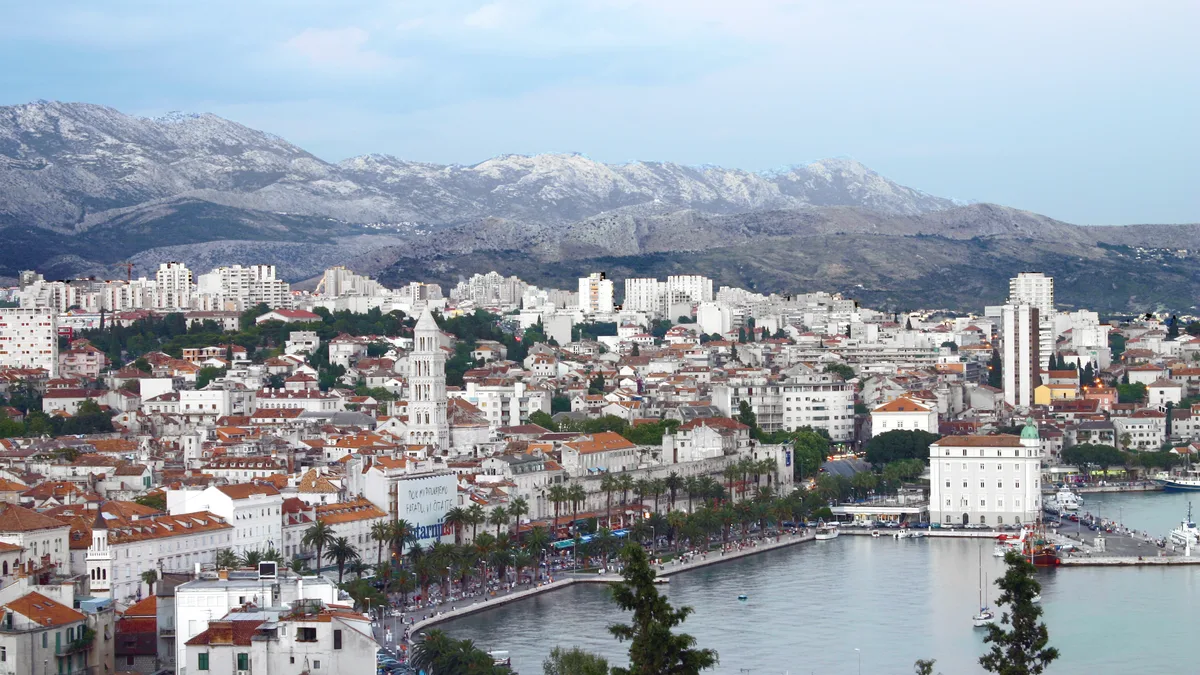
Croatia property buying costs: 3% on a resale, 25% VAT on a new build.
// Short answer
The big one-off cost of buying in Croatia depends on the building's age. A resale pays 3% real estate transfer tax on market value, charged to the buyer. A new building sold before first occupation, or within two years of it, carries 25% VAT instead. Agent and lawyer fees come on top and are set by the market.
Rules and rates as of September 2026. The consent rule for non-EU buyers ends for OECD nationals the day Croatia joins the OECD, which had not happened when this was written, and municipalities set their own property tax, so check the dated items again before you sign. Every figure links to its source.
On this page
What are the one-off costs of buying property in Croatia?
Transfer tax at 3% of market value on a resale, or 25% VAT on a new build, plus an agent's commission, a lawyer if you use one, the notary's certification of the seller's signature, and land registry court fees. Rates as of September 2026.
| Cost | Rate or amount | Notes |
|---|---|---|
| Real estate transfer tax | 3% of market value | Resale; paid by the buyer; since 1 January 2019 |
| VAT on a new building | 25% | Before first occupation or within two years; instead of transfer tax |
| Agent commission | 3% + VAT, minimum €3,000 + VAT | One agency's published rate; no statutory cap found |
| Lawyer | 1% + VAT, minimum €1,000 plus VAT | One agency's published rate; not mandatory by law |
| Notary tariff, court fees | Not published here | Official figures not found |
Sources
How is Croatian transfer tax assessed?
On the property's market value when the tax liability arises, at 3%, and the buyer pays. The notary sends each transfer document to the Tax Administration electronically within 30 days, which triggers the assessment. Where no notary handled the document, the taxpayer must file the report within 30 days.
The current Act has no general first-home exemption. Its exemptions cover specific cases such as family members and inheritance.
When do you pay VAT instead of transfer tax in Croatia?
When a building, or part of one, is supplied before first occupation or use, or within two years of first occupation. That supply is subject to VAT at the standard 25% rate and outside transfer tax. Later resales are VAT-exempt and pay the 3% transfer tax.
A seller may opt to charge VAT on an otherwise exempt supply only if the buyer is a taxable person with full input-VAT deduction. No reduced VAT rate for new homes was found. The Tax Administration ruling cited here dates from 2015.
How much are agent and lawyer fees in Croatia?
One agency lists agent commission at 3% plus VAT, 3.75% in total, with a minimum of €3,000 plus VAT, and a lawyer's fee of 1% plus VAT with a minimum of €1,000 plus VAT. These are one firm's published rates, not law. No statutory cap on commission was found.
No law requiring a buyer to use a lawyer was found; the legal requirement is the seller's certified signature. A non-EU buyer applying for consent from abroad must name a representative in Croatia.
Sources
Is there a first-home exemption from Croatian transfer tax?
No general one. The current Real Estate Transfer Tax Act contains no general first-home exemption. Its exemptions cover specific cases, such as transfers between family members and inheritance.
Budget the full 3% on any resale purchase. The annual costs after purchase: Croatia property tax for foreigners.
// Buying in Croatia?
Every listing in your budget, ranked on net yield, appreciation and resale. Any market with public listing data; book a free call first so I can confirm your city has the data.
See the $499 report, page by pageFrequently Asked Questions
What is the property transfer tax in Croatia?
Do I pay VAT on a new apartment in Croatia?
Who pays the agent in Croatia?
When is Croatian transfer tax assessed?
Is a lawyer required to buy in Croatia?
Header photo: Ryan Matzner and Rachel Pestik, CC BY-SA 3.0, via Wikimedia Commons. All credits: image credits.