Buying property in Montenegro as a foreigner: apartments and houses, outright. Farmland and islands, no.
// Short answer
Yes. A foreigner can own an apartment or a house in Montenegro outright, including the building plot under it. What the law closes to foreigners is land: agricultural land, forests, land within 1 km of the land border, islands, and some protected areas. Every sale is signed as a notarial deed, and you own the property once it is entered in the cadastre.
Rules and rates as of September 2026. Montenegro changed its residence rules in January 2026 and is negotiating EU membership, and official sources disagree on the income tax rate, so check the dated items again before you sign. Every figure links to its source.
On this page
- Can foreigners buy property in Montenegro?
- What can foreigners not buy in Montenegro?
- Does EU membership change the rules for foreign buyers?
- How does buying property in Montenegro work, step by step?
- What does it cost to buy property in Montenegro?
- What taxes does a foreign owner pay in Montenegro?
- Does buying property in Montenegro give residence?
Can foreigners buy property in Montenegro?
Yes. The Law on Property Relations lists what a foreign person may not own, and buildings and apartments are not on that list. So a foreigner can own an apartment or house outright, with the plot under it. A foreign individual can also inherit property on the same terms as a Montenegrin citizen.
The rules sit in the law's chapter on the rights of foreign persons. Its March 2025 amendment may have renumbered the articles, so this page cites the chapter rather than article numbers. The full list: foreign property ownership in Montenegro, explained.
Sources
What can foreigners not buy in Montenegro?
Natural resources, goods in general use, agricultural land, forests and forest land, cultural monuments of exceptional or special importance, real estate within 1 km of the land border and on islands, and areas closed by law to foreign ownership for national interest and security reasons.
One exception: a foreign individual may acquire up to 5,000 m² of agricultural land, forest or forest land when the contract's subject is a residential building standing on it. On the restricted categories, a foreigner may still hold long-term leases and concessions on the same terms as a domestic person.
Sources
Does EU membership change the rules for foreign buyers?
Not yet. In March 2025 Montenegro's Parliament adopted amendments giving EU nationals the same property rights as Montenegrins, but only upon Montenegro's accession to the EU. As of September 2026 Montenegro is an EU candidate in accession negotiations, and no accession date is fixed.
Nothing changes for EU buyers before accession, and the amendment does not change the position of non-EU buyers. The European Commission reported that restrictions on agricultural land for EEA nationals remain.
Sources
How does buying property in Montenegro work, step by step?
A reservation or pre-contract with a deposit, a legal check of the list nepokretnosti (the title sheet), the main contract signed as a notarial deed, the buyer's transfer tax return and payment within 15 days on a resale, then registration of ownership in the cadastre on the notary's filing.
The notarial deed is mandatory: under the Law on Notaries, a transfer of ownership of real estate not made as a notarial deed has no legal effect. Expect to need a Montenegrin tax number; sources conflict on whether it is required for a foreign buyer, so confirm with the notary. The title sheet: the list nepokretnosti, explained.
Sources
What does it cost to buy property in Montenegro?
On a resale, real estate transfer tax, in bands since 1 January 2024: 3% up to €150,000, then 5% on the part up to €500,000, then 6% above. The buyer pays it. A new build bought from a developer carries VAT, at the standard 21% rate, instead of transfer tax.
Notary, cadastre and agent fees are quoted differently by different sources, and the official tariffs were not found, so this page does not publish them. The full cost picture: Montenegro property buying costs.
Sources
What taxes does a foreign owner pay in Montenegro?
Annual real estate tax of 0.25% to 1.00% of market value, at a rate each municipality sets, with a loading of up to 150% on a second home. PwC gives 15% on rental income and on capital gains for non-residents. A government explainer page still shows an older 9% rate.
A home is not treated as a second home if it is the owner's only home in Montenegro. Because the income tax sources disagree, confirm the current rate with a Montenegrin accountant before you model the rent. The detail: Montenegro property tax for foreigners.
Sources
Does buying property in Montenegro give residence?
It can support temporary residence. Law firms report that amendments in force from 17 January 2026 require a property valued at €150,000 or more, measured by the value in the transfer-tax decision, for third-country nationals. The citizenship-by-investment scheme closed to applications on 31 December 2022.
The government's November 2025 draft proposed €200,000; the enacted figure reported by law firms is €150,000, and the Official Gazette number was not confirmed. EU, EEA and Swiss nationals are exempt from the value test. Check the current conditions with a Montenegrin lawyer before you buy for residence.
Sources
// Buying in Montenegro?
Every listing in your budget, ranked on net yield, appreciation and resale. Any market with public listing data; book a free call first so I can confirm your city has the data.
See the $499 report, page by pageFrequently Asked Questions
Can foreigners buy property in Montenegro?
Can a foreigner buy land in Montenegro?
Is a notary required to buy property in Montenegro?
What is the transfer tax in Montenegro in 2026?
Does Montenegro still offer citizenship by investment?
What property value gives residence in Montenegro?
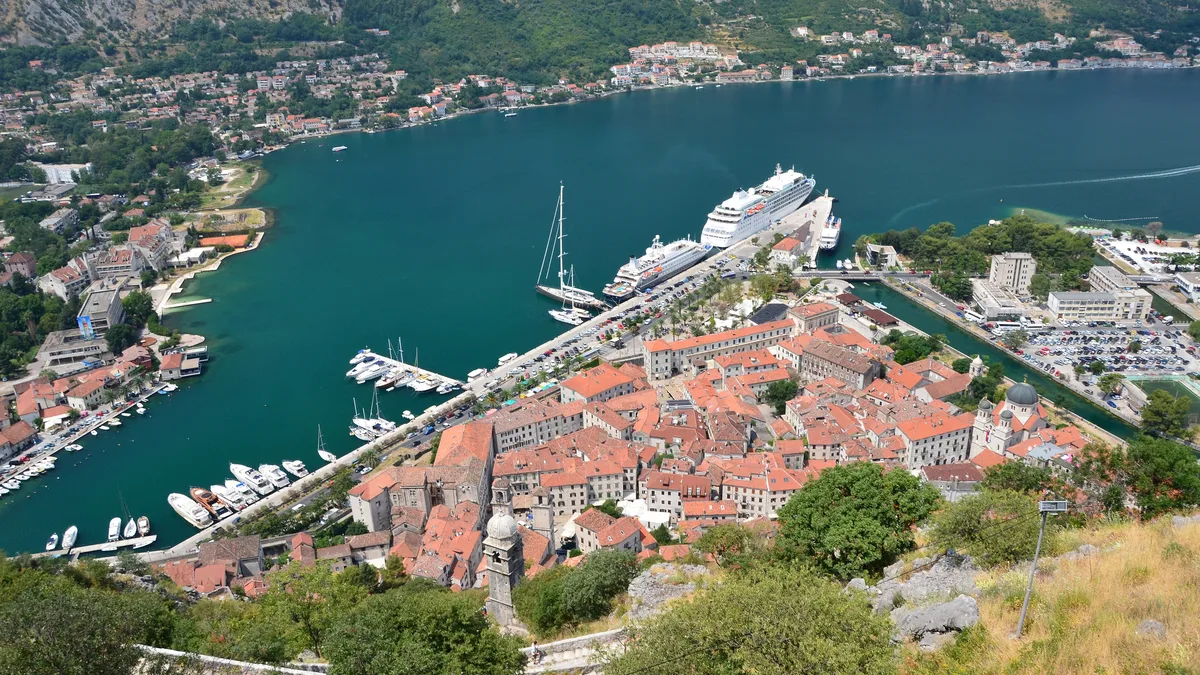
Header photo: Gzzz, CC BY-SA 4.0, via Wikimedia Commons. All credits: image credits.