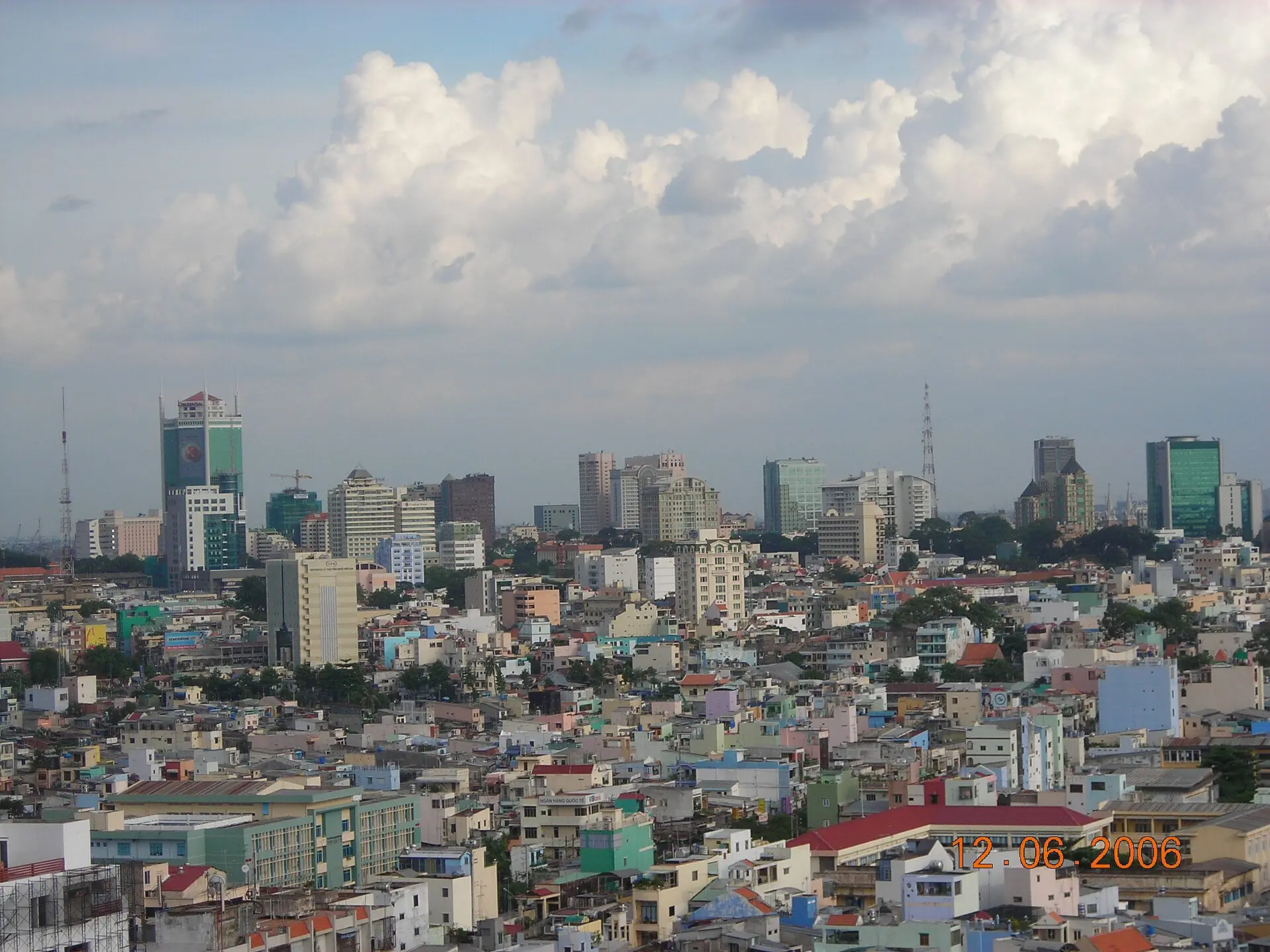
Can Taiwanese buy property in Vietnam? Yes, the dwelling, for a term, inside a quota.
// Short answer
Yes, the dwelling. Under the Housing Law 2023 and the Land Law 2024, both effective 1 August 2024, a foreign national can own an apartment or a landed house inside an approved commercial housing project, for a 50 year term, subject to a 30 percent cap per apartment building. Land use rights themselves are administered by the State and are not available to foreign individuals. Taiwan appears in the published data on foreign buyers, but only as a name on a list, without a count.
Rules and figures as of September 2026. Thai transfer statistics are REIC's, compiled from Department of Lands records and published in REIC's own releases: full-year 2025 on 20 April 2026, Q1 2026 on 16 June 2026 and H1 2026 on 11 September 2026. The destination rules come from each market's own statute and from this site's sourced cluster pages. The Taiwan side is stated as published by the foreign exchange declaration regulations on the Ministry of Justice law database and by the Ministry of Finance and the National Taxation Bureau of Taipei. This is a description of published rules, not legal, tax or foreign exchange advice, and it does not describe any way around any rule. Confirm your own position with your own bank and a qualified adviser before committing to anything. Every figure links to its source.
On this page
- Can a Taiwanese citizen buy property in Vietnam?
- What are the quota and the term in Vietnam?
- Is there data on Taiwanese buyers in Vietnam?
- What does a foreign owner pay in Vietnam, and does buying give a visa?
- How does the money have to move for a Vietnamese purchase?
- What should a Taiwanese buyer check before signing in Vietnam?
Can a Taiwanese citizen buy property in Vietnam?
Yes, within limits that apply to every foreign national. A foreign individual can own a dwelling, an apartment or a landed house, inside an approved commercial housing project. Land use rights themselves are not available to foreign individuals. The model is set by the Housing Law 2023 and the Land Law 2024.
The distinction that trips people is between the dwelling and the land under it. What a foreign owner takes is ownership of the house or apartment, recorded on the certificate, for a fixed term. It is not the land use right, and no nationality changes that.
The whole regime, sourced: Vietnam foreign ownership, explained, and the certificate itself: the pink book, explained.
Sources
What are the quota and the term in Vietnam?
No more than 30 percent of the units in any single apartment building may be foreign held, and no more than 250 landed houses within a ward equivalent area. The dwelling term for a foreign owner is 50 years, renewable once. Both are ceilings in the Housing Law 2023 and neither depends on nationality.
Two consequences follow, and both belong before a deposit rather than after it.
- The project list is the first gate. A foreign buyer can buy only in approved commercial housing projects, and not in national defence or security restricted zones. The relevant province publishes the eligible list. That list, not a sales agent's reassurance, is what decides eligibility.
- The term is a term. Fifty years, renewable once, is the shape of what you are buying. A resale buyer takes the remaining term, which is a different asset from the one the first owner bought.
The term rule in detail: Vietnam's 50 year ownership term, explained.
Sources
Is there data on Taiwanese buyers in Vietnam?
Only a name on a list. A CBRE report using Ministry of Construction data, reported by VnExpress, said about 75 percent of foreign buyers between 2015 and the third quarter of 2023 came from mainland China, Hong Kong, South Korea, Taiwan and Singapore, with no split between them. No Taiwanese count has been published.
The totals are small in any case. The Ministry of Construction reported roughly 3,035 foreign home buyers across the near-decade to the third quarter of 2023, and as of September 2026 about 6,188 foreign-owned homes with certificates, plus 1,519 apartments registered to foreigners since 1 August 2024. None of those releases carries a nationality split.
So the honest statement is that Taiwanese buyers are named among the five largest origin groups and nothing more precise is published. Compare that with Thailand, where the count exists and is specific: Taiwanese buyers in Thailand.
Sources
What does a foreign owner pay in Vietnam, and does buying give a visa?
Buying gives no visa or residency in Vietnam. On tax, a foreign owner pays what a Vietnamese owner pays: roughly 3 percent in registration fee and value added tax at purchase, a minor land use tax while holding, a flat 10 percent of gross rent above the annual threshold, and 2 percent of the full sale price on exit.
The 2 percent exit is charged on the full price rather than on the gain, which is a different shape of cost from a capital gains tax and needs to be modelled that way. The full breakdown: Vietnam property tax for foreigners and selling a Vietnamese apartment as a foreigner.
Sources
How does the money have to move for a Vietnamese purchase?
Through the banking system, with the inbound payment documented, and with the exit route planned before the entry. Vietnam runs a capital account regime in which a foreign owner's ability to take proceeds out depends on the money having arrived and been recorded properly in the first place.
On the Taiwan side, a foreign exchange transaction of NT$500,000 or more is declared, a single individual remittance above the equivalent of USD 500,000 has its supporting documents checked by the bank, and an individual whose annual aggregate of foreign exchange purchased or sold passes the equivalent of USD 5 million needs central bank approval. Those are the published thresholds and this page states them without describing any way around them.
The Vietnamese end: transferring money to Vietnam for a property and the capital account, explained. The Taiwan end: sending money from Taiwan for a property purchase.
Sources
What should a Taiwanese buyer check before signing in Vietnam?
Four things. That the project is on the province's eligible list, that the building is under the 30 percent foreign cap today, what remaining term the certificate will carry, and that the funding route and the exit route are both confirmed in writing before a deposit moves.
- The eligible project list published by the province, checked yourself rather than taken from a brochure.
- The building's current foreign percentage, in writing from the developer or management, dated.
- The term on the certificate, and whether you are buying the original 50 years or the remainder of someone else's.
- The money, both ways. The inbound route from Taiwan and the outbound route on sale, confirmed by your own bank and a qualified adviser.
The document sweep: Vietnam property due diligence.
Sources
// Buying abroad?
Every listing in your budget, ranked on net yield, appreciation and resale. Any market with public listing data; book a free call first so I can confirm your city has the data.
See the $499 report, page by pageFrequently Asked Questions
Can a Taiwanese citizen own an apartment in Vietnam?
How many Taiwanese buyers are there in Vietnam?
What happens at the end of the 50 year term in Vietnam?
Does buying property in Vietnam give a Taiwanese buyer residency?
What does a foreign owner pay when selling in Vietnam?
Header photo: Genghiskhanviet, Public domain, via Wikimedia Commons. All credits: image credits.