Buying property in the Dominican Republic as a foreigner: yes, same terms as a Dominican. The title check is the work.
// Short answer
Yes. As of September 2026 a foreigner can buy property in the Dominican Republic on the same terms as a Dominican, with no nationality cap and no purchase permit found for an ordinary home. The work is on the title: ownership is proven by a Certificado de Título, and the registry will certify what is recorded against it before you pay.
Rules and rates as of September 2026. The Dominican Republic's June 2026 tax reform (Law 30-26) was still awaiting its regulations, and several figures here come from secondary sources, so check the dated items with the DGII before you sign. Every figure links to its source.
On this page
- Can foreigners buy property in the Dominican Republic?
- What proves ownership of Dominican property?
- How does buying property in the Dominican Republic work?
- What does it cost to buy property in the Dominican Republic?
- What taxes does a foreign owner pay in the Dominican Republic each year?
- Can I move money into and out of the Dominican Republic freely?
- What happens when a foreigner sells property in the Dominican Republic?
Can foreigners buy property in the Dominican Republic?
Yes. Article 25 of the 2010 Constitution gives foreigners the same rights and duties as nationals, with exceptions set by the Constitution and law. According to the U.S. State Department, there are no restrictions on foreign owners of land, the procedure is the same as for a citizen, and there is no approval step for foreign investment.
No nationality cap, quota or purchase permit for an ordinary residential purchase was found in any source reviewed for this page. The one constitutional carve-out is the Frontier Zone bordering Haiti (Article 10), where acquiring property is subject to specific legal requirements that favour Dominican ownership.
What a foreign owner holds, and every rule that touches it: foreign property ownership in the Dominican Republic, explained.
Sources
What proves ownership of Dominican property?
A Certificado de Título issued by the Registro Inmobiliario. It evidences ownership of an individual parcel with defined measurements and boundaries. Older rights may instead sit on a Constancia Anotada, a share of a parcel with no individual cadastral designation, which is converted to a title through a boundary survey called a deslinde.
Before buying, order the registry's Certificación del Estado Jurídico del Inmueble. It certifies the legal status of the property and shows every current entry, including liens, mortgages and annotations, as of its issue date. The standard fee is RD$1,000 and anyone can request it.
The title in full: the certificado de título, explained.
Sources
How does buying property in the Dominican Republic work?
Due diligence, then a notarised deed, then payment of the 3% transfer tax, then registration at the Registro de Títulos. The deed can be a private deed with notarised signatures or a notarial deed. A foreign buyer identifies with a passport plus a second national ID from their home country.
- Due diligence. Verify the seller, review the Certificado de Título, order the Certificación del Estado Jurídico, confirm property tax is current, and for new builds check permits and the developer. This is the sequence described by El Inmobiliario, June 2026.
- Deed. A notary certifies it under Law 140-15.
- Transfer tax. Paid before registration; the registry requires proof of payment.
- Registration. The seller's duplicate title, a DGII certificate that IPI is paid or exempt, and the IDs of seller, buyer and spouses go to the Registro de Títulos.
The U.S. State Department, citing a legacy international ranking, puts registration at six steps and 33 days on average. The costs of each step: Dominican Republic property buying costs.
Sources
What does it cost to buy property in the Dominican Republic?
The main cost is the 3% real estate transfer tax on the property value, set by Law 173-07 and due within 6 months of the transfer. Global Property Guide puts total buyer costs at about 4.25% to 5% of the price, including 1% legal fees and 0.25% to 1% notary fees. Rates as of September 2026.
First purchasers of units in tourism projects classified by CONFOTUR under Law 158-01 are exempt from the transfer tax. The exemption does not pass to a later buyer. Registry fees are small fixed amounts in pesos. The full table: Dominican Republic property buying costs.
Sources
What taxes does a foreign owner pay in the Dominican Republic each year?
The Impuesto al Patrimonio Inmobiliario (IPI): 1% of an individual's total real estate value above an exempt threshold. For 2026 the DGII threshold is RD$10,695,494, adjusted each year for inflation. If you let the property, rent paid to a non-resident is most commonly reported as taxed through 27% withholding on the gross rent.
The 27% rent figure is stated by Global Property Guide, DR Listings and a 2024 law-firm guide published by Airbnb; one 2026 source describes a different regime, and DGII confirmation for rent specifically was not found. Treat it as the most-cited figure, not a confirmed one. The full breakdown: Dominican Republic property tax for foreigners.
Sources
Can I move money into and out of the Dominican Republic freely?
Yes. According to the U.S. State Department, the peso is freely convertible and there are generally no restrictions on converting, transferring or repatriating investment funds. What matters for the exit is registering the investment with ProDominicana, whose certificate is needed in practice to repatriate sale proceeds. Cash of US$10,000 or more must be declared at the border.
Anti-money-laundering rules require proof of the origin of your funds when you buy. The steps: transferring money to the Dominican Republic for a property.
Sources
What happens when a foreigner sells property in the Dominican Republic?
The sale is registered the same way as the purchase, and the tax on the gain is in transition. Law 30-26, promulgated in June 2026, introduced a 10% flat tax on real estate gains by individuals, according to Siempre al Día. Its start date and whether it applies to non-residents were not settled as of September 2026.
Implementing regulations had not been issued at the time of the sources reviewed. Do not model a rate for a non-resident seller until the DGII publishes one. Step by step: selling property in the Dominican Republic as a foreigner.
Sources
// Buying in Dominican Republic?
Every listing in your budget, ranked on net yield, appreciation and resale. Any market with public listing data; book a free call first so I can confirm your city has the data.
See the $499 report, page by pageFrequently Asked Questions
Can foreigners buy property in the Dominican Republic?
Do I need to live in the Dominican Republic to buy property there?
What document proves I own property in the Dominican Republic?
How much is the transfer tax in the Dominican Republic?
Does buying property in the Dominican Republic give residency?
Can a foreigner get a mortgage in the Dominican Republic?
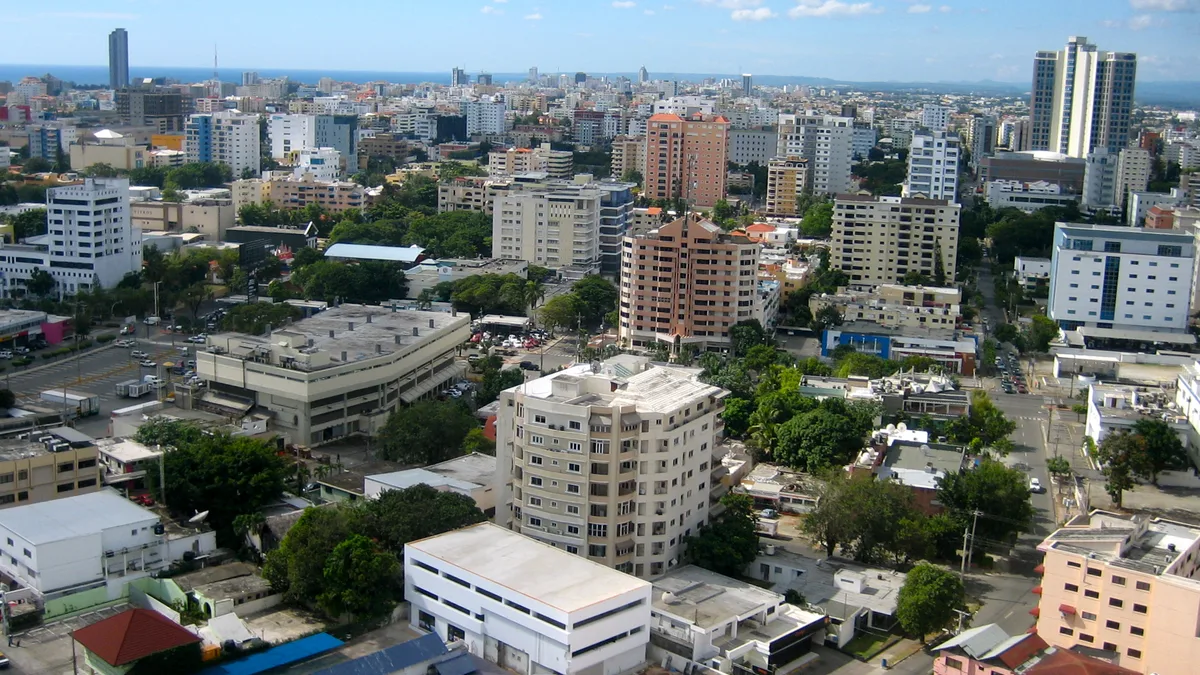
Header photo: Jjc09, Public domain, via Wikimedia Commons. All credits: image credits.