Buying property in Mexico as a foreigner: yes. Where it sits decides how you hold it.
// Short answer
Yes. Foreigners can buy residential property in Mexico. Location decides how you hold it. Within 100 km of a border or 50 km of the coast, the restricted zone, a foreign buyer holds a home through a bank trust (fideicomiso) permitted by the Secretaría de Relaciones Exteriores (SRE). Outside that strip, a foreigner can hold title directly after a written agreement with the SRE.
Rules and rates as of September 2026. Several Mexican figures move every year or are set locally, so check the dated items again before you sign. Every figure links to its source.
On this page
- Can foreigners buy property in Mexico?
- What is Mexico's restricted zone?
- How does a foreigner hold a home inside the restricted zone?
- How does buying property in Mexico work, step by step?
- Is there VAT on buying property in Mexico?
- How is rent taxed for a foreign owner in Mexico?
- What happens when a foreigner sells property in Mexico?
Can foreigners buy property in Mexico?
Yes. Under Article 27 of the Mexican Constitution, foreigners can own property outside the restricted zone, provided they agree before the SRE to treat themselves as Mexican nationals regarding that property. Inside the zone, 100 km from a border or 50 km from a beach, foreigners cannot hold direct title and buy a home through a bank trust.
The agreement is known as the Calvo clause. The foreign buyer agrees not to invoke their own government's protection in matters concerning that property. It is set out in the Constitution and in Article 10-A of the Ley de Inversión Extranjera (LIE).
What a foreign owner holds, in each case: foreign property ownership in Mexico, explained.
Sources
What is Mexico's restricted zone?
The restricted zone (zona restringida) is the strip of Mexican territory 100 km wide along the borders and 50 km wide along the beaches, as defined in Article 2 of the Ley de Inversión Extranjera. Inside it, a foreigner cannot hold direct title to land. Residential property is held through a bank trust instead.
Check the property's distance from the coast or border first. The SRE trust permit application itself asks for it.
How the trust works: the fideicomiso and the restricted zone, explained.
Sources
How does a foreigner hold a home inside the restricted zone?
Through a fideicomiso. The SRE permits a Mexican bank to acquire the property as trustee, and the foreign buyer is the beneficiary with the use and benefit of the property (LIE Article 11). The permit covers property destined for residential use. The trust runs for up to 50 years and can be extended on request.
The bank holds title. The trust deed, with the SRE permit, is the buyer's title document. According to IBG Legal, extension is not automatic: the beneficiary has to request it from the SRE before the term ends.
The full mechanics: Mexico's fideicomiso, explained.
Sources
How does buying property in Mexico work, step by step?
Two steps are required by law. First the SRE step: outside the zone, the buyer's written agreement or statement to the SRE; inside it, the bank requests the SRE trust permit. Then the deed (escritura pública) is signed before a notary, who also calculates and pays the income tax due on the sale.
- SRE step. Outside the zone, nationals of countries with which Mexico has diplomatic relations file a written statement under LIE Article 10-A. Inside the zone, the bank's fiduciary delegate applies for the trust permit.
- Deed before a notary. The transfer is formalised in an escritura pública. The notary calculates the seller's income tax, records it in the deed and pays it within 15 days.
A non-resident buyer is not obliged to hold a Mexican tax number (RFC). Under Article 27 of the Código Fiscal de la Federación, residents abroad without a permanent establishment may register voluntarily. The SRE itself notes that its standard permit deadline is suspended and manual processing takes longer, so do not plan around a fixed number of days.
The ownership rules behind step one: foreign ownership in Mexico.
Sources
Is there VAT on buying property in Mexico?
Not on a home. Under Article 9 of Mexico's VAT law (LIVA), the sale of land is exempt, and so is the sale of buildings destined or used for housing. That covers new-build residential condos and houses. VAT at 16% applies only to the building portion of non-housing construction, such as hotel or commercial units.
Where only part of a building is housing, only that part is exempt, and hotels are excluded. According to Elconta, buyers of hotel-style or commercial units should expect the price to be split between land and construction for that reason.
Buyers also commonly budget for a local acquisition tax (ISAI), set by the state or municipality. No official rate was confirmed for this page as of September 2026, so ask the notary for the figure in your municipality. Every tax in one place: Mexico property tax for foreigners.
Sources
How is rent taxed for a foreign owner in Mexico?
Rent from Mexican property paid to a non-resident is taxed at 25% of the gross rent, without any deduction (LISR Article 158). A Mexican-resident payer withholds it. If the tenant is also a resident abroad, the owner pays the tax by filing within 15 days of receiving the rent. Furnished lets also carry 16% VAT.
Platforms such as Airbnb withhold 4% income tax on lodging (LISR Article 113-A). How that withholding interacts with the 25% rule for a non-resident host was not settled in the sources for this page. The detail: Mexico property tax for foreigners. The published yield figures: Mexico rental yields.
Sources
What happens when a foreigner sells property in Mexico?
A non-resident seller pays 25% of the total sale price, with no deduction (LISR Article 160). The alternative is tax on the gain at the top individual rate, which needs a representative in Mexico and a sale in a public deed. The notary calculates the tax, records it in the deed and pays it within 15 days.
Secondary summaries (SDV Asesores) put that top rate at 35%. The residents' home-sale exemption, up to 700,000 UDIS, sits in the part of the law for Mexican tax residents. Step by step: selling property in Mexico as a foreigner.
Sources
// Buying in Mexico?
Every listing in your budget, ranked on net yield, appreciation and resale. Any market with public listing data; book a free call first so I can confirm your city has the data.
See the $499 report, page by pageFrequently Asked Questions
Can foreigners buy beachfront property in Mexico?
Do I need to live in Mexico to buy property there?
How long does a fideicomiso last?
Is there VAT on a new condo in Mexico?
Is a notary required to buy property in Mexico?
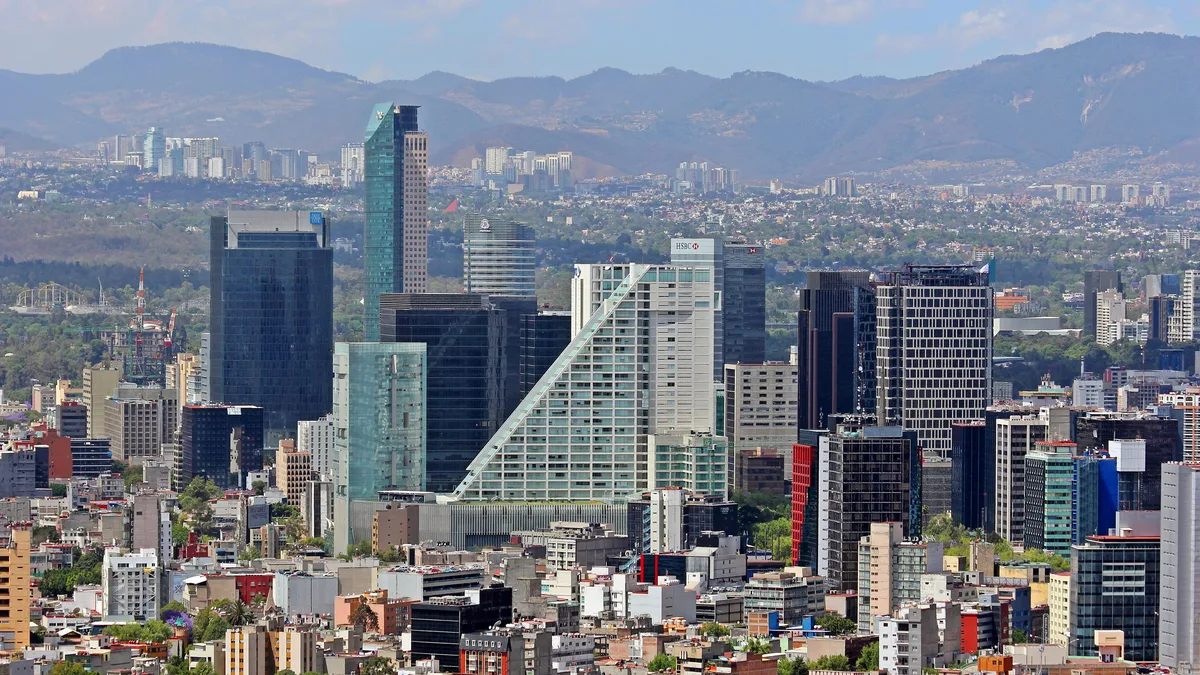
Header photo: Alejandro Islas Photograph AC, CC BY 2.0, via Wikimedia Commons. All credits: image credits.