Buying property in Costa Rica as a foreigner: yes, titled land. The beach is the exception.
// Short answer
Yes. Costa Rica's Constitution gives foreigners the same individual rights as Costa Ricans, within the limits set by law, and no general statute barring foreigners from owning titled land was found. The exception is the coast: the first 200 metres from high tide belong to the State, and a foreigner can hold that land only by concession, and only after five years' residence.
Rules and rates as of September 2026. Coastal concessions are run by each municipality and several tax points were unsettled when this was written, so check the dated items with a Costa Rican lawyer before you sign. Every figure links to its source.
On this page
- Can foreigners buy property in Costa Rica?
- What is the maritime zone in Costa Rica?
- How does buying property in Costa Rica work, step by step?
- What does it cost to buy property in Costa Rica?
- What taxes does a property owner pay in Costa Rica each year?
- Can I send money to Costa Rica and pay in US dollars?
- What happens when a foreigner sells property in Costa Rica?
Can foreigners buy property in Costa Rica?
Yes. Article 19 of the Constitution gives foreigners the same individual and social rights as Costa Ricans, with the limits the Constitution and the laws set. No statute barring foreigners from owning titled land in general was found. The limits that exist cover the coastal zone and certain state land.
According to AEGIS Legal Partners (July 2026), outside the maritime zone a foreign national can buy titled property directly, with no residency requirement. Every rule that touches foreign ownership: foreign property ownership in Costa Rica, explained.
Sources
What is the maritime zone in Costa Rica?
The Zona Marítimo Terrestre is a 200 metre strip along both coasts, measured from the ordinary high-tide line. It belongs to the State and cannot be sold. The first 50 metres are the public zone and cannot be occupied. The other 150 metres, the restricted zone, can only be held by municipal concession.
A concession is a right of use for 5 to 20 years, not ownership. Under Article 47 of Law 6043 it cannot go to a foreigner with less than five years' residence, or to an entity more than 50% foreign-owned. The concession and how it is registered: Costa Rica property title and the maritime zone, explained.
How does buying property in Costa Rica work, step by step?
Check the title in the Registro Nacional and the survey plan, pay through a controlled channel, sign the transfer deed before a notary, and the notary files it with the Registro Nacional. In Costa Rica a notary must be a lawyer with a postgraduate in notarial and registry law.
- Title check. According to AEGIS Legal Partners (July 2026), buyers get a registry report on the property's folio real number and check that the plano catastrado (survey plan) matches the registry on area and boundaries.
- Other checks. The same source lists the municipal land-use certificate, a water availability letter and proof that municipal taxes are paid, because unpaid property tax stays with the property.
- Funds. As market practice, AEGIS describes funds held by a SUGEF-registered escrow agent. No statute making escrow compulsory for private sales was found.
- Deed. The notary drafts the transfer deed (escritura de traspaso). For USD 10,000 or more the buyer makes a sworn declaration of the origin of the funds.
- Registration. The notary files the deed with the Registro Nacional.
A buyer abroad can sign through a special power of attorney granted in a public deed. What the title is and how to read it: Costa Rica property title, explained.
Sources
What does it cost to buy property in Costa Rica?
Transfer tax of 1.5%, which by law buyer and seller owe in equal parts, a registry fee of 0.5% under the fee law, plus stamps and notary fees set by an official schedule. AEGIS Legal Partners puts total closing costs at about 3.5% to 5% or more of the price.
The 0.5% registry fee comes from the fee law as reformed in 1998; confirm the current rate with your notary. Notary fees carry 13% IVA. Every cost in one table: Costa Rica property buying costs.
Sources
What taxes does a property owner pay in Costa Rica each year?
Municipal property tax of 0.25% of the registered value, nationwide. Homes whose construction value exceeds CRC 143,000,000 in 2026 also pay the solidarity tax, at 0.25% to 0.55%. If you let the property, rent under the capital-income regime is taxed at 15% after a flat 15% deduction.
That rent rule works out to 12.75% of gross rent, filed monthly. How it applies to a landlord who lives abroad was not settled in the sources for this page, as of September 2026. Short-term rentals also charge 13% IVA and must be registered with the tourism board, the ICT. The full breakdown: Costa Rica property tax for foreigners.
Sources
Can I send money to Costa Rica and pay in US dollars?
Yes. The central bank law requires the colón to stay freely convertible, and contracts in foreign currency are valid and enforceable. No foreign-exchange approval for buying or selling property was found. What applies instead is the notary's source-of-funds record, with a sworn declaration at USD 10,000 or more.
No non-resident mortgage terms were verified for this page, so plan on cash. The money trail in full: transferring money to Costa Rica for a property.
Sources
What happens when a foreigner sells property in Costa Rica?
The gain is taxed at 15%. For property bought before 1 July 2019, the owner can instead choose to pay 2.25% of the sale price on the first sale. When the seller is not domiciled in Costa Rica, the buyer withholds 2.5% of the agreed price, and the registry will not record the transfer until it is paid.
Whether that 2.5% is a prepayment or the final tax was not settled as of September 2026. Step by step: selling property in Costa Rica as a foreigner.
Sources
// Buying in Costa Rica?
Every listing in your budget, ranked on net yield, appreciation and resale. Any market with public listing data; book a free call first so I can confirm your city has the data.
See the $499 report, page by pageFrequently Asked Questions
Can foreigners buy property in Costa Rica?
Do I need to live in Costa Rica to buy property there?
Can a foreigner buy beachfront property in Costa Rica?
Who handles the purchase in Costa Rica?
Can I get a mortgage in Costa Rica as a non-resident?
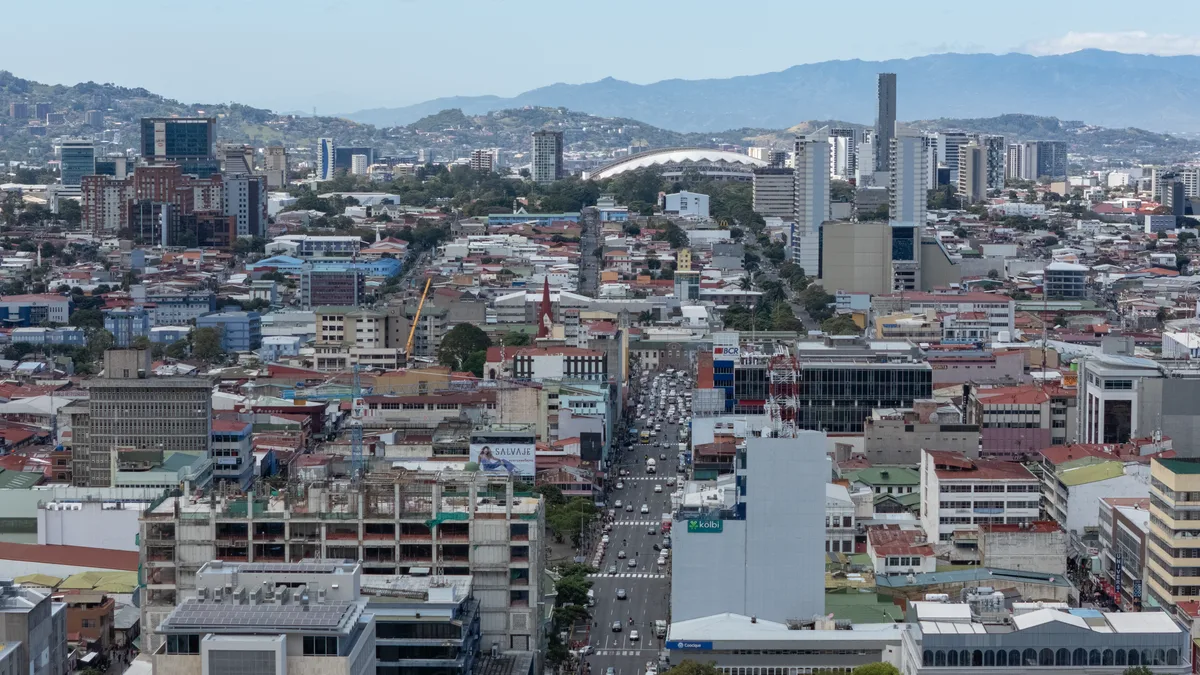
Header photo: Spicypepper999, CC0, via Wikimedia Commons. All credits: image credits.