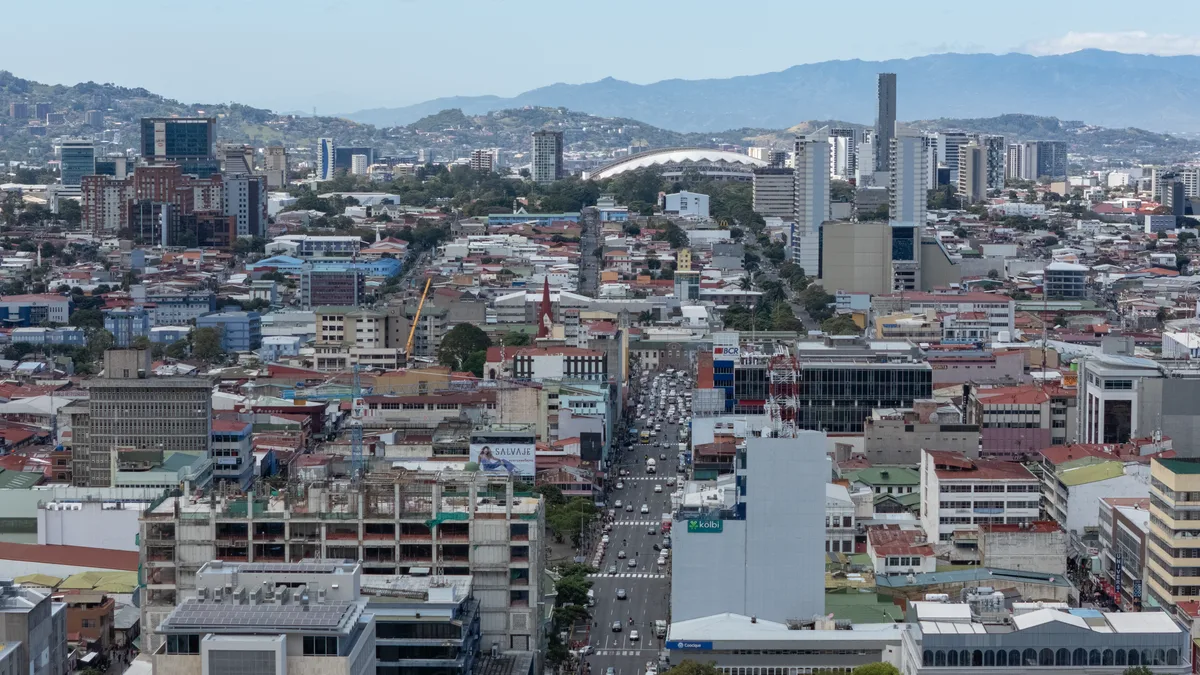
Costa Rica property buying costs: every one-off fee, with the rule that sets it.

// Short answer
Buying in Costa Rica costs four things on top of the price: the 1.5% transfer tax, the registry fee, stamps, and the notary's fee under an official schedule. AEGIS Legal Partners puts the total at about 3.5% to 5% or more of the price. Here is each one, and which figures could not be confirmed.
Rules and rates as of September 2026. Coastal concessions are run by each municipality and several tax points were unsettled when this was written, so check the dated items with a Costa Rican lawyer before you sign. Every figure links to its source.
On this page
- What are the one-off costs of buying property in Costa Rica?
- Who pays the transfer tax in Costa Rica?
- How much does a notary charge in Costa Rica?
- Is there VAT on buying property in Costa Rica?
- Does buying through a company avoid the transfer tax?
- Is the 20% transfer tax reduction for residents still available?
What are the one-off costs of buying property in Costa Rica?
Transfer tax at 1.5%, owed by buyer and seller in equal parts by law. A registry fee of 0.5% on the transfer, and 0.1% on a mortgage. Stamps. Notary fees under an official schedule, plus 13% IVA. AEGIS Legal Partners (July 2026) puts the total at about 3.5% to 5% or more.
| Cost | Rate or amount | Charged on |
|---|---|---|
| Transfer tax (Law 6999) | 1.5%, buyer and seller liable in equal parts | Higher of price and registered value, according to PwC |
| Registry fee on the transfer | 0.5% (fee law as reformed in 1998; confirm it is current) | Higher of the deed value and the value in the Registro Único de Valores |
| Registry fee on a mortgage | 0.1% | Mortgage |
| Notary fees | Official schedule; current scale not found for this page | Deed, plus 13% IVA according to Punto Jurídico |
| Agent commission | No norm found in the sources for this page | Ask before you sign |
Sources
- Ley 6999, transfer tax on real estate (1985)
- Ministerio de Hacienda: draft resolution on transfer tax, Art. 6 (2025)
- PwC Worldwide Tax Summaries: Costa Rica, other taxes (reviewed June 2026)
- Ley 4564 registry fees and Código Notarial, Ley 7764 (Justia mirror)
- Punto Jurídico: IVA on property transfers (2019)
- AEGIS Legal Partners: real estate due diligence (July 2026)
Who pays the transfer tax in Costa Rica?
By law, both. Article 6 of Law 6999 makes the seller and the buyer liable for the 1.5% transfer tax in equal parts. According to PwC (reviewed June 2026), the tax is charged on the higher of the sale price and the property's registered value, so a low declared price does not lower it.
Who actually bears it is a point to settle in the contract. For the taxes after purchase: Costa Rica property tax for foreigners.
Sources
How much does a notary charge in Costa Rica?
Notary fees follow an official schedule, the arancel. The Colegio de Abogados sets it and the Ministry of Justice issues it by executive decree, under Article 166 of the Notarial Code. The current percentage scale for a sale deed could not be confirmed for this page as of September 2026.
Ask the notary for a written quote under the schedule. According to Punto Jurídico (2019), notary fees carry 13% IVA. The general IVA rate of 13% is confirmed by PwC and by Hacienda.
Sources
Is there VAT on buying property in Costa Rica?
Not on the property itself, according to Punto Jurídico (2019): the transfer of real estate, new or resale, does not carry IVA because it is taxed by the transfer tax. The notary's fees do carry IVA at 13%. That article was written just before the IVA law took effect on 1 July 2019.
The exempting article of the IVA law itself was not located for this page. Confirm the treatment of a new build with your notary.
Does buying through a company avoid the transfer tax?
Not on a change of control. According to PwC (reviewed June 2026), the transfer tax also applies to indirect transfers through a change of company control. Hacienda's 2025 draft resolution requires the transfer-tax form when more than 50% of the shares of a property-holding company change hands.
A company that holds property also pays the legal-entities tax each January and files an annual beneficial-ownership return. Detail: Costa Rica property tax for foreigners.
Sources
Is the 20% transfer tax reduction for residents still available?
Not for new applicants. Law 9996 gave residents under that law a 20% reduction of the transfer tax on property bought during its term, if the beneficiary is the registered owner. The window to opt into its benefits closed on 14 July 2026. If the property is resold within that period, the exempted tax must be paid back.
Those who took the benefits up keep them for ten years from the grant. The residency side of Law 9996: foreign ownership in Costa Rica, explained.
// Buying in Costa Rica?
Every listing in your budget, ranked on net yield, appreciation and resale. Any market with public listing data; book a free call first so I can confirm your city has the data.
See the $499 report, page by pageFrequently Asked Questions
How much are closing costs in Costa Rica?
What is the transfer tax rate in Costa Rica?
What is the registry fee on a Costa Rican property transfer?
How much is agent commission in Costa Rica?
Do notary fees in Costa Rica include VAT?
Header photo: Spicypepper999, CC0, via Wikimedia Commons. All credits: image credits.