Selling property in Costa Rica as a foreigner: the gain, the withholding, the wire home.

// Short answer
Selling property in Costa Rica means capital gains tax at 15% on the gain, or 2.25% of the price for property bought before 1 July 2019. When the seller is not domiciled in Costa Rica, the buyer withholds 2.5% of the agreed price and the registry will not record the sale until it is paid. No currency control applies to the proceeds.
Rules and rates as of September 2026. Coastal concessions are run by each municipality and several tax points were unsettled when this was written, so check the dated items with a Costa Rican lawyer before you sign. Every figure links to its source.
On this page
- How much tax does a foreigner pay on selling Costa Rican property?
- What is the 2.5% withholding when a foreigner sells?
- Is the 2.5% withholding the final tax on a Costa Rican sale?
- How does the sale itself work in Costa Rica?
- Can a maritime zone concession be sold to a foreigner?
- Can a foreigner take the sale money out of Costa Rica?
How much tax does a foreigner pay on selling Costa Rican property?
15% on the capital gain, under Article 31 ter of the income tax law. For property bought before the capital-gains rules took effect on 1 July 2019, the owner may instead choose, on the first sale, to pay 2.25% of the sale price. The choice matters most where the gain is large.
A gain on the sale of the taxpayer's habitual home is exempt, including a home held in a company that is clearly used as the owners' habitual home. The seller also carries half of the 1.5% transfer tax by law. All taxes in one place: Costa Rica property tax for foreigners.
Sources
What is the 2.5% withholding when a foreigner sells?
When the seller is not domiciled in Costa Rica, the buyer must withhold 2.5% of the total agreed price and pay it to Hacienda, on account of the capital-gains tax. The Registro Nacional cannot register the transfer until it is paid. The rule is Article 28 ter of the income tax law.
According to Globalex and EY (2025), the procedure is set by Resolution MH-DGT-RES-0051-2025, published on 6 October 2025, with the payment due within 15 days after the month of the sale. Hacienda's 2025 draft resolution sets the base as the agreed price, but not less than Hacienda's official valuation, and applies the habitual-home exception only to sellers domiciled in Costa Rica.
Sources
Is the 2.5% withholding the final tax on a Costa Rican sale?
Not settled as of September 2026. The statute says the 2.5% is withheld on account of the capital-gains tax. Hacienda's draft resolution and EY describe it as single and final. The final text of the implementing resolution was not reviewed for this page, so get a tax adviser's view before you price the sale.
If it is on account, the real tax is 15% of the gain, settled separately. If it is final, 2.5% of the price is the whole tax. Which is cheaper depends on the size of the gain.
Sources
How does the sale itself work in Costa Rica?
The same way as the purchase, in reverse. A notary, who must be a lawyer, executes the transfer deed and files it with the Registro Nacional. A seller abroad can act through a special power of attorney granted in a public deed. The buyer's notary records how the price was paid.
Expect the buyer to run the same checks you ran: the registry report on the folio real, the plano catastrado and proof that municipal taxes are paid, according to AEGIS Legal Partners (July 2026). Unpaid property tax stays with the property. More on the title: Costa Rica property title, explained.
Sources
Can a maritime zone concession be sold to a foreigner?
Only to a buyer who meets Article 47 of Law 6043, and only with express authorisation. A concession cannot be assigned or transferred without the approval of the municipality and the ICT or the land institute; acts that break this are void. A foreigner needs five years' continuous residence to hold one.
Entities holding a concession cannot transfer shares or quotas to foreigners. That narrows the pool of buyers for a coastal concession compared with titled property.
Can a foreigner take the sale money out of Costa Rica?
Yes. The central bank law requires the colón to stay freely convertible, and no foreign-exchange approval for selling property was found. The main exit cost is tax, the 2.5% withholding on the price for a non-domiciled seller, not a currency control. Cash of USD 10,000 or more must be declared at the border.
The money-in side, and the notary's source-of-funds rule: transferring money to Costa Rica for a property.
Sources
// Buying in Costa Rica?
Every listing in your budget, ranked on net yield, appreciation and resale. Any market with public listing data; book a free call first so I can confirm your city has the data.
See the $499 report, page by pageFrequently Asked Questions
What is the capital gains tax rate on Costa Rican property?
Does the buyer really withhold 2.5% of the price?
Is my Costa Rican home exempt from capital gains tax?
Do I need to be in Costa Rica to sell?
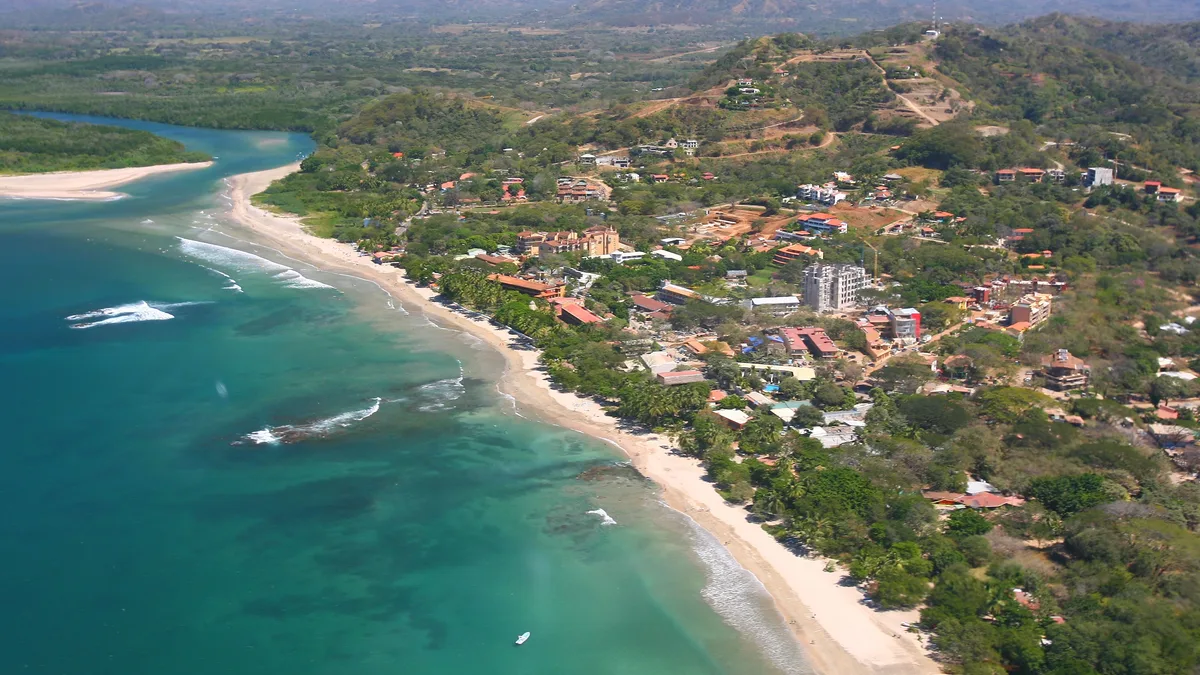
Header photo: Tamarindowiki, CC BY-SA 3.0, via Wikimedia Commons. All credits: image credits.