Dominican Republic property tax for foreigners: on the way in, every year, on the rent, on the way out.

// Short answer
A foreign owner in the Dominican Republic meets tax at four points: a 3% transfer tax on purchase, the annual IPI on holdings above RD$10,695,494 (2026), tax on rent, and tax on the gain when selling. Law 30-26 of June 2026 changes several of these, and its regulations were not issued as of the sources below. Check each rate with the DGII before you rely on it.
Rules and rates as of September 2026. The Dominican Republic's June 2026 tax reform (Law 30-26) was still awaiting its regulations, and several figures here come from secondary sources, so check the dated items with the DGII before you sign. Every figure links to its source.
On this page
- What taxes do you pay when buying property in the Dominican Republic?
- What is the annual property tax (IPI) in the Dominican Republic?
- How is rental income taxed for a non-resident owner in the Dominican Republic?
- What did Law 30-26 change for landlords in 2026?
- What is capital gains tax on Dominican property?
- When does a foreign owner become a Dominican tax resident?
- What tax exemptions does CONFOTUR give property buyers?
What taxes do you pay when buying property in the Dominican Republic?
The real estate transfer tax: 3% of the property value, land plus construction, under Law 173-07, according to Siempre al Día. It is due within 6 months of the transfer, and the property cannot be registered in the buyer's name until it is paid. The registry requires proof of payment.
DR Listings reports that the 3% is charged on the higher of the DGII appraisal and the declared price; this was not confirmed from the DGII. None of the Law 30-26 summaries reviewed lists a change to the transfer tax. A mortgage also attracts a registration tax, commonly 2% of the registered mortgage, which Law 30-26 cuts to 1% in 2027 and removes from 2028, according to Ulises Cabrera and Siempre al Día. All one-off costs: Dominican Republic property buying costs.
Sources
What is the annual property tax (IPI) in the Dominican Republic?
The Impuesto al Patrimonio Inmobiliario is 1% of the total value of an individual's real estate holdings above an exempt threshold. For 2026 the DGII threshold is RD$10,695,494.00, up from RD$10,190,833 in 2025. It is adjusted every year for inflation, so check the new figure each January.
- Legal basis: Law 253-12, which amended Law 18-88. The 2026 figure was set by DGII resolution DDG-AR1-2026-00001 of 15 January 2026, as reported by Listín Diario.
- Payment: two instalments; a secondary source gives 11 March and 11 September.
- Fideicomiso: property held in a fideicomiso is taxed at 1% on its total value with no exempt threshold, according to El Inmobiliario.
Some older guides, including Global Property Guide's September 2025 page, still show a threshold of about DOP 7.7M. Use the DGII's current figure.
Sources
How is rental income taxed for a non-resident owner in the Dominican Republic?
The most-cited treatment is 27% withheld from the gross rent as a single, final tax, under Article 305 of the Tax Code, which covers Dominican-source income paid to non-residents. The tenant or property manager withholds and pays it to the DGII. Global Property Guide, DR Listings and a 2024 law-firm guide published by Airbnb all state it.
This is not settled beyond doubt. One 2026 source describes progressive rates with 10% withheld by the property manager and an annual March filing, and does not mention 27%. DGII confirmation for rent specifically was not found. Tax treaties can lower the rate: the same 2024 guide gives 18% for Canada-resident owners. Ask a Dominican tax adviser before you set a rent.
Sources
What did Law 30-26 change for landlords in 2026?
It raised the withholding on rent paid to individual landlords from 10% to 15% from 1 July 2026, according to Siempre al Día and Ulises Cabrera. That is the regime for residents. It does not replace the Article 305 withholding that applies to rent paid to non-residents.
Law 30-26 also cut the donations tax between direct descendants, spouses and close relatives from 27% to 3%, per Ulises Cabrera. These are secondary summaries; the official law text could not be read for this page, and the regulations were pending.
Sources
What is capital gains tax on Dominican property?
It is in transition. Before Law 30-26, gains were taxed as ordinary income, with the cost indexed for inflation. Law 30-26 introduced a 10% flat, final tax on real estate gains by individuals, per Siempre al Día. Its start date, and whether it applies to non-residents, were not settled as of September 2026.
Siempre al Día and Ulises Cabrera report it applies from promulgation in June 2026; Melo, Martínez & Contín report fiscal year 2027. The taxable base, including inflation adjustment and inherited property, was not yet defined when El Inmobiliario reported on 25 June 2026. This page does not state a rate for a foreign or non-resident seller: wait for the DGII regulation. The exit in full: selling property in the Dominican Republic as a foreigner.
Sources
When does a foreign owner become a Dominican tax resident?
After more than 182 days in the Dominican Republic in a year, per the 2024 law-firm guide. A resident pays income tax on a progressive scale. For fiscal 2026 PwC lists an exempt band to RD$416,220, then 15%, 20% and a top rate of 25% above RD$867,123.
From fiscal 2027 Law 30-26 raises the exempt band to RD$480,000 and sets a top rate of 27% above RD$4,800,000, per PwC and Melo, Martínez & Contín. A resident operating rentals registers in the RNC with the DGII and files the IR-1 annual return by 31 March.
Sources
What tax exemptions does CONFOTUR give property buyers?
First purchasers of units in projects classified under Law 158-01 are exempt from the 3% transfer tax and from IPI. The exemption is processed through the Ministry of Finance, which refers it to the DGII, and the project needs a CONFOTUR classification resolution. A later resale to a third party does not carry the exemption.
The IPI exemption period is widely quoted as 15 years, following Law 195-13, but DGII help-community answers still quote 10 years, and whether the clock starts at the project's completion or at the purchase is unclear. Law 30-26 bars stacking more than one incentive regime for the same activity, which trade press says creates uncertainty for condo-hotel projects. A 2024 draft reform would have repealed key CONFOTUR articles; it was withdrawn on 19 October 2024. Status as of September 2026: confirm the exemption for your specific project in writing.
Sources
- DGII help community: CONFOTUR first purchasers (July 2022)
- DGII help community: CONFOTUR exemptions, ID 4070 (2020)
- DMK Abogados: summary of Law 195-13 amending Law 158-01
- Guzmán Ariza: Law 158-01 as amended by Law 195-13
- El Inmobiliario: Law 30-26 and the CONFOTUR model (June 2026)
- Presidencia: fiscal modernisation bill withdrawn (October 2024)
- CONFOTUR (Ministry of Tourism): what CONFOTUR is
// Buying in Dominican Republic?
Every listing in your budget, ranked on net yield, appreciation and resale. Any market with public listing data; book a free call first so I can confirm your city has the data.
See the $499 report, page by pageFrequently Asked Questions
Do foreigners pay more property tax in the Dominican Republic?
What is the IPI threshold for 2026?
Is the 10% capital gains tax in force for foreign sellers?
Does CONFOTUR still exist?
How long does the CONFOTUR IPI exemption last?
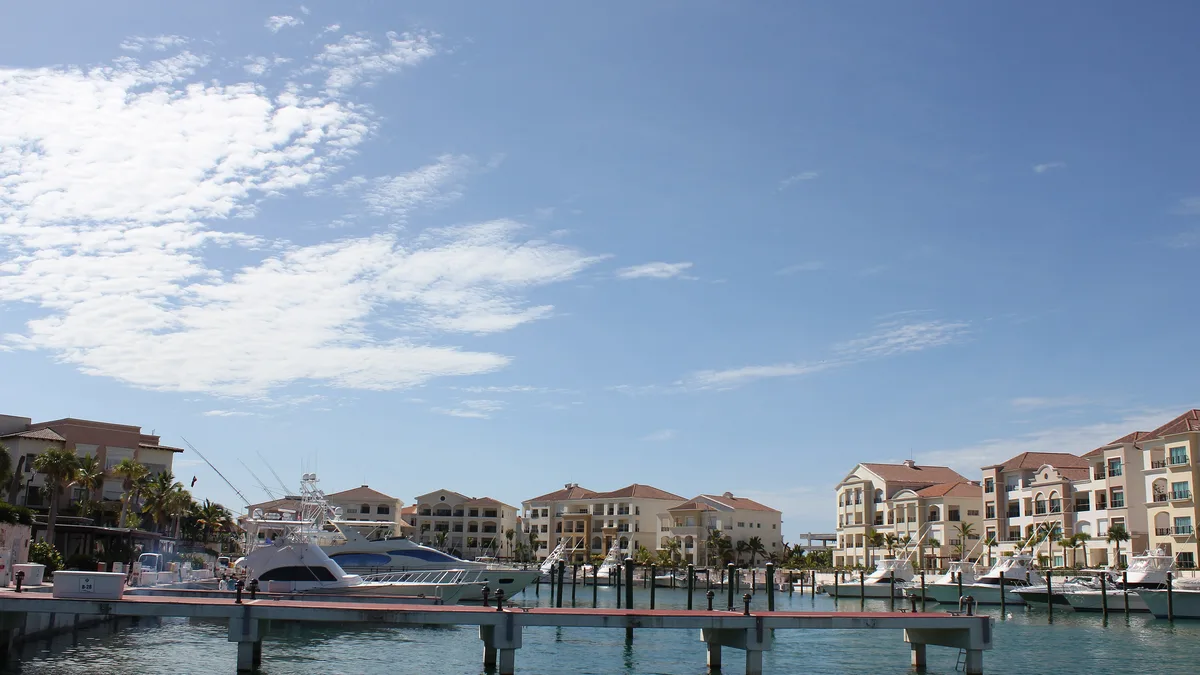
Header photo: https://www.flickr.com/photos/uira/, CC BY-SA 2.0, via Wikimedia Commons. All credits: image credits.