Transferring money to the Dominican Republic for a property: no controls, one registration that matters at the exit.

// Short answer
You do not need approval to send money into the Dominican Republic to buy property. According to the U.S. State Department, the peso is freely convertible and investment funds can generally be transferred and repatriated without restriction. Two things still matter: proving where the money came from, and registering the investment with ProDominicana so you can take it out later.
Rules and rates as of September 2026. The Dominican Republic's June 2026 tax reform (Law 30-26) was still awaiting its regulations, and several figures here come from secondary sources, so check the dated items with the DGII before you sign. Every figure links to its source.
On this page
- Are there exchange controls on sending money to the Dominican Republic?
- What proof of funds does a foreign buyer need?
- Should I register my purchase with ProDominicana?
- Do I have to declare cash when entering the Dominican Republic?
- Can I take the money out when I sell in the Dominican Republic?
- Should I borrow in the Dominican Republic instead of transferring cash?
Are there exchange controls on sending money to the Dominican Republic?
No. According to the U.S. State Department's 2025 report, the Dominican exchange system has free convertibility of the peso, and there are generally no restrictions on foreign investors converting, transferring or repatriating investment funds. The Central Bank runs a managed float, and the country has accepted IMF Article VIII obligations.
Article VIII means no restrictions on current international payments. The full buying process: buying property in the Dominican Republic as a foreigner.
What proof of funds does a foreign buyer need?
Proof of the origin of the money. Anti-money-laundering rules require it for a purchase, according to a Dominican attorney quoted by El Inmobiliario in June 2026. Keep the bank records showing the money leaving your own account and arriving for the purchase, in your own name.
The registry itself asks a foreign buyer for a passport plus a second national ID from their country of origin, so the names on the transfer and on the IDs should match.
Sources
Should I register my purchase with ProDominicana?
Yes, if you want a clean exit. Foreign investment is registered with ProDominicana under Law 16-95 and Decree 214-04, within 180 calendar days, according to the U.S. State Department. Missing it carries no sanction, but the certificate is what you need in practice to repatriate sale proceeds and buy foreign exchange for the transfer abroad.
ProDominicana issues the certificate in about 15 business days, for a fee that varies with the amount. Whether an individual's home purchase, as opposed to capital put into a company, is registrable is stated by secondary sites but was not confirmed from an official ProDominicana page. Ask your lawyer to file it with the purchase.
Do I have to declare cash when entering the Dominican Republic?
Yes, for US$10,000 or more. Travellers entering or leaving with cash of that amount, or the equivalent in pesos, other currency or bearer instruments, must declare it to the Dirección General de Aduanas on the official form and carry documents proving its lawful origin. No tax is charged on carrying money.
A bank transfer leaves the paper trail that a purchase needs anyway.
Can I take the money out when I sell in the Dominican Republic?
Generally yes. The U.S. State Department reports that there are generally no restrictions on repatriating investment funds from the Dominican Republic. In practice the ProDominicana registration certificate is needed to repatriate sale proceeds, and the foreign investor must notify the Central Bank within 60 days of a remittance.
The tax on the gain is the open question on the way out: selling property in the Dominican Republic as a foreigner.
Should I borrow in the Dominican Republic instead of transferring cash?
Plan on transferring cash. Several Dominican banks lend to foreigners with legal residency, typically 70% to 90% of appraised value, according to El Inmobiliario in August 2026. It reported average mortgage rates in early 2026 of 11.93% at multiple banks and 12.96% at savings and loan associations. No terms for non-residents were confirmed.
If a lender offers terms, get them in writing before you pay a deposit.
Sources
// Buying in Dominican Republic?
Every listing in your budget, ranked on net yield, appreciation and resale. Any market with public listing data; book a free call first so I can confirm your city has the data.
See the $499 report, page by pageFrequently Asked Questions
Is there a limit on how much money I can send to the Dominican Republic?
What is the ProDominicana registration?
Do I need to declare cash at the Dominican border?
Can I repatriate the proceeds after selling Dominican property?
Can a non-resident get a Dominican mortgage?
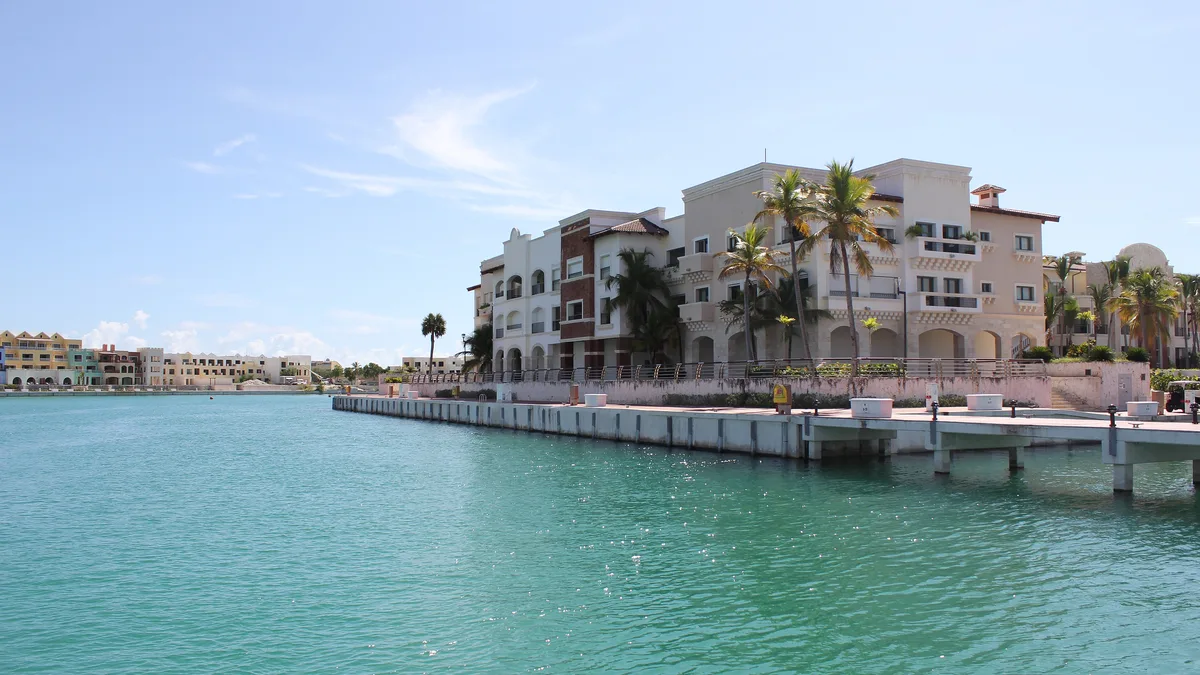
Header photo: https://www.flickr.com/photos/uira/, CC BY-SA 2.0, via Wikimedia Commons. All credits: image credits.