Selling property in Colombia as a foreigner: the two-year line, the withholding, the transfer out.

// Short answer
Two years decides the tax. A gain on Colombian property held two years or more is taxed at 15% as ganancia ocasional. Under two years it is ordinary income, taxed at the flat 35% non-resident rate. The sale closes by deed before a notary, and a registered foreign investment lets you send the proceeds abroad.
Rules and rates as of September 2026. Colombian tax law was amended by emergency decree in 2026 and the minimum wage behind the visa threshold is under a transitional decree, so check the dated items again before you sign. Every figure links to its source.
On this page
How is the gain taxed when a foreigner sells Colombian property?
It depends on how long you held it. Property held as a fixed asset for two years or more produces ganancia ocasional, taxed at 15% for non-resident individuals. Property held for less than two years produces ordinary income, and non-resident individuals pay a flat 35% on Colombian-source taxable income.
The 15% rate applies since Ley 2277 de 2022 raised it from 10%. Some commercial guides still show 10%, which is out of date. Every rate in one place: Colombia property tax for foreigners.
Sources
What is the 1% withholding on a Colombian property sale?
An individual selling a fixed asset suffers 1% withholding at source on the sale value, and for real estate it is paid before the notary executes the transfer. It is a withholding, not the final tax. Whether and how it applies when the seller is a non-resident was not confirmed for this page.
Other withholding rules may apply to a non-resident seller. Ask a Colombian tax adviser before you agree the closing date.
Can I take the sale proceeds out of Colombia?
Yes, if the investment was registered with Banco de la República. Once registered, the investor may remit abroad in freely convertible currency the sums received from selling the investment. The conditions in force at registration cannot be changed to the investor's detriment, except temporarily when reserves fall below three months of imports.
That is why the money route on the way in matters on the way out: transferring money to Colombia for a property.
How does a property sale close in Colombia?
By escritura pública, a deed signed before a notary, which is then registered at the ORIP, the public registry. The buyer will review the Certificado de Tradición y Libertad first. There is no 2% consumption tax on property sales today: it was struck down by the Constitutional Court in 2019.
A notary is mandatory. The registry certificate the buyer will ask for: the certificado de tradición y libertad, explained.
Sources
Who pays the agent's commission when you sell in Colombia?
According to Global Property Guide, the seller pays agent commission of 3% to 4%, plus VAT, and round-trip transaction costs run from 5.0% to 8.5%. That page was last updated in September 2025 and shows VAT at 16% while the general rate is 19%, so treat it as a reference only.
Agree the commission in writing with the agent before listing. The full guide: buying property in Colombia as a foreigner.
// Buying in Colombia?
Every listing in your budget, ranked on net yield, appreciation and resale. Any market with public listing data; book a free call first so I can confirm your city has the data.
See the $499 report, page by pageFrequently Asked Questions
What is capital gains tax on property in Colombia for non-residents?
Is the Colombian capital gains rate still 10%?
Can a foreigner repatriate money after selling property in Colombia?
Does the seller pay 1% at the notary in Colombia?
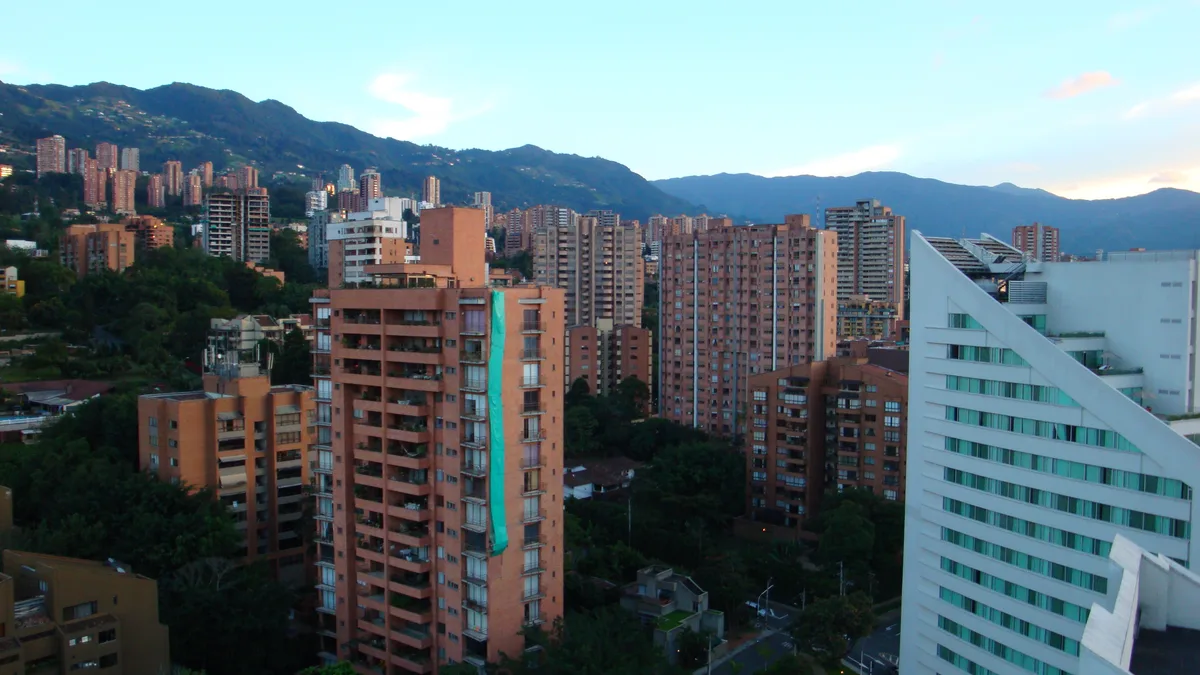
Header photo: User: (WT-shared) CONOCER at wts wikivoyage, Public domain, via Wikimedia Commons. All credits: image credits.