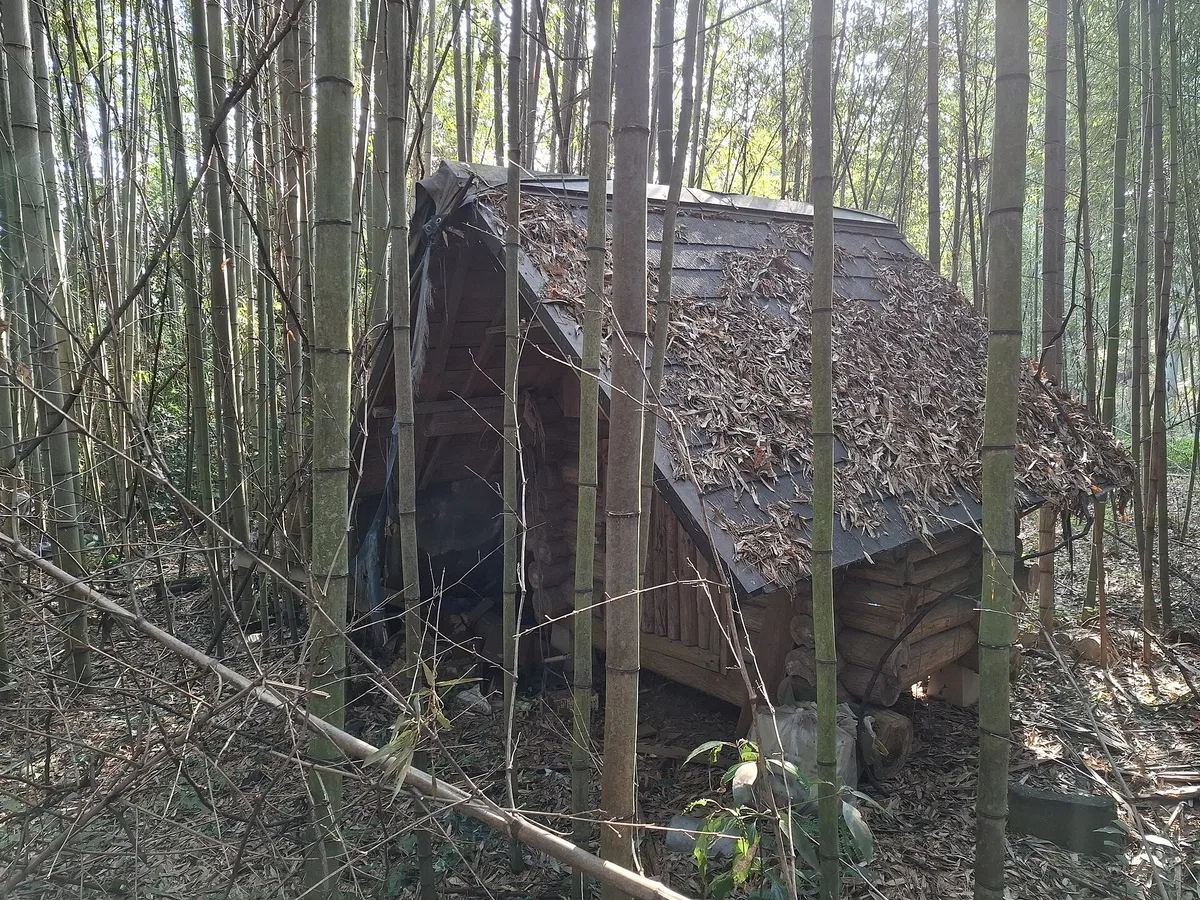
Japan's akiya houses: the price can be zero. The purchase is not.
// Short answer
An akiya, a vacant Japanese house, can be listed for next to nothing, sometimes for nothing at all. The costs that follow are set by rules, not by the seller: purchase taxes charged on the government's assessed value, an agent's fee that can be larger than the price, a report to the Ministry of Finance that a non-resident owes even on a zero-yen purchase, and a building that may predate Japan's 1981 seismic standard.
Rules as of October 2026. Japan's treatment of foreign buyers is under policy review; tax reliefs carry end dates. Nothing here is tax or legal advice for your own case.
On this page
Can a foreigner buy an akiya in Japan?
Yes, today. Japan regulates foreign purchases by reporting after the fact, not by approval: no permission is needed to buy, and a non-resident files a report with the Minister of Finance after the purchase. Foreign buyers are under policy review in 2026, so check the rules again before you commit.
Akiya are listed by municipalities on their own vacant-house banks, and the Ministry of Land, Infrastructure, Transport and Tourism set up a national bank that searches them in one place. What is specific to a foreign buyer is the reporting below.
The full buying process for a foreigner: can foreigners buy property in Japan.
Sources
Does a non-resident have to report an akiya purchase?
Yes, even at zero yen. A non-resident who acquires real property in Japan must file a post-transaction report, Form No. 22, with the Minister of Finance through the Bank of Japan within 20 days. The Ministry's 2026 FAQ says there is no minimum amount or area, so a zero-yen acquisition or an inheritance is reportable too.
Since 1 April 2026 the old exemptions narrowed: buying a home to live in yourself is no longer exempt, and buying from another non-resident is no longer exempt. Holiday homes never counted as residential use. Failing to report, or reporting falsely, can carry up to six months' imprisonment or a fine of up to JPY 500,000.
A second change applies to everyone, Japanese included. From 5 October 2026, anyone registering as the owner must also declare their nationality to the registry, which the Ministry of Justice says is used to identify the law that applies when the owner dies. For a non-Japanese owner, the name in Roman letters is recorded on the register.
Sources
What taxes do you pay on a cheap akiya?
Purchase taxes are charged on the government's assessed value, not on the price. Real estate acquisition tax is 3% for land and residential buildings acquired by 31 March 2027, with residential land taxed on half its assessed value. Registration and license tax on land is 1.5% until 31 March 2029, and 2% on the building unless it qualifies for a reduced rate.
That is the akiya trap. A house sold for one yen still has an assessed value, and the taxes follow the assessed value. Ask for the fixed asset tax assessment certificate before you agree a price: it is the number the taxes will be built on.
Then the agent. Since 1 July 2024 the brokerage fee on a property of JPY 8 million or less may go up to JPY 300,000 plus consumption tax, JPY 330,000, from each side. On a cheap akiya the fee can be bigger than the price. A judicial scrivener files the registration, for a fee on top. Every line: Japan property buying costs.
Sources
What should you check about the house itself?
When it was built. The Ministry of Land, Infrastructure, Transport and Tourism says buildings built before 1981 were built to the old seismic standard, before the Building Standards Act requirements were strengthened, and many of them lack adequate earthquake resistance. Its advice is a seismic diagnosis first, then retrofit or rebuild if needed.
National and local governments run subsidy schemes for seismic diagnosis and retrofit, and your municipality's office is the place to ask which apply to the house. The Ministry also warns that it does not carry out diagnoses itself: anyone claiming to work on its behalf is not.
An akiya is often old by definition, so the age of the building and the cost of making it safe are the numbers that decide the deal, more than the price.
Sources
What does an akiya cost to hold?
Fixed asset tax of 1.4% and city planning tax of up to 0.3% a year on the assessed value. Land under a house gets relief, taxed on one sixth of its value up to 200 m2. Under the 2023 amendment to the Vacant Houses Act, a neglected vacant house can lose that relief if the owner ignores the municipality's guidance and receives a formal recommendation.
That is the second akiya trap. The law now targets not only the dangerous vacant houses but those likely to become dangerous if left alone, the kanri fuzen akiya. An owner abroad who leaves the house empty and unmaintained can see the land tax base jump from one sixth to the full value. Budget for upkeep, or for someone local to do it.
The yearly taxes in full: Japan property tax for foreigners. Italy's version of the same idea: Italy's 1 euro houses.
Sources
// Buying in Japan?
Every listing in your budget, ranked on net yield, appreciation and resale. Any market with public listing data; book a free call first so I can confirm your city has the data.
See the $499 report, page by pageFrequently Asked Questions
Can foreigners buy akiya in Japan?
Do I have to report a free akiya?
Why are the taxes high on a cheap akiya?
How much can a Japanese agent charge on a cheap house?
Header photo: Kuroshio no Neko, CC BY 4.0, via Wikimedia Commons. All credits: image credits.