Italy's 1 euro houses: the price is 1 euro. The purchase is not.
// Short answer
The 1 euro is real. It is also the smallest number in the deal. The registration tax on a 1 euro house has a legal minimum of EUR 1,000, comuni ask for a EUR 5,000 guarantee bond, and the terms set deadlines to design, start and finish a renovation you pay for. Below: two comuni's own terms, read in full, and the tax that applies whatever the price.
Tax rules as of October 2026. Each comune sets its own 1 euro terms and changes them by resolution; the two examples here are dated and named. Check the terms in force before you apply.
On this page
Are Italy's 1 euro houses real?
Yes. They are schemes run by individual comuni, usually small towns with empty historic centres, where private owners agree to sell for a symbolic EUR 1 and the comune sets the conditions. There is no national programme: every comune writes its own terms, and they differ.
Two examples, from the comuni's own documents. Mussomeli, in Sicily, runs its scheme under a regulation approved by its council in 2015. Montresta, in Sardinia, adopted guidelines in 2019 that open the scheme to private buyers who are Italian, EU or non-EU citizens. Both documents are years old: always ask the comune for the terms in force on the day you apply.
A foreign buyer is still a foreign buyer. The reciprocity rule that applies to any purchase by a non-EU citizen applies here too, and the notary checks it: see Americans, British and Canadian buyers.
Sources
What tax do you pay on a 1 euro house?
At least EUR 1,100. Buying a home from a private seller carries 9% registration tax with a minimum of EUR 1,000, plus EUR 50 mortgage tax and EUR 50 cadastral tax. On a price of EUR 1, 9% is nine cents, so the EUR 1,000 minimum applies.
The rule comes from the Agenzia delle Entrate's own guide to buying a home. It does not care what the price is: the minimum is the minimum. Notary fees come on top and are not a fixed statutory percentage, so ask for a quote before you commit.
The comune's terms add the rest of the paperwork to your side of the table. Mussomeli's sheet makes the buyer pay every cost of the deed, including notary, registration, transfer and cadastral updates. Montresta's guidelines go further: the buyer also reimburses the taxes the owner paid while the house was on offer, and any cost of putting the title in order, such as a late succession or a building amnesty. Every one-off cost of an ordinary purchase: Italy property buying costs.
Sources
What do you sign up to when you buy a 1 euro house?
Deadlines and a bond. In Mussomeli: a renovation project within one year of the purchase, works started within six months of the building permit, and a EUR 5,000 guarantee bond for three years. In Montresta: the project within three months of the deed, works started within two months of the permit and finished within three years, and a bond of at least EUR 5,000.
The bond is the comune's insurance that the work gets done. In Mussomeli, if the buyer defaults, the comune may keep the bond or acquire the property. In Montresta, the comune keeps the bond and uses the money to make the building safe, or takes the building for public use or demolition. Montresta's bond must pay out within fifteen days of the comune's written request.
The deadlines run from dates you do not fully control, such as the building permit, so ask the comune how long permits take there before you sign. Extensions exist in both texts, but only when justified and authorised.
Sources
So what does a 1 euro house really cost?
The renovation. The tax and the bond are knowable on day one: about EUR 1,100 of tax, notary fees on top, and EUR 5,000 tied up in a bond for three years. The renovation is the number that decides the deal, and no comune's terms tell you what it will be.
These are houses a private owner was willing to give away for one euro, in historic centres where works need permits, and Montresta's own guidelines describe some as badly run down. Get a local surveyor's estimate on the specific building before you apply, not after you win it.
Then the house becomes an ordinary Italian property. IMU is due on a second home from a base of 0.86%, set by the comune up to 1.06%, on the cadastral value: Italy property tax for foreigners. Owning it gives no right to stay: non-EU owners are limited to 90 days in any 180 in the Schengen area.
Sources
// Buying in Italy?
Every listing in your budget, ranked on net yield, appreciation and resale. Any market with public listing data; book a free call first so I can confirm your city has the data.
See the $499 report, page by pageFrequently Asked Questions
Can foreigners buy 1 euro houses in Italy?
What is the minimum tax on a 1 euro house in Italy?
Do you have to renovate a 1 euro house?
What happens if you do not finish the renovation?
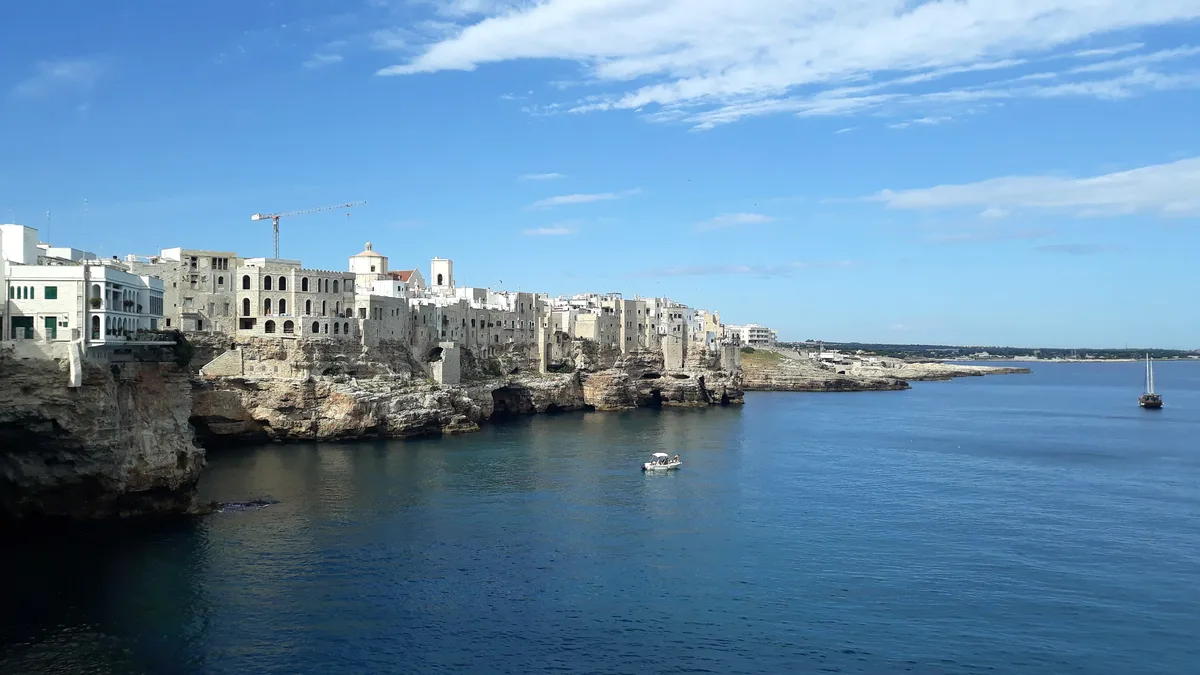
Header photo: acediscovery, CC BY 4.0, via Wikimedia Commons. All credits: image credits.