Italy's 7% flat tax towns: 2,424 comuni, counted, and what buying there costs.
// Short answer
Italy lets foreign pensioners who move to a small southern town pay a flat 7% on all their foreign income. Small means 30,000 residents or fewer, in eight regions. I counted them from ISTAT's own population file: 2,424 of the 2,551 comuni in those regions qualify on 1 January 2025 figures. And the move that unlocks the tax also cuts the tax on buying your home there from 9% to 2%.
Rule as of the July 2026 text; population figures ISTAT 1 January 2025. Nothing here is tax advice for your own situation.
On this page
What is Italy's 7% flat tax for pensioners?
A substitute tax of 7% on all foreign-source income, for people receiving a pension paid from abroad who move their tax residence to a comune of no more than 30,000 inhabitants in Sicily, Calabria, Sardinia, Campania, Basilicata, Abruzzo, Molise or Puglia, or in the listed comuni hit by the 2009 and 2016 earthquakes. The rule is Article 24-ter of the income tax code.
The 7% replaces ordinary Italian income tax on income produced abroad: the foreign pension, and foreign income of any other kind. Income produced in Italy, such as rent from an Italian property, is taxed normally.
The income tax code is renumbered from 1 January 2027, and the same rule then sits in Article 247 of the new consolidated text. Cite both if you are filing around the change.
Sources
Which towns qualify for Italy's 7% flat tax?
Any comune with 30,000 residents or fewer in the eight regions. On ISTAT's 1 January 2025 figures that is 2,424 of 2,551 comuni, so almost all of them: what is excluded is the cities and larger towns. The earthquake comuni listed in the law qualify too, and some of them are in other regions.
The count below is mine, from ISTAT's resident population file for 1 January 2025, the latest final figures, matched to ISTAT's official list of comuni and regions. It covers the eight regions only. The earthquake comuni elsewhere are not counted.
| Region | Comuni | 30,000 or fewer residents | Share of the region's people living in them | Largest that qualify |
|---|---|---|---|---|
| Sicily | 391 | 359 | 46.8% | Milazzo (29,830), Castelvetrano (29,297) |
| Puglia | 257 | 231 | 51.6% | Ostuni (29,943), Manduria (29,665) |
| Campania | 550 | 508 | 47.4% | Marigliano (29,351), Frattamaggiore (28,558) |
| Calabria | 404 | 396 | 68.2% | Castrovillari (20,605), Montalto Uffugo (20,034) |
| Sardinia | 377 | 370 | 67.9% | Selargius (28,377), Assemini (25,630) |
| Abruzzo | 305 | 297 | 63.9% | Roseto degli Abruzzi (25,882), Francavilla al Mare (25,568) |
| Basilicata | 131 | 129 | 76.7% | Policoro (17,682), Melfi (16,961) |
| Molise | 136 | 134 | 72.4% | Isernia (20,529), Venafro (10,719) |
Watch the edge. Ostuni had 29,943 residents and Milazzo 29,830 on those figures: a town near the line can cross it. Which population figure the tax authority applies to your move is a question to settle with an Italian accountant before you choose the town, not after.
Sources
Who can use the 7% flat tax, and for how long?
You need pension income paid by a foreign payer, you must not have been tax resident in Italy in the previous five tax years, and you must be moving from a country with an administrative cooperation agreement with Italy. The option takes effect in the tax year you move, and stays valid for the nine tax years after that.
You choose it in your Italian tax return for the year of the move, and you state the country or countries where you were last tax resident; the Agenzia delle Entrate passes that information to those countries. The tax is paid in one instalment, by the normal deadline for the income tax balance. You can revoke the option, and it falls away if the conditions turn out not to have been met.
Whether your home country has the required cooperation agreement, and how your pension is treated there, are questions for an accountant who knows both systems.
What does it cost to buy a home in a 7% town?
Less than elsewhere, because of the move itself. Buying a home from a private seller normally carries 9% registration tax. Buy in the comune where you live, or move your residence there within 18 months and say so in the deed, and the prima casa rate of 2% applies instead, for homes outside the luxury categories.
On a EUR 150,000 home taxed on the price, that is the difference between EUR 13,500 and EUR 3,000, plus EUR 50 and EUR 50 either way. A private buyer can also ask for the tax to be charged on the cadastral value rather than the price; in the Agenzia's own worked example that base was well below the price.
Once the home is your main residence, it is exempt from IMU, the municipal property tax, unless it is in a luxury category. A second home pays IMU from a base of 0.86%. Every purchase cost: Italy property buying costs. The cheapest end of the market: Italy's 1 euro houses: both comuni on that page, Mussomeli (9,846 residents) and Montresta (435), would qualify.
Sources
// Buying in Italy?
Every listing in your budget, ranked on net yield, appreciation and resale. Any market with public listing data; book a free call first so I can confirm your city has the data.
See the $499 report, page by pageFrequently Asked Questions
Which regions have Italy's 7% flat tax?
How many towns qualify for the 7% flat tax?
How long does Italy's 7% flat tax last?
Does Italian rent count under the 7% flat tax?
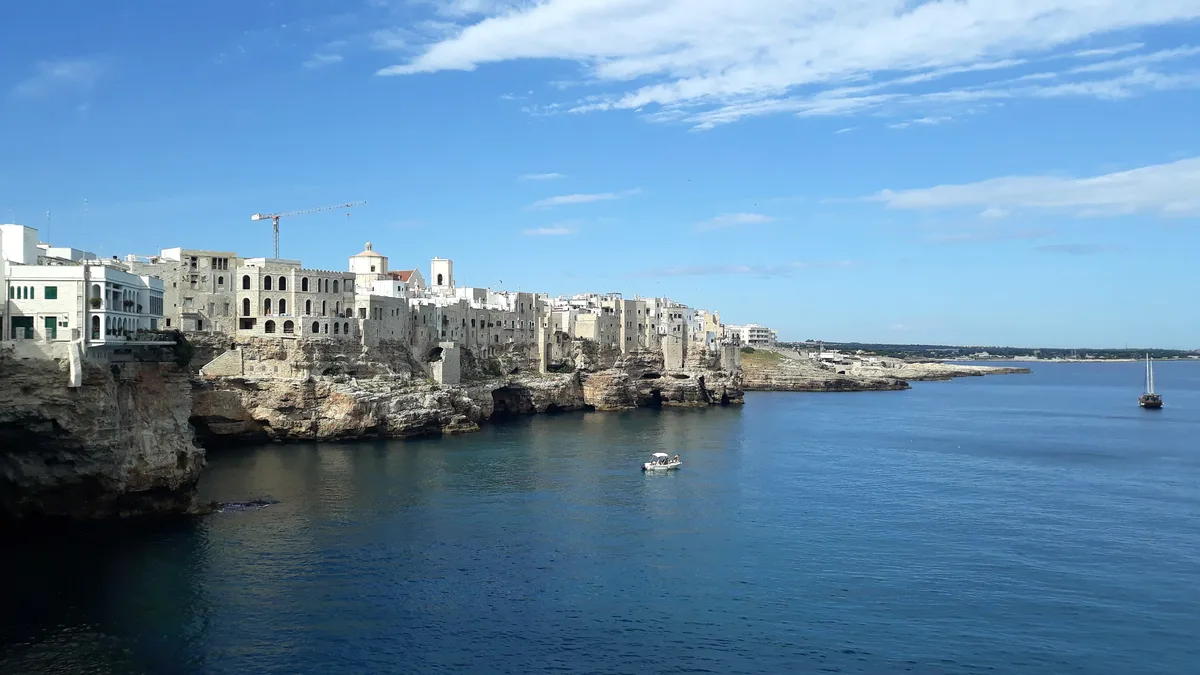
Header photo: acediscovery, CC BY 4.0, via Wikimedia Commons. All credits: image credits.