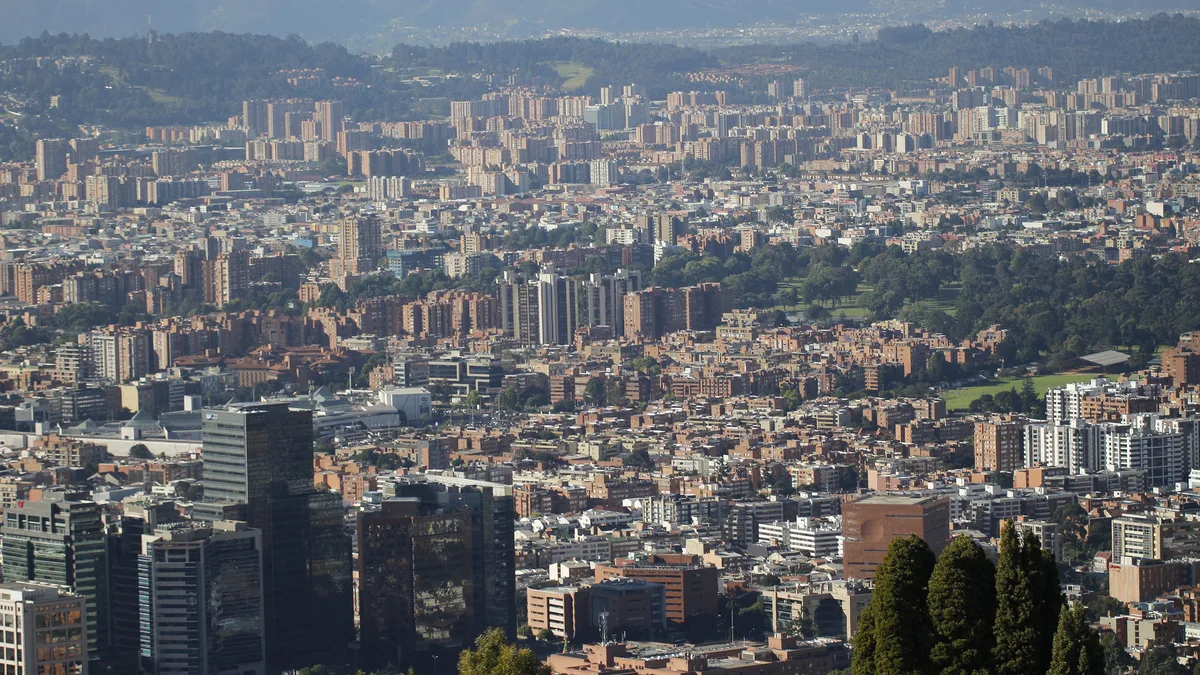
Foreign property ownership in Colombia, explained: same rights, registered money.

// Short answer
A foreigner can own a home in Colombia outright. The Constitution gives foreigners the same civil rights as Colombians, and the foreign-investment regime needs no prior authorisation. The rules a foreign owner meets are about the money and a representative: the purchase is foreign direct investment, it should be registered with Banco de la República, and you appoint an apoderado.
Rules and rates as of September 2026. Colombian tax law was amended by emergency decree in 2026 and the minimum wage behind the visa threshold is under a transitional decree, so check the dated items again before you sign. Every figure links to its source.
On this page
- Is there any limit on foreigners owning property in Colombia?
- What land can no one own in Colombia?
- Why is a foreigner's home purchase foreign direct investment?
- What is an apoderado, and does a foreign buyer need one?
- Does owning property in Colombia give you residency?
- What proves a foreigner owns property in Colombia?
Is there any limit on foreigners owning property in Colombia?
No nationality-based cap, quota or prior approval for buying a home was found in the foreign-investment regime, as of September 2026. Article 100 of the Constitution gives foreigners the same civil rights as Colombians, and Decreto 1068 de 2015 states that a foreign investment needs no authorisation, save for special rules.
Article 100 also lets the law, for reasons of public order, place special conditions on specific civil rights of foreigners. The regime states a principle of equal treatment between foreign and resident investors. Private property is protected by Article 58 of the Constitution, and a buyer takes full ownership (dominio) of land and building alike.
Sources
What land can no one own in Colombia?
Under Article 63 of the Constitution, property of public use, natural parks, communal lands of ethnic groups, resguardo lands and the archaeological heritage cannot be owned privately, by Colombians or foreigners. Separately, rural land the State originally adjudicated as baldío carries size limits under Ley 160 de 1994.
No person may acquire former baldío land where the holding would exceed the maximum set for the local Unidad Agrícola Familiar (UAF), and contributing such land to companies to consolidate holdings above the UAF is void. These rules apply regardless of nationality.
Border and security zones: whether any specific rule applies to foreigners there was not confirmed from an official source for this page. No nationality-based restriction on buying a city apartment or house was found.
Sources
Why is a foreigner's home purchase foreign direct investment?
Decreto 1068 de 2015 lists the acquisition of real estate, directly, through a trust arrangement or through a real estate securitisation, as foreign direct investment. So a foreigner's purchase sits inside the foreign-investment regime, and registering it with Banco de la República is what protects the right to take the money back out.
Once the investment is made and registered, the investor may remit abroad in freely convertible currency the net profits of the investment and the sums received from selling it. The conditions in force at registration cannot be changed to the investor's detriment, except temporarily when international reserves fall below three months of imports. How registration works: transferring money to Colombia for a property.
Sources
What is an apoderado, and does a foreign buyer need one?
Yes. Under Decreto 1068 de 2015 a foreign investor must appoint an apoderado, an attorney-in-fact or representative in Colombia, under Colombian law. A different apoderado can be named for each investment. The apoderado can also file a Banco de la República registration for an investment that was not registered automatically.
A lawyer is not named as a legal requirement for the purchase in the sources read for this page. The apoderado is.
Sources
Does owning property in Colombia give you residency?
It can support a Visa M Inversionista. The real estate route needs a Certificado de Tradición y Libertad for a property titled exclusively in the foreigner's name, worth at least 350 minimum monthly wages when you apply, plus Banco de la República statements showing the investment registered in your name. The visa lasts up to 3 years.
Time as a Visa M holder counts toward a resident (R) visa after 5 years. In pesos, 350 minimum wages is about COP 613 million at the 2026 minimum wage of COP 1,750,905. That wage figure is itself in flux: the Consejo de Estado provisionally suspended the decree that set it on 12 February 2026, and a transitional decree, reported as Decreto 0159, kept the figure pending a final ruling. Check the current minimum wage before you apply.
Sources
What proves a foreigner owns property in Colombia?
The Certificado de Tradición y Libertad, the title history and encumbrance certificate issued by the public registry for the property's folio de matrícula inmobiliaria. The Cancillería's investor visa rules use it as the proof of ownership. It costs COP 23,000 electronic in 2026.
What it is and how to use it: the certificado de tradición y libertad, explained. The full buying guide: buying property in Colombia as a foreigner.
Sources
// Buying in Colombia?
Every listing in your budget, ranked on net yield, appreciation and resale. Any market with public listing data; book a free call first so I can confirm your city has the data.
See the $499 report, page by pageFrequently Asked Questions
Can a foreigner own land in Colombia?
Do I need permission to buy property in Colombia as a foreigner?
What is the minimum property value for the Colombian investor visa?
Do I need an apoderado to buy in Colombia?
Are there restricted areas for foreign buyers in Colombia?
Header photo: Alejandro Turola, CC0, via Wikimedia Commons. All credits: image credits.