Can Australians buy property in Japan? Yes, and there is no approval board to get past.

// Short answer
Yes. An Australian can buy land and buildings in Japan freehold, on the same terms as a Japanese buyer, with no screening body to satisfy. That is the opposite of the way Australia treats foreign buyers at home. What Japan asks for instead is a report filed within 20 days of the purchase.
Rules and rates as of September 2026. Japan's policy on foreign purchases is under review, so check the dated items again before you sign. Nothing here is tax advice for your own country. Every figure links to its source.
On this page
- Can Australians buy property in Japan?
- Is there a Japanese equivalent of FIRB approval?
- What does the ATO want from an Australian who owns a Japanese property?
- How much of the rent does Japan take before it leaves the country?
- What does an Australian owner need on the Japanese register?
- What does it cost an Australian to buy, and then to sell?
Can Australians buy property in Japan?
Yes. As of September 2026 no Japanese law restricts foreign individuals or companies from buying land or buildings, and an Australian buyer takes the same freehold ownership as a Japanese one. There is no nationality test and no quota. The rules that apply are reporting duties, not permission.
The caveat is that this is under review. A government expert panel postponed its recommendations on restricting foreign real estate purchases to autumn 2026, and a bill to tighten the law on land near important facilities was being prepared for the autumn Diet session. Nothing nationality-based was in force when this page was written.
What a foreign owner holds, and every rule that touches it: foreign property ownership in Japan, explained.
Sources
Is there a Japanese equivalent of FIRB approval?
No. Australia screens foreign investment in residential real estate through the Foreign Investment Review Board before a purchase. Japan has no equivalent gate for an Australian buyer. Japan reports after the fact instead: a non-resident files FEFTA Form No. 22 with the Minister of Finance through the Bank of Japan within 20 days of acquisition.
Get the direction of that difference right, because it changes the shape of the deal. In Australia the approval comes before you commit. In Japan the duty lands after you already own the property, which is exactly when a buyer who has flown home stops paying attention.
- No threshold. No minimum amount or area. An inheritance is reportable too.
- It is in Japanese. An agent living in Japan can file it for you.
- Penalty. Up to six months' imprisonment or a fine of up to JPY 500,000 for not filing or filing falsely.
- Since 1 April 2026 buying a home to live in is no longer exempt, and neither is buying from another non-resident.
Sources
What does the ATO want from an Australian who owns a Japanese property?
Australian residents for tax purposes declare foreign and worldwide income, which includes rent from an overseas property, and capital gains rules reach overseas assets as well. The Japanese tax you pay does not make the Australian side disappear. This page states that the obligation exists; it does not tell you how to compute it.
Two ATO pages are the starting point: the one on foreign and worldwide income for the rent, and the one on capital gains on overseas assets for the eventual sale. Both are linked below.
Take the interaction between Japanese tax already paid and your Australian return to an adviser who handles both sides. Do not take it from the agent selling you the property, and do not take it from this page.
How much of the rent does Japan take before it leaves the country?
The payer withholds 20.42% of the gross rent paid to a non-resident, except where an individual tenant rents the home to live in. Net rental income is then taxed at progressive national rates of 5% to 45% plus a 2.1% reconstruction surtax, settled through a return filed between 16 February and 15 March.
- Tax representative. A non-resident must appoint one in Japan. Arrange it before the first rent is collected.
- Annual taxes. Fixed asset tax at a standard 1.4% plus city planning tax of up to 0.3%, on the government's assessed value, billed to whoever owns the property on 1 January.
- Short lets are capped. Under the Private Lodging Business Act, nights let to guests are capped at 180 per year per property, with a notification to the prefectural governor before starting and local ordinances able to restrict further.
The full breakdown: Japan property tax for foreigners.
Sources
What does an Australian owner need on the Japanese register?
A contact person in Japan. Since 1 April 2024, when an owner with no address in Japan is registered, the application must name a domestic contact with their consent and seal certificate. It can be a relative, a company, a real estate firm or a judicial scrivener. Foreign owners also give a romanised name.
From 5 October 2026 there is one more line on the form: every new registered owner declares a nationality to the Legal Affairs Bureau. It applies to Japanese and foreign owners alike, and the nationality is not printed on the public register.
Registration is what makes your ownership enforceable against third parties, which is why in Japan the balance is paid and the transfer is filed on the same day, usually by a judicial scrivener. There is no notary step. How the register works: Japan's property registration (toki), explained.
Sources
What does it cost an Australian to buy, and then to sell?
On the way in: acquisition tax at 3% on land and residential buildings until 31 March 2027, registration tax at 1.5% on land and up to 2% on the building, stamp tax, and a capped broker commission. Both big taxes run on the assessed value, not the price you pay.
| Item | Rate | Charged on |
|---|---|---|
| Real estate acquisition tax | 3% until 31 March 2027 (standard 4%) | Assessed value |
| Registration tax, land | 1.5% until 31 March 2029 | Assessed value |
| Registration tax, building | 2% (0.3% only for a qualifying residence) | Assessed value |
| Broker commission | Capped; above JPY 8M works out to 3% plus JPY 60,000 plus consumption tax | Price |
On the way out: 15% national tax on the gain if held more than five years as of 1 January of the year of sale, 30% if not, each plus the 2.1% surtax, and a 10.21% withholding on the gross price taken by the buyer from a non-resident seller. Every one-off fee: Japan property buying costs.
Sources
// Buying in Japan?
Every listing in your budget, ranked on net yield, appreciation and resale. Any market with public listing data; book a free call first so I can confirm your city has the data.
See the $499 report, page by pageFrequently Asked Questions
Do Australians need approval to buy property in Japan?
Can an Australian own land in Japan or only an apartment?
Does the ATO need to know about a Japanese rental property?
How long do I have to hold before the lower Japanese gain rate applies?
Is a Japanese mortgage realistic for an Australian?
Can I run the Japanese property as a short-term let?
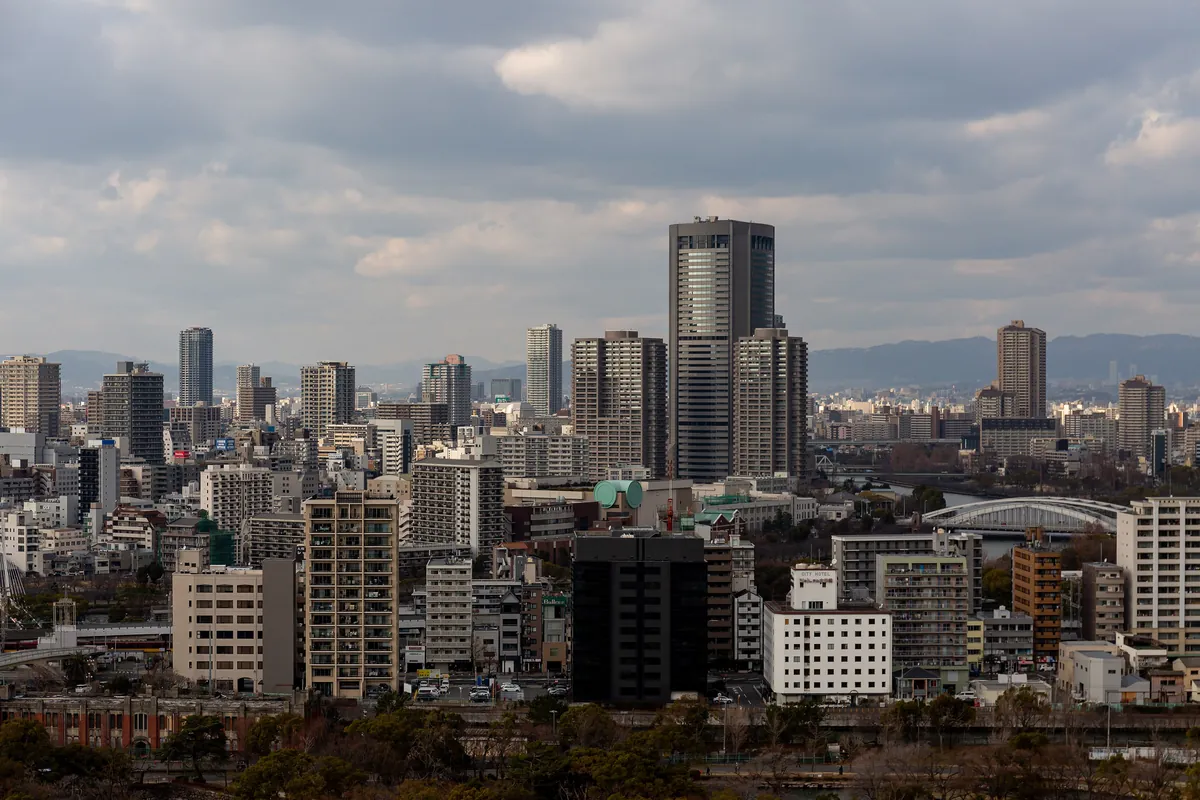
Header photo: Balon Greyjoy, CC0, via Wikimedia Commons. All credits: image credits.