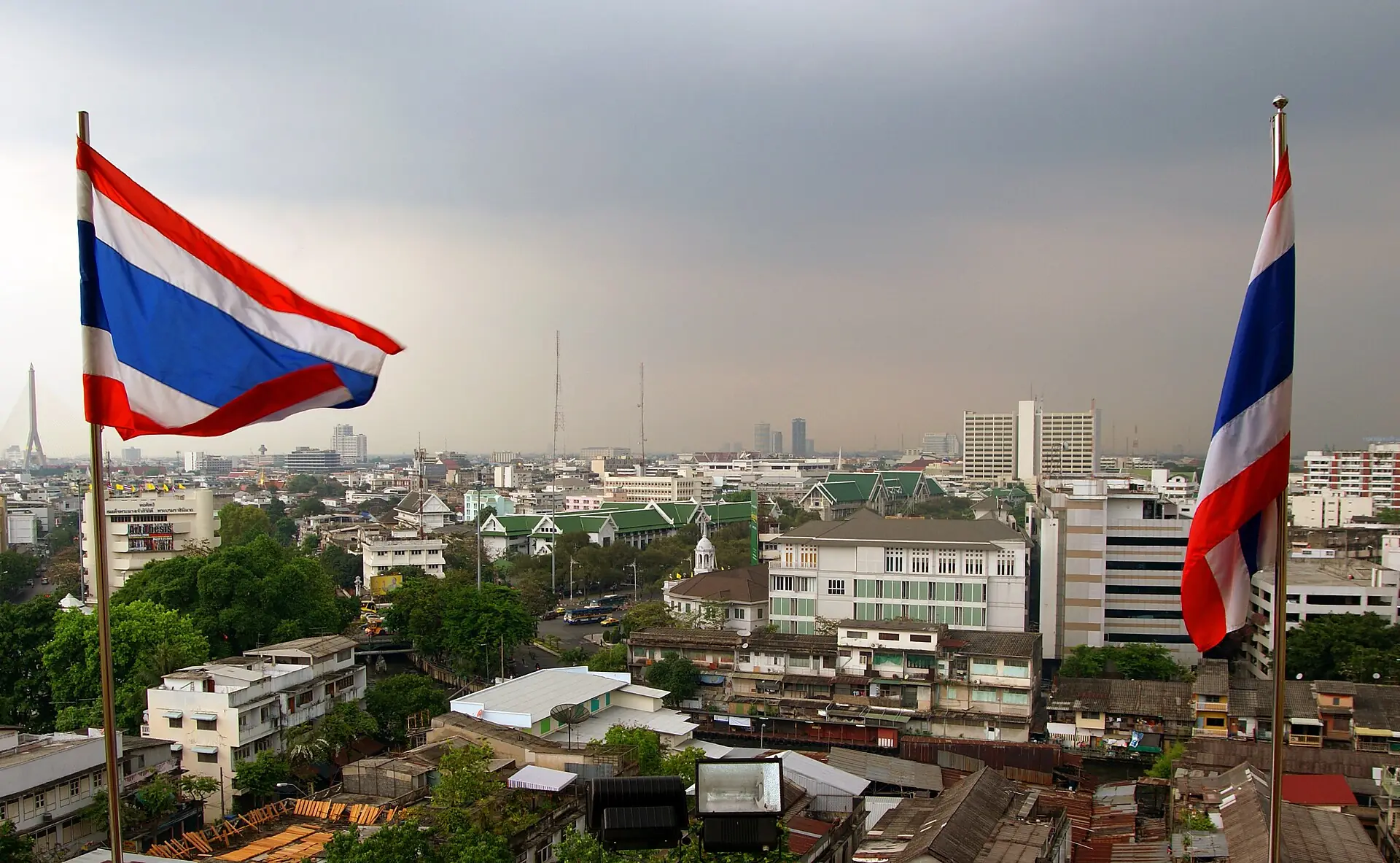
Can Australians Buy Property in Thailand?
Yes. Australians can buy property in Thailand. And the honest answer has three hard edges most listings won't put in front of you. You can own a condominium unit on freehold title, in your own name, inside the building's 49% foreign quota. You cannot own land, not as an individual, not really, not safely. And the part that's specific to you as an Australian isn't a Thai rule at all. It's the AUD getting from your account at home into Thailand the documented way, and the ATO wanting to hear about the income and the asset once you own it. Thai law treats you like any other foreigner. Australia treats it like any other overseas asset you hold. This page is the mechanics, not personalized tax or legal advice.
The Short Answer: Condo Yes, Land No
An Australian can take outright freehold title to a Thai condominium unit, held in their own name, exactly the same way a German, American, or Singaporean buyer can. Citizenship doesn't change the rule. The Thai Land Department applies one foreign-buyer framework to everyone. There is no Australia-specific restriction, no treaty quirk, and no extra Thai approval an Aussie needs that a New Zealander doesn't.
The condominium is the clean path because of how the Condominium Act is built: up to 49% of a building's total unit floor area can be held by foreigners on freehold title. Buy a unit that sits inside that 49% slice and you own the airspace outright. Your name on the title, transferable, inheritable, sellable. The 49% quota math, explained in full.
Land is the wall. No foreign individual can own freehold land in Thailand in their own name. Not a house with a yard, not a plot, not a villa-on-land, not directly. The villa products marketed to foreigners run on a long-term registered lease of the land or, worse, a Thai nominee company that puts the land in a local entity you "control." The nominee route carries well-documented legal exposure, and it is not a workaround we'll dress up as a shortcut. If you want freehold in your own name in Thailand, you want a condo. Freehold versus leasehold, and why the distinction decides your exit.
The Money Has to Arrive as Foreign Currency
Here's the rule that catches Aussies who assume cash is cash: the purchase funds for a foreign-freehold condo must arrive in Thailand from abroad, in foreign currency, and the inflow must be documented. The Land Department won't register foreign freehold title without proof the money came from outside the country. That proof is the FET. The Foreign Exchange Transaction form (historically called Thor Tor 3).
The mechanism is precise. You transfer AUD from your Australian bank to a Thai bank. The Thai bank receives the foreign currency, converts it to baht, and (for a single inward transfer at or above the documentation threshold (commonly cited in the region of USD 50,000-equivalent)) issues the FET. Below that threshold, the bank issues a credit advice letter that performs the same legal function. Either document is your receipt that the money's origin was foreign. No FET, no freehold registration. The full Thailand FET certificate guide. Exact wire wording, thresholds, and the timing trap.
For an Australian this has a downstream consequence most buyers don't think about on the way in: the FET is also your key on the way out. Keep it. It's what lets you repatriate the sale proceeds in foreign currency and bring them back to AUD when you sell. Treat it like a deed, not a receipt. The same documented-inflow mechanics apply from any offshore base — the Dubai-based buyer's walkthrough runs the identical FET logic for a Gulf expat.
The Australian Layer: the ATO, Worldwide Income and the CRS
This is where the Australian buyer's extra work lives, and notice that none of it is Thai. There is no Australian law that stops you owning real estate overseas. The Foreign Investment Review Board governs foreigners buying into Australia; it has nothing to say about an Australian buying a condo in Thailand. Your home-country layer is a tax-and-reporting layer, not a permission layer.
Three things to have straight before you transfer a dollar:
- Worldwide income if you're an Australian tax resident. Australia generally taxes residents on income earned anywhere, so rental income from a Thai condo is reportable on your Australian return. If you've become a non-resident for tax purposes, the treatment changes. Which is exactly the kind of residency question to put to a registered tax agent rather than assume.
- The asset can surface on your return. Holding a foreign property and a foreign bank account can interact with the foreign-income and foreign-asset questions on your Australian return, and a later sale can fall within Australia's capital gains tax rules depending on your residency and how long you've held. State the thresholds as ranges and confirm the specifics. None of this is a flat number that applies to everyone.
- The Thai account is visible under the CRS. Australia and Thailand both participate in the Common Reporting Standard, the international framework for automatic exchange of financial-account information. In practice that means the Thai bank account you open can be reported back to the ATO. The takeaway isn't fear. It's that the honest, declared version is the only version, and it's straightforward when you plan it up front.
And the recurring one: there is a double-tax agreement between Australia and Thailand, but it does not change your eligibility to own, ownership is Thai law's call, and it does not exempt an Australian resident from Australian filing. What it does is govern how the two countries' tax claims interact, including relief for foreign tax paid. I flag the exact CGT treatment, residency tests, and treaty interactions as items to confirm with a registered Australian tax agent or cross-border tax professional rather than state as advice, because the right answer depends on your residency, holding period, and structure.
THE ONE-LINE VERSION
The 5-step underwriting protocol I run before a single dollar leaves Australia. The quota check, the FET timing, the fee stack. PDF.
Get The Thailand Underwriting Protocol — $20Getting Your Money Back: Repatriation at Exit
A property you can't get the money out of is a position, not an asset. For an Australian, the exit is the mirror image of the entry, and the same document governs both.
When you sell, the original FET that documented your foreign-currency inflow is what authorizes remitting the sale proceeds back out of Thailand in foreign currency through an authorized bank. Ready to convert back to AUD at home. The logic is symmetric: money that lawfully arrived from abroad is money that can lawfully leave. If the FET is intact, the outbound transfer is routine. If you lost it, the transfer is slower and the bank wants more paperwork to reconstruct the trail. Solvable, but a self-inflicted delay.
Once the proceeds reach Australia, Australian rules take over: any taxable gain on the sale is handled under Australia's capital gains tax framework (subject to your residency and holding period), and foreign tax paid in Thailand may interact with that through the foreign income tax offset. That interaction, and any treaty effect, is a registered-tax-agent question, not a property question. The property side of repatriation is simple and document-driven. The tax side is where you bring in a professional. The data study on how Thai net yields land after the fee and tax stack.
What This Means for the Australian Buyer
Strip out the noise and the Aussie's checklist is short:
- Target a condo, not land. Freehold title in your own name only exists, for a foreigner, inside the 49% quota of a condominium building. Verify the unit is in the foreign quota before you fall in love with it.
- Move the AUD the documented way. Transfer foreign currency from Australia, get the FET (or credit advice under the threshold), and store the original somewhere you won't lose it for the life of the holding.
- Pre-clear the Australian side. Know your tax-residency footing, plan for rental-income and eventual-gain reporting to the ATO, and ask the residency and structure questions to a registered tax agent before the transfer, not at tax time.
- Underwrite the net, not the brochure. The headline price is the tourist's number. The operator's number is what's left after the fee stack, the tax stack, and the exit friction. That's the spreadsheet, not the listing.
Nothing here is a reason an Australian shouldn't buy in Thailand. It's the reason the Australian should buy it the documented way, with the home-country reporting mapped out in advance. Easy entry isn't the same as clean ownership, and for an Aussie, clean ownership is a paper trail you build on purpose.