Foreign property ownership in Panama, explained: local terms, three geographic limits.
// Short answer
A foreigner can own titled property in Panama on essentially the same terms as a Panamanian. The limits that exist are about where the land is: within 10 km of the borders, on the public beach strip, and on islands. Separately, owning property can support residency, and those rules changed on 16 September 2026.
Rules and rates as of September 2026. Panama's investor-residency rules changed on 16 September 2026 and a short-rental tax bill is before the National Assembly, so check the dated items again before you sign. Every figure links to its source.
On this page
Can a foreigner own land and condos in Panama?
Yes. Foreign individuals and companies can buy and hold registered property in Panama, including land and condos, on essentially the same terms as Panamanians. The US State Department's 2024 Investment Climate Statement says there are no specific regulations on land acquisition by foreign or non-resident investors. No nationality-based permit is needed for an ordinary urban purchase.
The overview for buyers: buying property in Panama as a foreigner.
Sources
What is Panama's 10 km border rule?
Foreign natural or legal persons, and Panamanian companies whose capital is wholly or partly foreign, may not own national or private land less than 10 km from Panama's borders. The rule is in Article 291 of the Constitution's 2004 consolidated text. Many sources cite it as Article 290, the number in older texts.
A company structure does not get around it: any foreign capital in the company is enough to trigger the rule. The article beside it, Article 290 in the 2004 text, bars foreign governments and foreign official entities from owning any part of the national territory, embassy seats excepted.
Sources
Can a foreigner own beachfront property in Panama?
Yes, beside the sea, but the beach itself stays public. Under Law 80 of 2009 the public beach strip (ribera de playa) runs 22 m inland from the high-tide line on the Pacific and 10 m on the Atlantic. No nationality-based difference was found in Law 80, and foreigners can hold titled land beside the sea.
- Coastal zone: a 200 m strip inland from the high-tide line.
- Titleable coastal land on the Pacific: starts where the beach strip ends and runs to 178 m inland.
- Public access: access to beaches on coasts and islands must be kept open. Blocking it carries fines from B/.1,000, and up to B/.20,000 for repeat offences.
Global Property Guide sums it up the same way: the first 22 metres of beachfront cannot be privately owned.
Sources
Can a foreigner buy land on a Panamanian island?
Only where strict conditions are met, and the answer depends on the specific land. The Constitution allows island territory to be transferred only for national-development purposes, when it is not a strategic or reserved area, and when it has been declared a special development area with legislation on its use.
Law 80 of 2009 adds that island land may only be transferred if possessory rights of more than five years are proven, the land use serves national-development aims, the area is declared a special development zone, and it is not a strategic or reserved area (Art. 13). Mangroves, protected areas and indigenous territories are not titleable at all. How title is converted from possession: Panama's Public Registry title, explained.
Sources
Does buying property in Panama qualify you for residency?
It can. Under Executive Decree 17 of 8 September 2026, the Qualified Investor permanent residency needs B/.300,000 in a new first-sale property or B/.500,000 in a resale property, according to the trade ministry (MICI). The decree took effect on 16 September 2026 and replaced Decree 722 of 2020.
- New property route: the B/.300,000 amount applies only to the first acquisition of a new, unoccupied property transferred by the developer, according to law firm Icaza, González-Ruiz & Alemán.
- Holding period: investments must be held 5 years, per the same firm.
- Deposit routes: B/.500,000 in a fixed-term deposit at Banco Nacional or Caja de Ahorros (MICI).
- Timing: MICI certification within 15 business days and a residency decision within 30 business days, per Icaza.
The decree took effect six days before this page was written, and published summaries of its transition rules differ. Confirm the rules for your filing date with a Panamanian lawyer before you buy.
Sources
What is the Friendly Nations property route?
A residency for nationals of listed countries. The migration service (Migración) grants 2 years of provisional residence, then permanent residence. One qualifying route is a real-estate investment of at least B/.200,000, titled to the applicant or to a company or private-interest foundation the applicant beneficially owns. The purchase may be financed by a local bank.
Migración's sheet lists fees of B/.250 to the Treasury and B/.800 to Migración. About 50 countries are on the list, including the US, Canada, the UK, EU states and Australia, according to Kraemer & Kraemer. A separate economic-solvency permit for real estate of at least B/.300,000 is still published by Migración, but whether it stays open after Decree 17 was unclear as of 22 September 2026.
Sources
// Buying in Panama?
Every listing in your budget, ranked on net yield, appreciation and resale. Any market with public listing data; book a free call first so I can confirm your city has the data.
See the $499 report, page by pageFrequently Asked Questions
Can a foreigner own land in Panama?
Can I use a Panamanian company to buy near the border?
Is the border rule Article 290 or 291?
How much property do I need to buy for Panama's Qualified Investor visa?
Can I use a mortgage for the Friendly Nations property route?
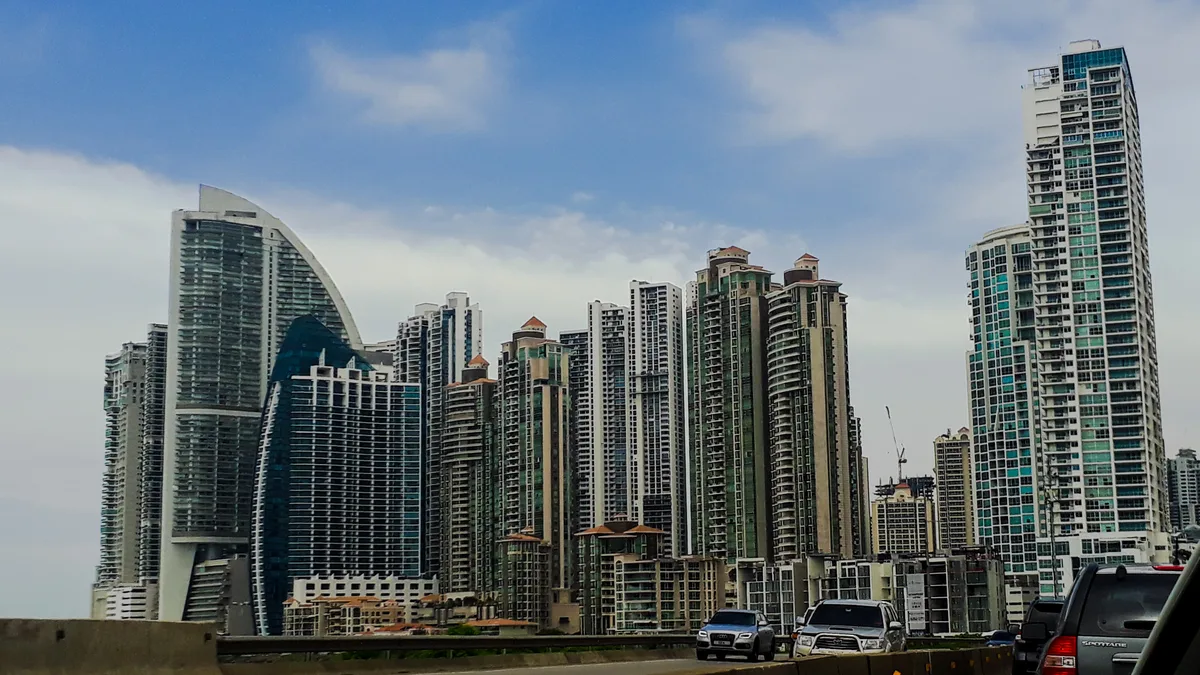
Header photo: 123Hollic, CC BY-SA 4.0, via Wikimedia Commons. All credits: image credits.