French tax on property abroad: three duties, two forms, and one treaty that does the work.

// Short answer
A French tax resident who owns property outside France meets three separate duties at home, and they do not switch off because the property is far away or because tax was already paid on it. Income tax on worldwide income. The real estate wealth tax, the IFI, on assets situated in France and outside France. And the declaration of every account held abroad. Which of them costs you money depends on the treaty. Which of them applies does not.
Rules, rates and forms as of September 2026. This is research, not legal, tax or financial advice, and no page can tell you what applies to your own position. Confirm it with a qualified adviser and with the tax administration of the country you live in before you commit to anything. Every figure links to its source.
On this page
- Does a French tax resident pay French tax on a property abroad?
- Which French form declares rental income from a property abroad?
- What does the France and Thailand convention do with rent from a Thai condominium?
- What does the Thailand convention say about a gain on selling the property?
- Does the IFI cover property owned outside France?
- Do you have to declare a foreign bank account used for the property?
Does a French tax resident pay French tax on a property abroad?
The duty to declare is unconditional. Article 4 A of the Code general des impots states that persons whose tax domicile is in France are liable to income tax in respect of the whole of their income. Whether the foreign rent is actually taxed in France is then decided by the tax convention between France and the country where the property sits.
The French tax administration sets out the two mechanisms conventions use. Either the income is taxable in France and the convention gives a credit for the foreign tax, or the income is exempt in France but retained for the effective rate, which the administration calls the taux effectif. It also states the general principle that conventions tax rental income from property abroad in the country where the property is located.
Exempt is not the same as ignored. Under the effective-rate method the exempt income is declared, is not itself taxed, and is used to work out the rate applied to your other income taxable in France. People who read exempt and stop reading are the ones who get a surprise.
Which convention applies is a matter of which country, and the texts are published by the administration. There is no general rule that covers every destination, so the one that governs your property is the one to read.
Sources
Which French form declares rental income from a property abroad?
Form 2047 is the declaration of income received abroad, filed by anyone domiciled in France who received income outside metropolitan France and the overseas departments. But foreign rental income that is exempt in France and retained for the effective rate is an explicit exception: it is not entered on form 2047 at all. It goes straight onto form 2042 C.
The official notice to form 2047 is unusually direct about this, and it is the detail that is most often got wrong.
- Exempt income retained for the effective rate, other than salaries, pensions and rental income: declared on form 2047, frame 8, then carried to line 8TI of form 2042 C.
- Exempt rental income retained for the effective rate: declared directly on form 2042 C, line 4EA under the regime reel or line 4EB under the micro regime, and not carried to line 8TI.
So a French resident with a treaty-exempt foreign rent may correctly file nothing on 2047 for that rent, and put a figure on 4EA or 4EB instead. Where the income is instead taxable in France with a credit, it is declared on form 2047 and carried to the matching sections of form 2042.
Which of the two situations you are in is set by the convention, not by choice.
Sources
What does the France and Thailand convention do with rent from a Thai condominium?
It taxes it in Thailand and exempts it from French income tax, while letting France use it to set the rate on your other income. Article 6(1) makes income from immovable property taxable in the State where the property is situated. Article 23(1)(a) exempts income taxable in Thailand from the French taxes listed in Article 2(3)(a). Article 23(1)(c) preserves the effective rate.
The convention was signed in Bangkok on 27 December 1974, approved by loi 75-576 of 4 July 1975, entered into force on 29 August 1975 and was published by decret 75-1078 of 4 November 1975. Article 6(3) makes clear that paragraph 1 covers income from letting, not only from direct use, so ordinary rent from a condominium is inside it.
Read Article 23 carefully, because the exemption is the default and the credit is the exception. Paragraph 1(b) gives a French resident a credit for Thai tax only on income covered by Articles 8, 10, 11, 12, 16 and 17. Article 6 is not in that list, so paragraph 1(a) is what applies to rent from immovable property.
Combined with the filing rule above, that points a French resident letting a Thai condominium at line 4EA or 4EB of form 2042 C rather than at form 2047. Confirm your own case with an adviser: the treatment turns on the income actually being taxable in Thailand under the convention and Thai law, which is a question about your Thai position, not only your French one.
What the Thai side of the same unit looks like: French buyers in Thailand, and Thailand property tax for foreigners.
Sources
What does the Thailand convention say about a gain on selling the property?
The same allocation. Article 13(1) makes gains from the alienation of immovable property, as defined in Article 6(2), taxable in the State where the property is situated. Article 13 is not among the articles listed in Article 23(1)(b), the credit list, so the exemption in Article 23(1)(a) is the paragraph that applies, with the effective rate preserved by 23(1)(c).
Article 13(1) also reaches the sale or exchange of shares or similar rights in a property co-ownership company, or in a company whose object consists mainly of holding immovable property. So a disposal structured through such a company is inside the same rule rather than outside it.
Two cautions before anyone acts on this paragraph. The convention allocates the right to tax; it does not compute anything. What France then does with an exempt gain in a given year, and how the Thai side taxes the same disposal, are separate questions for an adviser who can see both. And a 1999 to 2000 exchange of letters addressing a wording difference between the French and English texts of Articles 6 and 18 exists, published by decret 2003-341, but its effect was not analysed for this page and is deliberately not stated here.
Sources
Does the IFI cover property owned outside France?
Yes, for a French tax resident. Article 964 of the Code general des impots makes individuals whose tax domicile is in France liable in respect of the assets covered by Article 965 situated in France or outside France, once net taxable real estate value exceeds 1,300,000 euros. Liability is assessed on 1 January of each year.
Three points that decide whether this applies to you.
- The threshold is on net real estate wealth, not on one property. A single apartment abroad may sit well under it, and still matter once the French home and any other real estate is added.
- There is a five year rule for arrivals. A person who was not tax resident in France during the five preceding calendar years is taxable only on real estate situated in France, for the period Article 964 sets out.
- A non-resident is taxed only on French real estate and on holdings in entities to the extent their value represents French real estate.
The France and Thailand convention does not help here, and it is worth knowing why. Article 2 of that convention applies to taxes on income, and the French taxes it lists are income tax and corporation tax. A real estate wealth tax is not on that list. Any relief for a Spanish, Portuguese or other foreign wealth tax charged on the same property is a question about that country's own convention with France and about French domestic law, and it is a question for an adviser.
Sources
Do you have to declare a foreign bank account used for the property?
Yes. Individuals domiciled in France within the meaning of Article 4 B of the Code general des impots must declare accounts opened, held, used or closed abroad during the year, on form 3916 and 3916 bis, at the same time as the income return. It covers holders, joint holders, economic beneficiaries and beneficial owners.
The scope is wider than most people expect. It covers bank accounts, capitalisation contracts and similar placements including life insurance policies, and digital asset accounts. The exception the administration states is narrow: accounts used for online purchases below 10,000 euros a year and backed by a French account.
The penalties are published and specific. 1,500 euros per undeclared account, rising to 10,000 euros per account where the account is held in a state or territory that has not concluded an administrative assistance agreement with France giving access to banking information. For digital asset accounts the fine is 750 euros per undeclared account, or 125 euros per omission or inaccuracy, capped at 10,000 euros per declaration.
The practical point for a property owner. An account opened in the country where the property is, to receive rent or to pay the local charges, is a declarable account. Open it and put it on the return in the same year. This page states the rules and does not describe any way around them.
Sources
// Buying abroad?
Every listing in your budget, ranked on net yield, appreciation and resale. Any market with public listing data; book a free call first so I can confirm your city has the data.
See the $499 report, page by pageFrequently Asked Questions
Does a French resident declare foreign rental income even if it is not taxed in France?
Which form is used for income received abroad?
What are lines 4EA and 4EB on form 2042 C?
How does the France and Thailand tax treaty handle rent from a Thai condominium?
Is property abroad counted for the French IFI?
What is the fine for not declaring a foreign bank account in France?
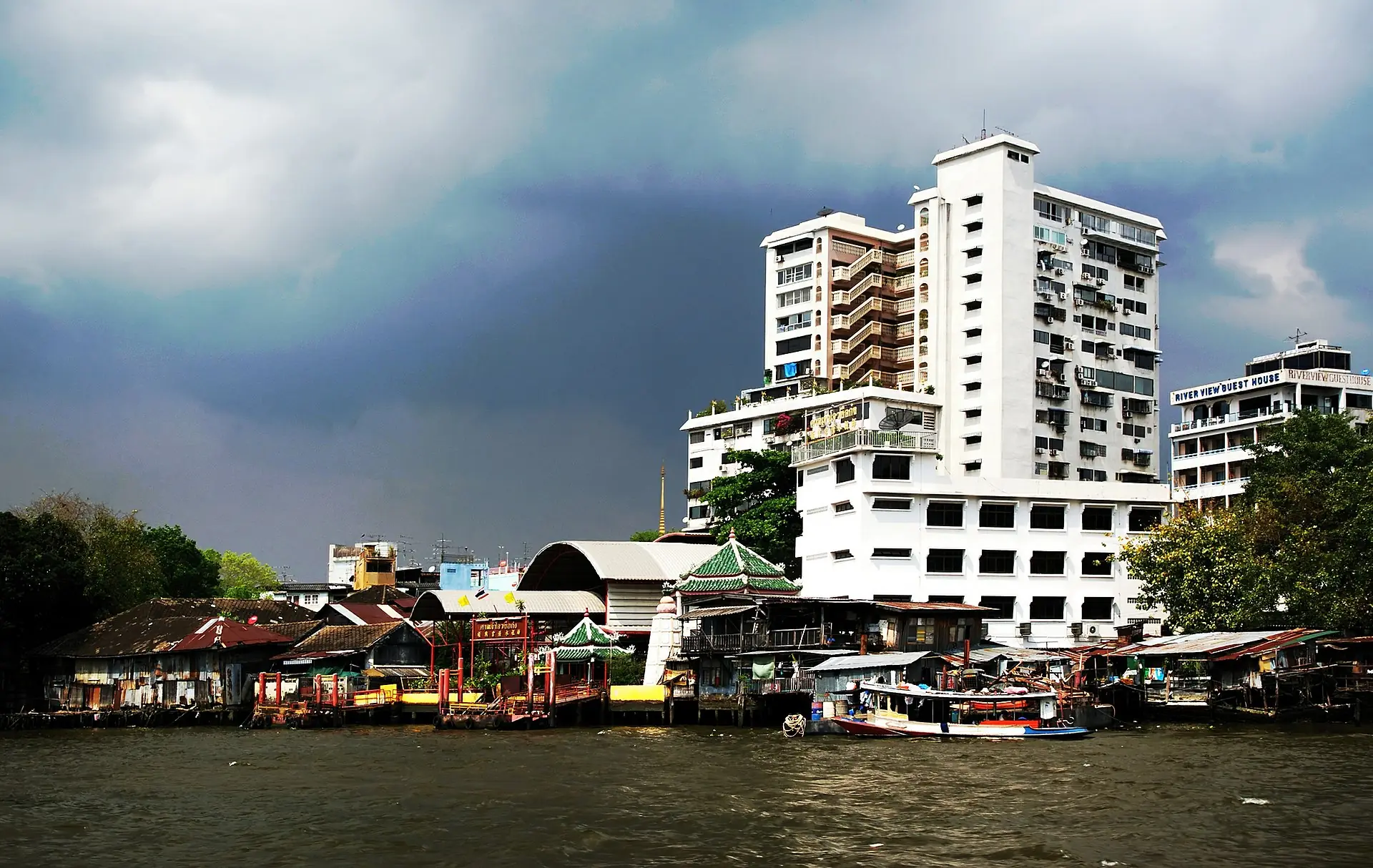
Header photo: Unknown, CC0, via Wikimedia Commons. All credits: image credits.