Vietnam vs Singapore property yield: under a point apart on gross, and a long way apart on everything else.
// Short answer
Global Property Guide puts Vietnam's average gross rental yield at 3.85 percent and Singapore's at 3.06 percent. The two figures are not from the same quarter: Vietnam's is Q3 2025 and Singapore's is Q2 2026. Both are gross, built from asking rents against list prices, so the gap between them is smaller than the gap between the two cost stacks underneath.
Figures as of September 2026. The two published yield figures compared here are not from the same quarter: the Vietnam figure is Q3 2025 and the Singapore figure is Q2 2026, because the publisher updates each country on its own cycle. That mismatch is stated wherever the two appear together.
On this page
- Is the rental yield higher in Vietnam or Singapore?
- What is the rental yield on a Vietnamese apartment?
- What is the rental yield on a Singapore condominium?
- What costs sit between the two gross yields?
- What do you actually own in Vietnam, and for how long?
- Which of these figures should you not compare directly?
Is the rental yield higher in Vietnam or Singapore?
In Vietnam, on the published gross figures, by under a percentage point. Global Property Guide reports 3.85 percent for Vietnam at Q3 2025 and 3.06 percent for Singapore at Q2 2026. Read that gap carefully: the two figures are a year apart in their data periods, because the publisher updates each country separately.
| Market | Average gross rental yield | Data period | Page last updated |
|---|---|---|---|
| Vietnam | 3.85 percent | Q3 2025 | August 2025 |
| Singapore | 3.06 percent | Q2 2026 | June 2026 |
The publisher's own prior readings show how much each figure moves. Vietnam was 3.36 percent at Q1 2025, so it rose by roughly half a point in two quarters. Singapore was 3.04 percent at Q4 2025, so it barely moved. A Vietnamese figure that can move half a point in six months is not a figure to carry a year forward without saying so.
Both numbers are gross, before taxes, repairs, agency fees and every other cost. The publisher notes that net yields in its dataset typically run 1.5 to 2 percentage points below the gross ones.
Sources
What is the rental yield on a Vietnamese apartment?
3.85 percent gross nationally at Q3 2025, per Global Property Guide. Ho Chi Minh City averages 4.16 percent and Hanoi averages 3.54 percent, so the two largest cities sit about six tenths of a point apart. The publisher covers only those two cities in its Vietnam dataset.
| Vietnam | Average gross rental yield (Q3 2025) |
|---|---|
| Ho Chi Minh City | 4.16 percent |
| Hanoi | 3.54 percent |
| Vietnam, national average | 3.85 percent |
Two things the table does not say. Da Nang, Nha Trang and Phu Quoc carry no published figure in this dataset, so a coastal Vietnamese yield is not covered by either row above. And the publisher's Vietnam page was last updated in August 2025, which makes it the older of the two datasets compared on this page.
The repo's own Vietnam yield workings sit at Vietnam rental yield.
What is the rental yield on a Singapore condominium?
3.06 percent gross at Q2 2026, per Global Property Guide. Across the six districts it publishes, the range is narrow: from 2.72 percent in East Coast and Marine Parade to 3.30 percent in Hougang, Punggol and Sengkang. Brinkman Data holds no Singapore data of its own, so every figure here is the publisher's.
| Singapore district | Average gross rental yield (Q2 2026) |
|---|---|
| Hougang / Punggol / Sengkang | 3.30 percent |
| Alexandra / Commonwealth | 3.20 percent |
| Tanglin / Holland / Bukit Timah | 3.15 percent |
| Orchard / River Valley | 3.01 percent |
| Newton / Novena | 2.99 percent |
| East Coast / Marine Parade | 2.72 percent |
| Singapore, national average | 3.06 percent |
The spread across those six districts is 58 basis points, which is tight enough that district selection is not the lever a Singapore figure turns on. The publisher sources the underlying data from a local listing platform and updates the country twice a year.
What costs sit between the two gross yields?
The entry cost is where the two markets separate, not the yield. Singapore's Additional Buyer's Stamp Duty for foreigners buying any residential property has been 60 percent of the higher of price or market value since 27 April 2023. Vietnam has no foreign-buyer stamp surcharge; a foreign buyer pays what a Vietnamese buyer pays.
| Moment | Vietnam | Singapore |
|---|---|---|
| Buying, as a foreign buyer | No foreign-buyer surcharge. A 0.5 percent registration fee and a 2 percent maintenance fund contribution, with VAT usually already inside a new-build price. | Additional Buyer's Stamp Duty of 60 percent for foreigners buying any residential property, on the higher of purchase price or market value, from 27 April 2023. Buyer's Stamp Duty applies on top. |
| Holding, each year | No recurring percentage tax on market value. The recurring instrument is the non-agricultural land-use tax at 0.03 to 0.15 percent on prescribed land prices, a minor line for an apartment owner. | Property tax on the Annual Value, which is the estimated gross annual rent. Non-owner-occupier residential rates effective 1 January 2024 run 12 percent on the first 30,000 dollars of Annual Value, then 20, 28 and 36 percent on the bands above it. |
| On the rent | A flat 10 percent of gross rent, being 5 percent VAT and 5 percent personal income tax, with no deductions, once rental revenue passes 100 million dong a year. | Not published here. No current Singapore rental income tax rate was confirmed at source for this page. |
| On the way out | 2 percent of the full sale price, whether or not there is a gain. | Not published here. No current Singapore seller's stamp duty position was confirmed at source for this page. |
Three gaps in that table are deliberate. Singapore's rental income tax and seller's stamp duty were not read at source in September 2026, so no figure appears for them. The two blanks are worth more than a number nobody can check.
The Vietnamese side in full: Vietnam property tax for foreigners and selling a Vietnamese apartment as a foreigner.
Sources
- Inland Revenue Authority of Singapore: Additional Buyer's Stamp Duty (ABSD) rates on or after 27 April 2023
- Inland Revenue Authority of Singapore: property tax rates, non-owner-occupier residential rates effective 1 January 2024
- Brinkman Data: Vietnam property tax for foreigners (the repo's own sourced page)
What do you actually own in Vietnam, and for how long?
A term, not a perpetuity, and inside a building-level quota. A foreign buyer takes a 50-year term on an apartment and can hold only within the 30 percent cap on foreign ownership in a single building. That constraint has no equivalent in the yield figures, and it decides who can buy the unit from you later.
Those two rules are what make the Vietnamese exit a different question from the Vietnamese income. The exit tax is 2 percent of the full sale price whether or not there is a gain, and the buyer pool for a part-used term inside a quota is narrower than the pool for a fresh unit. Both belong in the arithmetic before a gross yield does.
On the Singapore side this page publishes nothing. Brinkman Data has analysed Thailand cities and holds no Singapore data, and no named source on Singapore's private residential ownership rules was read at source for this page. The ABSD and property tax figures above are the Inland Revenue Authority of Singapore's own, and they are the only Singapore positions stated here.
The Vietnamese ownership rules in full: Vietnam property for foreign buyers.
Sources
Which of these figures should you not compare directly?
The two headline yields, without stating the date gap. Vietnam's is Q3 2025 and Singapore's is Q2 2026. They also come from different local listing platforms, they are both gross, and they are both built from asking rents against list prices rather than from achieved rents against paid prices.
Four conditions have to hold before a cross-country yield comparison means anything, and only the first two hold here:
- Same publisher and same method. Both figures are Global Property Guide's, on the same biannual method: median monthly asking rent multiplied by twelve, divided by median purchase price.
- Same basis. Both are gross, before every cost.
- Same period. They are not. A year separates the two data periods.
- Same asset. Both datasets survey apartments, but a Hanoi apartment and a Singapore condominium sit in different tenant markets with different lease norms.
The honest use of a pair of country figures is to decide which market to look at, never which unit to buy. A yield is one building's achievable rent against one unit's real all-in cost, and the spread inside a single city is usually wider than the gap between these two countries.
The same comparison across the rest of the region: Thailand rental yield and rental yields in Indonesia beyond Bali.
Sources
// Buying in Vietnam?
Every listing in your budget, ranked on net yield, appreciation and resale. Any market with public listing data; book a free call first so I can confirm your city has the data.
See the $499 report, page by pageFrequently Asked Questions
Is property yield higher in Vietnam or Singapore?
What is the average rental yield in Vietnam?
What is the average rental yield in Singapore?
How much stamp duty does a foreigner pay on Singapore property?
Does Vietnam charge foreign buyers extra tax?
Are these yield figures gross or net?
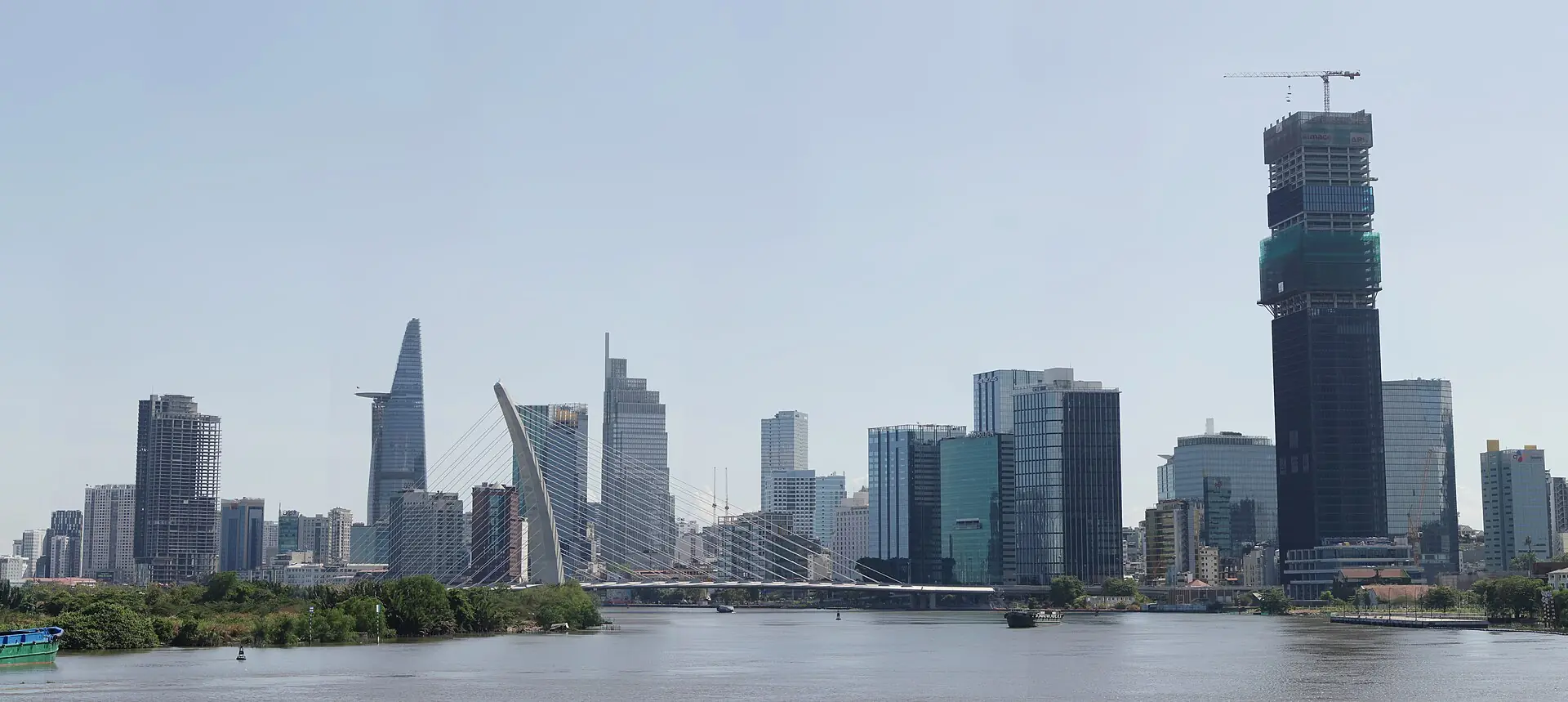
Header photo: Unknown, CC0, via Wikimedia Commons. All credits: image credits.