Selling property in Panama as a foreigner: two taxes, one deadline, no exit controls.

// Short answer
A foreign seller in Panama pays two taxes: capital-gains tax, with an advance of 3% of the higher of price or cadastral value, and the 2% transfer tax, which is legally the seller's. Both are filed with the tax authority and paid in the same calendar month, and the capital-gains tax must be paid before the sale can be registered.
Rules and rates as of September 2026. Panama's investor-residency rules changed on 16 September 2026 and a short-rental tax bill is before the National Assembly, so check the dated items again before you sign. Every figure links to its source.
On this page
- What taxes does a foreigner pay when selling property in Panama?
- How does the 3% capital gains advance work in Panama?
- When must the seller's taxes be paid in Panama?
- How is the transfer tax worked out on a sale in Panama?
- What other costs does a seller pay in Panama?
- Can a foreigner take the sale proceeds out of Panama?
- What is different about selling possession-rights land in Panama?
What taxes does a foreigner pay when selling property in Panama?
Capital-gains tax and the transfer tax. Capital gains on real estate sold outside the seller's ordinary business are taxed at 10% of the gain, with a 3% advance at transfer, according to PwC. The 2% real estate transfer tax (ITBI) is legally the seller's, though contracts can allocate it differently.
No separate rate for foreign sellers appears in the tax sources for this page. The full tax picture: Panama property tax for foreigners.
Sources
How does the 3% capital gains advance work in Panama?
At transfer, the seller pays an advance of 3% of the higher of the sale price or the cadastral value. The seller may then treat the 3% as the final tax, or compute 10% of the actual gain, credit the 3%, and claim any excess back, according to PwC. The legal basis is Código Fiscal Art. 701(a).
So a sale at a small gain, or a loss, is the case where filing on the actual gain can pay off. The tax authority's Form 107 page confirms the declaration and the Art. 701 basis but does not state the rates; the rates here are PwC's.
Sources
When must the seller's taxes be paid in Panama?
In the same calendar month as the declaration, and the capital-gains tax before the sale is registered at the Registro Público. The transfer tax (Form 106) and the capital-gains declaration (Form 107) are both filed with the tax authority (DGI) through e-Tax 2.0.
Registration is when ownership passes to the buyer, so the seller's tax payment sits on the critical path of the closing. How registration works: Panama's Public Registry title, explained.
How is the transfer tax worked out on a sale in Panama?
At 2% of the higher of the deed price or the cadastral value the seller acquired at, plus improvements, plus 5% of that value for each full calendar year between acquisition and transfer, according to RC Group Panamá. By law the seller pays, but the contract can allocate it differently.
Global Property Guide lists the transfer tax as a buyer's cost, so a buyer may expect otherwise. Agree it in writing in the promesa de compraventa.
Sources
What other costs does a seller pay in Panama?
The agent's commission, which Global Property Guide puts at 3% to 5%, paid by the seller. The same source puts the round-trip cost of buying and selling at about 7.1% to 9.1%, depending on who bears the transfer tax.
The buying side of the same costs: Panama property buying costs.
Can a foreigner take the sale proceeds out of Panama?
Yes. There are no foreign exchange controls and no restrictions on capital flows into or out of Panama, according to the US International Trade Administration. The US dollar is the currency in use, so there is no conversion step on the Panamanian side.
If the property backs a Qualified Investor residency, the investment must be held for 5 years under Executive Decree 17 of 2026, according to Icaza, González-Ruiz & Alemán. Check that before you list. More on moving money: transferring money to Panama for a property.
Sources
What is different about selling possession-rights land in Panama?
What you sell is the possessory claim, not a registered finca. A possession-rights parcel is not on the Registro Público as titled property, and the buyer's position depends on later titling succeeding, according to RG Law Firm. Under Law 80, a previous possessor can pass their time of possession on to the buyer.
That changes the buyer pool and the paperwork compared with a titled condo. The overview: buying property in Panama as a foreigner.
Sources
// Buying in Panama?
Every listing in your budget, ranked on net yield, appreciation and resale. Any market with public listing data; book a free call first so I can confirm your city has the data.
See the $499 report, page by pageFrequently Asked Questions
What is the capital gains tax on property in Panama?
Who pays the transfer tax when selling in Panama?
Can the sale be registered before the seller pays tax?
Can I move my sale proceeds out of Panama?
How much is the agent fee when selling in Panama?
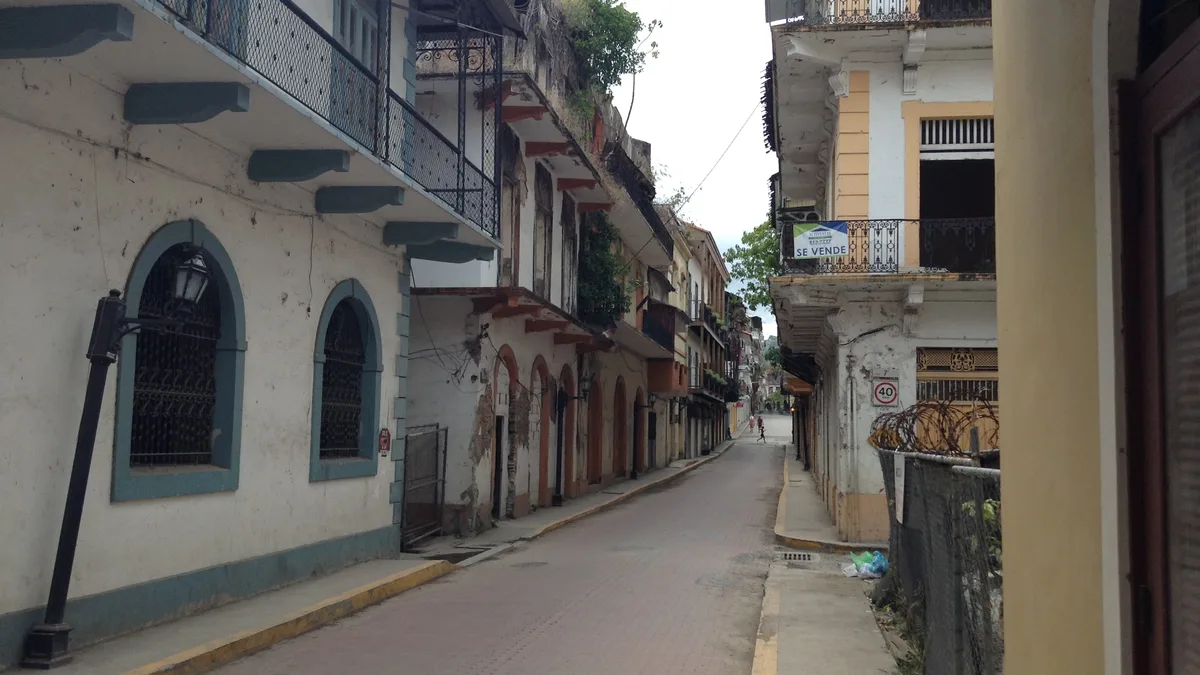
Header photo: MusikAnimal, CC BY-SA 4.0, via Wikimedia Commons. All credits: image credits.