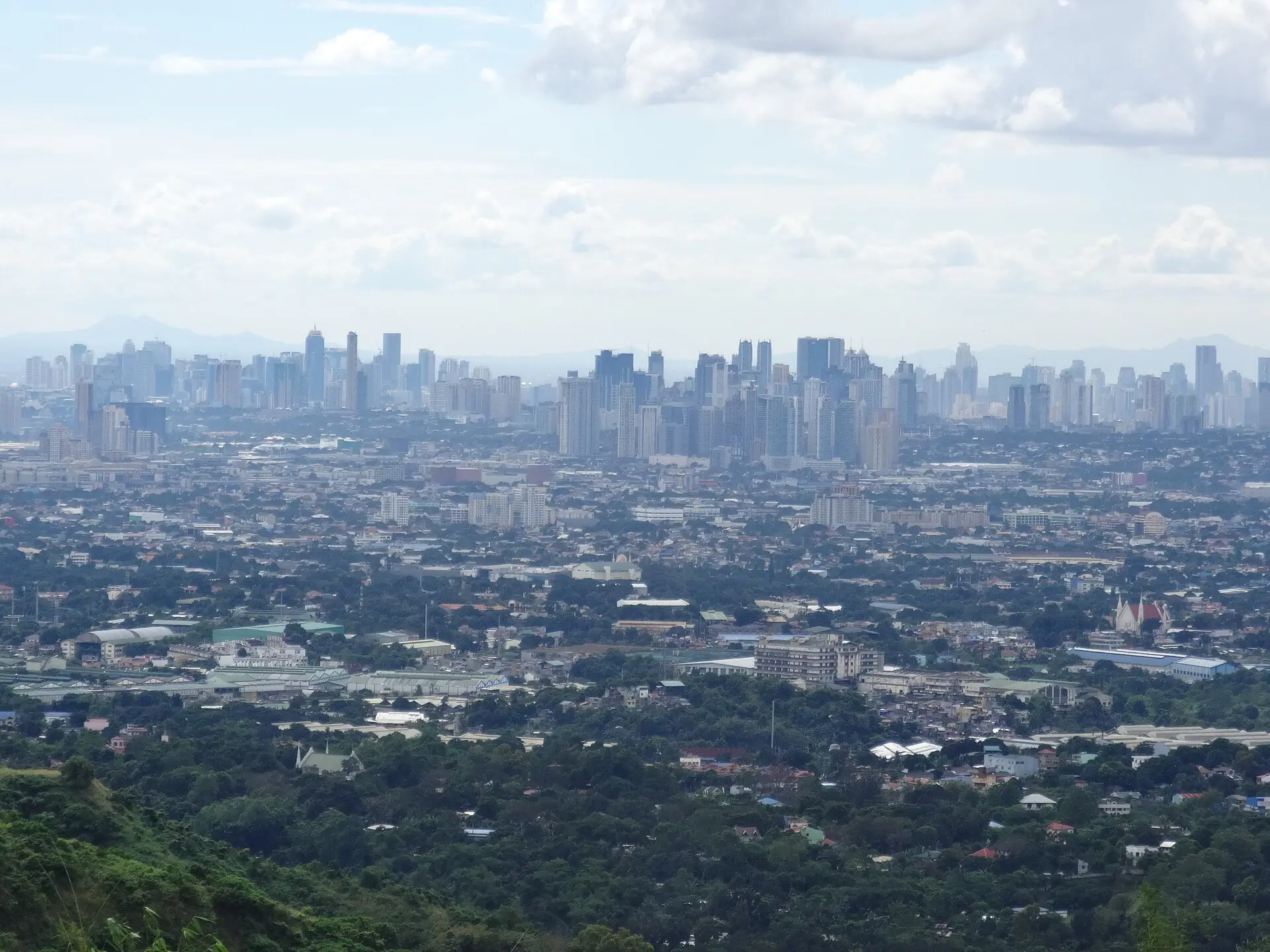
Metro Manila from above — the Philippines property market in 2026
Philippines Market · 2026

The Philippines property market in 2026: the foreign buyer’s read.
Philippines Property Market 2026 — The Foreign Buyer's Read. Brinkman Data SEO brand card.

The Philippines in 2026 is not Thailand and it is not one market. A foreigner cannot own land here — but a foreigner can own a condominium unit perpetually, in their own name, on a real certificate, as long as the project stays under the 40% foreign cap. No 50-year clock. That is the cleanest unit ownership in the region, sitting over land you will never own. Every submarket below runs on a different tenant pool, a different exit pool, and the same legal gate. The structural frame sits at the Philippines foreign-buyer reality check.

40%
foreign cap per project
Perpetual
CCT, no 50-year clock
60–75%
Manila Bay occupancy band

The Perpetual Advantage

A unit with no clock — behind a cap that decides everything.

I read the legislation before I read a single listing. Under the 1987 Constitution, land is reserved for Filipino citizens and corporations at least 60% Filipino-owned — a foreigner cannot own the ground, full stop. But under Republic Act 4726, the Condominium Act, a foreigner can own a condominium unit outright and perpetually, evidenced by a Condominium Certificate of Title in their own name, with no term attached.

That is the headline the other regional markets cannot match. There is no 50-year expiry like Vietnam, no diminishing leasehold to underwrite. The catch is structural, not legal: foreign ownership across the whole project cannot exceed 40% of total floor area. Hit the cap, and no further foreigner can be registered as owner in that building — no matter the price, no matter the paperwork. The cap is the first thing you verify, before price, before the view. The mechanics sit at the 40% cap.

The brochure leads with the infinity pool. It does not open with “this tower is at 38% foreign ownership and a handful of units remain eligible for you.” That sentence is yours to extract, in writing, before the reservation fee leaves your account.

The Demand Floor

The corporate-tenant floor under the prime markets.

The 2026 market splits on tenant covenant. The prime corporate districts — BGC / The Fort and Makati CBD — run on the deepest multinational and expatriate long-let pools in the country, with realised occupancy bands the region-scout matrix places in the high eighties to low nineties for well-positioned, professionally managed units. Cebu’s business districts run on a durable BPO — business-process-outsourcing — workforce that supplies a defensible residential demand floor at saner entry pricing.

That demand floor is the structural feature a Western buyer underestimates. A corporate or BPO tenant pool is sticky and low-churn in a way a tourist-driven coastal market is not. The region-scout matrix places BGC and Makati appreciation projections in the Low-med band, roughly 3–6% annualised over a five-year forward horizon, with the strongest resale liquidity in the country — most of the growth is already priced into prime, so you buy covenant quality and exit depth, not a headline curve.

These are independent-research projection ranges, not forecasts and not promises. Independent sources project both higher and lower bands. Use them as scenario inputs, never as point estimates in a model, and never as an outcome you are owed.

The Supply Caution

The Manila Bay overhang is a market condition, not a verdict.

The most important neutral fact in the 2026 market sits in the Manila Bay reclamation strip. This submarket scaled rapidly into 2023 and now carries pronounced condo oversupply and elevated vacancy following the 2024 wind-down of the offshore-gaming sector, which removed a large block of tenant demand quickly. This is a demand-shock plus a supply-overhang — the same pattern property markets everywhere produce when fast building meets a sudden drop in tenants. It is nobody’s fault and it is not a defect in anyone’s title. It is a market condition to underwrite, not a verdict to assign.

The matrix places the Manila Bay appreciation projection in the Low band, roughly 0–4% annualised with wide uncertainty, occupancy in a soft 60–75% band, and resale liquidity rated Weak while the overhang clears. Asking prices in places still carry pre-shock expectations; transacted figures can sit materially below. The Tourist reads the waterfront render at asking. The Operator underwrites from observed transacted comps and the building’s real current vacancy.

The single largest gap between what a foreign buyer thinks they bought and what they hold is the off-plan certificate delay — you pay across construction, take handover, and still hold a contract until the CCT issues and transfers. That is the generic off-plan & oversupply risk, and an oversupplied submarket is exactly where it bites hardest. Confirm the developer’s DHSUD License to Sell on any pre-selling unit.

92-page PDF · Instant download

Every number on this page, worked end-to-end.

The Philippines Property Buyer’s Playbook walks the 40% cap, the CCT title, VAT vs resale math, the fee stack, and the exit reality — the full framework this research page is built on.

Get The Philippines Playbook — $39

Thailand vs Philippines

Two perpetual models, one shared land, one walled-off land.

The Philippines and Thailand are the two regional markets where a foreigner holds the unit perpetually, with no clock. The difference is the ground. A foreigner in Thailand buys a condominium unit under the 49% building allowance and a share of the land underneath comes with it, registered on a Chanote. A foreigner in the Philippines owns the unit on a CCT, perpetually, but the land beneath belongs to a condominium corporation that must stay at least 60% Filipino — the door to the dirt is shut completely, not shared.

If your model was built in Thailand, the Philippine unit will feel familiar — your name, perpetual, a real certificate — and harder on the land. Neither is a criticism of either country; it is a fact about two different legal stacks. The buyer who imports Thai land assumptions into a Philippine deal underwrites the wrong asset. If you are weighing the region as a whole, the Vietnam market read is the third comparison — a 50-year dwelling behind a 30% cap — and the free SE Asia Ownership Map lays the six-country ownership rules side by side.

Any USD figure you read here is an indicative worked example from the region-scout matrix that has to be recomputed against live listings and the live USD/PHP rate — because the documentation you create on the way in is the documentation you will need to move sale proceeds out later.

The Bottom Line

Choose the submarket with discipline. Choose the building with more.

The 2026 Philippine market rewards exactly one posture: read every listing through three questions, in order. Is the project’s foreign quota still open under the 40% cap? Is the CCT clean at the Registry of Deeds and the developer DHSUD-licensed on any pre-sell? Is the submarket not sitting inside a vacancy overhang? Get those three airtight and most of the market screens itself out — which is the entire point.

Amateurs buy the city. Operators buy the building. The framework filters the listings; the legal gate decides whether a filtered listing is even ownable in your name. The unit is the asset. The land is the wall. The cap is the gate. Stop reading listings for the view. Start reading them for the certificate.

// FAQ

Can a foreigner buy property in the Philippines in 2026?
Yes, within strict limits. A foreigner cannot own land — that is reserved by the 1987 Constitution for Filipino citizens and corporations at least 60% Filipino-owned. But a foreigner can own a condominium unit outright and perpetually, in their own name, evidenced by a Condominium Certificate of Title, as long as foreign ownership across the whole project stays at or under 40% of total floor area. Confirm the building's current foreign-ownership percentage in writing before any money moves.
Is the Philippines property market a good investment in 2026?
It depends entirely on the submarket, the building, and your operating capacity. Prime corporate districts like BGC and Makati reward buyers who want covenant quality and exit depth; the Manila Bay area sits inside a vacancy overhang that rewards only patient, contrarian buyers who buy well below asking. Independent-research appreciation projections range from low-single-digit to mid-single-digit annualised bands by submarket. Treat them as scenario inputs, never as promised outcomes.
How does the Philippines compare to Thailand for foreign buyers?
Both let a foreigner own the unit perpetually, with no clock. The difference is the land. In Thailand a share of the land beneath the building comes with the unit under the 49% building allowance, registered on a Chanote. In the Philippines the land belongs to a condominium corporation that must stay at least 60% Filipino, and a foreigner can never own the ground. A buyer who imports Thai land assumptions into a Philippine deal underwrites the wrong asset.
Is there a condo oversupply risk in the Philippines?
Yes, and it is submarket-level, not country-level. The Manila Bay reclamation strip carries pronounced oversupply and elevated vacancy after the 2024 wind-down of the offshore-gaming sector removed a large block of tenant demand — a neutral demand-shock plus supply-overhang of the kind property markets everywhere produce. Underwrite from observed transacted comps and the building's real current vacancy, not from the brochure's pro-forma.
What law governs foreign condo ownership in the Philippines?
The 1987 Constitution reserves land for Filipinos and majority-Filipino corporations. Republic Act 4726, the Condominium Act, lets a foreigner own a unit perpetually via a CCT, subject to the 40% project-wide foreign cap. Pre-selling projects need a DHSUD License to Sell, titles are verified at the Registry of Deeds, and the Anti-Dummy Law prohibits using a Filipino nominee to hold land. Engage a licensed Philippine lawyer to confirm the specific building and unit before any deposit.

Related research

// Same math, other markets

THREE QUESTIONS, EVERY LISTING

Is the project’s foreign quota open under the 40% cap. Is the CCT clean at the Registry of Deeds and the developer licensed on any pre-sell. Is the submarket outside a vacancy overhang. Get those three airtight and most of the 2026 market screens itself out. The cap mechanics sit at the 40% cap.

Read The Market Through The Law

The Philippines market, underwritten.

The perpetual CCT. The 40% cap. The corporate demand floor. The oversupply checks. The Thailand comparison. One PDF, built for the operator, not the tourist.

Get The Philippines Playbook $39

Or start free with the SE Asia Ownership Map — who can own what across six countries.

Instant PDF · 7-Day Guarantee · Secure Checkout

⚠ Disclaimer

Brinkman Data Analytics is an independent research service. Not financial, investment, tax, or legal advice. Philippine property law is jurisdiction-specific. A foreigner cannot own land in the Philippines. Engage a licensed Philippine lawyer, verify every title at the Registry of Deeds, and consult a qualified tax adviser before acting. International real estate carries risk of partial or total loss of capital.

Get The Philippines Playbook $39