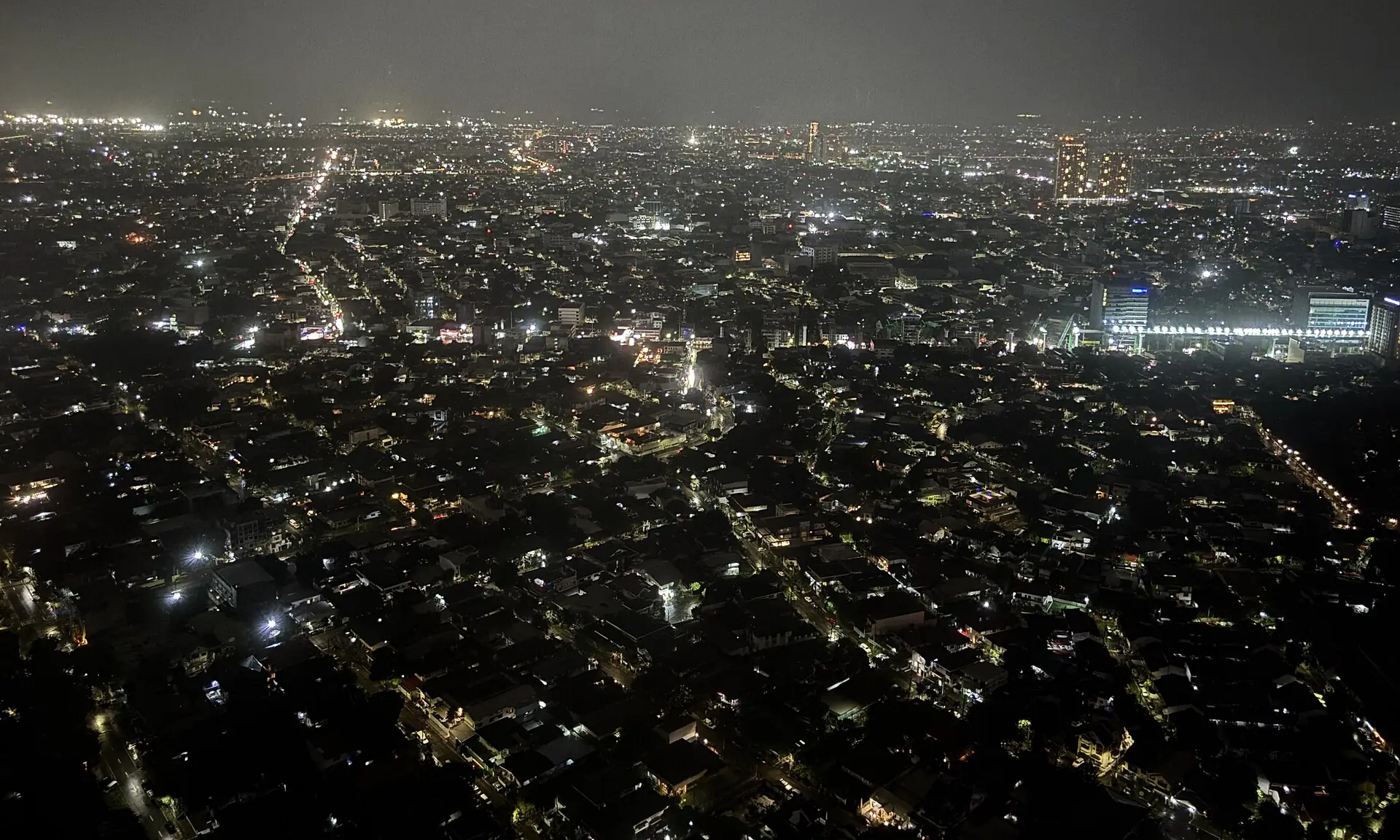
A Metro Manila skyline — the licence-to-sell check that runs before any off-plan deposit
Philippines Risk · Off-Plan & Oversupply

Philippines off-plan risk: the pre-sell and oversupply traps.
Philippines Off-Plan Risk — The Pre-Sell and Oversupply Traps. Brinkman Data SEO brand card.

Buying off-plan means paying staged installments against a unit that does not yet physically exist. Pre-selling is legal and common in the Philippines — the trap is funding a pre-completion unit from a project that never showed the licence the buyer is entitled to demand. Stacked on top is the generic off-plan developer-failure pattern seen in every such market on earth, and the oversupply problem that can leave a perfectly legal, properly titled buyer underwater anyway. None of this requires anyone to behave dishonestly. The pillar-level frame sits at the Philippines foreign-buyer reality check.

2
licences before staged money
2024
demand-shock year, Manila Bay
~1%
modeled net, Bay worked example

The Unlicensed Pre-Sell

Two documents, before any staged payment.

In a pre-sell you pay a reservation fee, then staged payments against construction, for a unit that does not yet exist. Your protection across that window is regulatory: a developer selling pre-completion condominium units is required to hold a DHSUD License to Sell for that project, and a registered project carries a Certificate of Registration. That licence exists for the buyer’s benefit.

The trap is the buyer who wires staged payments into a pre-sell that never secured — or never showed — its License to Sell. The defence was sitting right there, and they did not ask to see it. I want to be precise: this is not a claim that Philippine developers are unlicensed. Most reputable projects are fully licensed. The trap is the buyer who does not ask, on the one project where it would have mattered.

Before paying into any pre-sell, ask to see the project’s License to Sell and Certificate of Registration, both naming the exact project and phase, both current — not expired and not for a different phase. This is a one-document request. A developer running a licensed project produces it without friction; if it does not appear before your deposit does, pause. Start from the full due-diligence checklist and apply the off-plan-specific protections below.

The Generic Default Pattern

Developer default is a risk shape, not an accusation.

Stacked on top of the licensing question is the generic off-plan developer-failure pattern — the same pattern that exists in every pre-sell property market on earth. A project offers off-plan units at a discount to completed inventory. Buyers pay staged deposits tied to construction milestones. Construction slows, then stalls; the project entity runs short. The buyer’s staged payments are hard to recover, and the litigation is long. This is a generic pattern. It does not name any Philippine developer or project, and it does not imply that off-plan developers here fail more than anywhere else — it is a risk shape, so the buyer can defend against it.

Title-issuance lag rides alongside it. Even on completed stock, some buyers take full possession of a finished unit and then wait years for the individual CCT to release from the mother title. A finished, occupied building is not, by itself, proof that ownership has been registered in buyers’ names. The CCT in your name is the finish line; the keys are not.

The buyer who loses here is the one who funded an unbuilt project on trust, treated renderings as evidence of completion ability, and held no track-record threshold for the developer. The fix is not to fear off-plan. The fix is to underwrite it: stage payments against verified milestones, require the License to Sell first, and buy only from a developer with a documented history of completing projects and issuing titles to buyers.

The Track-Record Filter

Has this developer actually issued CCTs before?

For a pre-sell, the developer’s history is the asset until the building exists. The single best predictor that a developer delivers this time is that it delivered last time. The question that decides everything is not "will this building get finished?" — plenty get finished. It is: has this developer actually issued individual CCTs to buyers on its prior completed phases, and how long did that take?

Verify it concretely on three axes. One: did prior projects complete on or near the announced schedule? Two: did buyers actually receive their individual CCTs after turnover, and what was the average lag from possession to certificate? Three: are the completed buildings physically real and inspectable, not just renderings? Talk to prior buyers through owner groups and resale listings and ask one thing: did your CCT come through, and how long did it take? One honest answer from a prior buyer outweighs a hundred pages of marketing. Buy from a developer with a clean, documented history of issuing titles — not just handing over keys.

If you proceed off-plan, the additional protections are mechanical. Stage payments against independently verified construction milestones, not a calendar the developer controls. Confirm the License to Sell and Certificate of Registration before staged money moves. Confirm the condo corporation’s underlying land title is clean and free of a mortgage that could jeopardise the project. And plan your BSP inbound-investment registration from the first wire so proceeds repatriate cleanly later. This filter is the same one applied to Bali off-plan villas — track record over renderings, every time.

92-page PDF · Instant download

Every number on this page, worked end-to-end.

The Philippines Property Buyer’s Playbook walks the 40% cap, the CCT title, VAT vs resale math, the fee stack, and the exit reality — the full framework this research page is built on.

Get The Philippines Playbook — $39

The Oversupply Overlay

A clean title in a thin-exit submarket is still a money trap.

The final trap is not legal. Some Metro Manila submarkets carry real condo oversupply and elevated vacancy. The clearest example is the Manila Bay oversupply, where vacancy rose after the 2024 wind-down of offshore gaming operations vacated a large block of tenant demand. I want to be exact about what that is: a market-condition fact, the kind of demand-shock-plus-supply-overhang that happens in property markets everywhere. It is not anyone’s fault, and it is not a legal defect in any title.

But it is an exit problem. You can own a perfectly clean, perfectly legal, perpetual CCT in a tower with a thin resale market, soft rents, and a long line of similar units for sale. Oversupply hits you twice: it depresses your achievable rent and it lengthens your vacancy between tenants. Consider a hypothetical Bay Area one-bed marketed on a headline gross north of 8%, with a "discount" measured off the developer launch list rather than off the live resale market. Run the four-move comp — realised long-let rent, a submarket vacancy haircut, the BIR line, the dues and tax stack — and the durable net can land near 1%, while nine near-identical units in the same line compete down both your rent and your eventual exit. That is illustrative research math, not a promise of any outcome.

The check is to underwrite the exit, not just the entry. For any submarket, look at standing inventory, the depth of recent resale transactions, and the direction of vacancy. In a known oversupply pocket like the post-2024 Bay Area belt, price the thin exit into the deal — or do not buy there. And remember the structural exit constraint that rides under everything: your most natural foreign buyer faces the same 40% cap, so a near-capped tower in a saturated belt is the smaller side of the pool twice over.

Kill Or Keep

What walks the off-plan deal, and what keeps it.

It walks if the developer cannot evidence completed, handed-over prior projects and a record of issuing CCTs; if staged money is demanded against a pre-sell with no License to Sell shown; if full payment is demanded up front against a unit with no milestone schedule; or if the deal sits in a known oversupply pocket bought purely on entry price with the exit unchecked. Any one of those is a walk — not a renegotiation.

It keeps only with a verifiable track record of finished, delivered buildings and issued titles; a current License to Sell and Certificate of Registration naming the exact project and phase; payments staged against independently verified milestones; a submarket whose resale depth and vacancy you have underwritten; and a BSP-registered inbound investment planned from the first wire. Most foreign off-plan buyers skip all of this, because protections slow the close. The operator builds them in at signing, not at the breaking point. The exciting deals are exciting because someone is over-promising. The framework kills those and protects the boring unit that clears the math.

// FAQ

Is buying off-plan condo property in the Philippines risky for foreigners?
Pre-selling is legal and common, but it carries two layered risks. First, the regulatory one: a pre-completion project should hold a DHSUD License to Sell and a Certificate of Registration, and the trap is the buyer who funds staged payments without ever asking to see them. Second, the generic developer-default risk found in every off-plan market: construction can slow and stop, and if a project stalls before titles issue, the buyer holds a contractual claim rather than a registered CCT. Neither is specific to the Philippines and neither requires anyone to act dishonestly. The risk is managed by demanding the licence first, filtering on the developer's delivery and title-issuance record, and staging payments against verified milestones.
What is the DHSUD License to Sell and why does it matter?
A developer selling pre-completion condominium units in the Philippines is required to hold a DHSUD License to Sell for that specific project, alongside a Certificate of Registration for the registered project. These documents exist for the buyer's protection during the window when you are paying for a unit that does not yet physically exist. Before any staged payment, ask to see both, naming the exact project and phase and current. A licensed project produces them without friction. If they do not appear before your deposit does, pause the deal until they do.
What happens if a Philippine condo developer fails to deliver?
If a pre-sell project stalls before the individual CCTs issue, you typically hold a contractual claim against the developer entity rather than registered ownership of the unit, and recovery can be limited and slow. Separately, even on completed buildings, title-issuance lag can mean buyers take possession of a finished unit and wait years for the individual CCT to release from the mother title. This is why the developer's documented record of completing projects and actually issuing CCTs to buyers is the most important thing to verify before going off-plan.
What is the Manila Bay condo oversupply and how does it affect buyers?
Several Metro Manila submarkets carry real condo oversupply and elevated vacancy, with the Manila Bay Area the clearest example after the 2024 wind-down of offshore gaming operations vacated a large block of tenant demand. This is a market-condition fact, not anyone's fault and not a legal defect in any title. For a buyer it is an exit problem: a perfectly clean, perpetual CCT can still sit in a tower with soft rents, long vacancy, and a thin resale market. The defence is to underwrite the exit before the entry, checking standing inventory, recent resale depth, and the direction of vacancy.
How do I underwrite the exit on a Philippine off-plan condo?
Underwrite the exit at purchase, not at sale. Check the submarket's standing inventory, the depth of recent resale transactions, and the direction of vacancy, and price a known oversupply pocket accordingly or skip it. Remember the structural constraint: your most natural foreign buyer faces the same 40% foreign-ownership cap you did, so a near-capped tower limits your future foreign buyer pool to the domestic market. Finally, plan to register your inbound investment with the Bangko Sentral ng Pilipinas at entry so sale proceeds repatriate cleanly. All figures used in research examples are hypothetical and illustrative, not a promise of any outcome.

Related research

// Same math, other markets

ASK FOR THE LICENCE FIRST

Before any staged payment, see the DHSUD License to Sell and the Certificate of Registration — current, naming the exact project and phase. Then filter on the record that matters: did prior buyers actually receive their CCTs, and how long did issuance take? The full pre-deposit sequence sits in the due-diligence framework.

Don't Fund An Unbuilt Project On Trust

The off-plan risk, fully underwritten.

The unlicensed-pre-sell trap. The License-to-Sell request. The developer track-record question. Milestone-staged payment scripts and the Manila Bay oversupply overlay — the protections the close was designed to skip.

Get The Philippines Playbook $39

Or start free with the SE Asia Ownership Map — who can own what across six countries.

Instant PDF · 7-Day Guarantee · Secure Checkout

⚠ Disclaimer

Brinkman Data Analytics is an independent research service. Not financial, investment, tax, or legal advice. Philippine property law is jurisdiction-specific. A foreigner cannot own land in the Philippines. Engage a licensed Philippine lawyer, verify every title at the Registry of Deeds, and consult a qualified tax adviser before acting. International real estate carries risk of partial or total loss of capital.

Get The Philippines Playbook $39