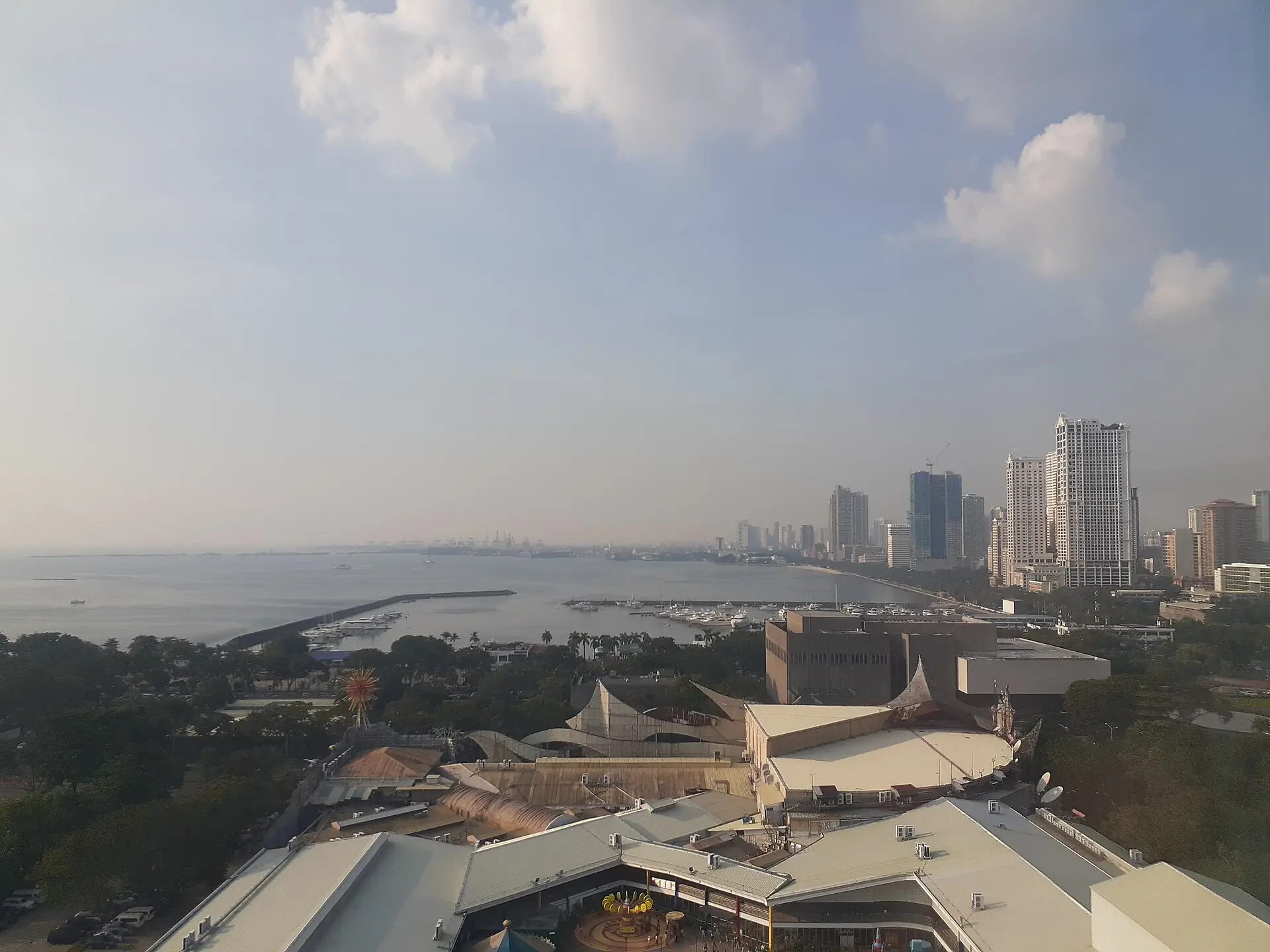
Manila Bay — the condo investment case for the capital's bay-side districts
Philippines Geography · Manila

Manila condo investment: Ortigas vs the Bay overhang.
Manila Condo Investment — Ortigas vs the Bay Overhang. Brinkman Data SEO brand card.

Metro Manila is the widest spread in the country. Ortigas Center is the balanced mid-market CBD between Makati and Quezon City — lower entry, decent demand, and a new-supply pipeline you must count before you assume your rent holds. The Manila Bay reclamation strip is the opposite: a post-shock oversupply with soft occupancy and a thin exit while the overhang clears. Across the whole city, you underwrite the exit, not just the rent. The unit is yours perpetually on a CCT, behind the same 40% cap. The structural frame sits at the Philippines foreign-buyer reality check.

4–7%
Ortigas projection band
0–4%
Bay band, wide uncertainty
60–75%
Bay occupancy while overhang clears

The Balanced Entry

Ortigas trades prime pricing for a supply-pipeline watch.

Ortigas Center is the mid-market CBD between Makati and Quezon City — commercial-anchored, more affordable entry than BGC or Makati, solid mid-tier residential demand. It is a balanced submarket rather than a prime or a frontier one. The region-scout matrix places realised long-let occupancy in the low-to-high eighties, with the appreciation projection in the Med band, roughly 4–7% annualised over a five-year forward horizon, and resale liquidity rated Med.

This is a reasonable first foreign purchase if the building and developer check out — mid-tier long-let against a local-professional and BPO-adjacent tenant base, blending yield with appreciation runway. But the covenants here are thinner than BGC’s corporate pool, so underwrite to a more conservative rent and vacancy assumption than you would in prime.

The live constraint is the supply pipeline. Ortigas has a meaningful number of towers in or near completion, and new supply competes directly with your unit on rent. Check what is being delivered within a one-kilometre radius over the next twenty-four months before you assume your rent band holds — a submarket that is balanced today can soften if three towers top out at once. Run the net-yield math against that pipeline, not against today’s occupancy.

The Bay Overhang

A market condition to underwrite, not a verdict to assign.

The Manila Bay reclamation strip is the submarket to walk unless the entry price already prices in the vacancy. It scaled rapidly into 2023 and now carries pronounced condo oversupply and elevated vacancy following the 2024 wind-down of the offshore-gaming sector, which removed a large block of tenant demand quickly. This is a demand-shock plus a supply-overhang — the same pattern property markets everywhere produce when fast building meets a sudden drop in tenants. It is nobody’s fault and it is not a defect in anyone’s title. It is a market condition to underwrite, not a verdict to assign.

The matrix places the appreciation projection in the Low band, roughly 0–4% annualised with wide uncertainty, realised long-let occupancy in a soft 60–75% band, and resale liquidity rated Weak while the overhang clears. Asking prices in places still carry pre-shock expectations; transacted figures can sit materially below. This is a contrarian value play only for the patient Capital Allocator who can buy meaningfully below asking, underwrite to a soft-rent and high-vacancy base case, and hold through the digestion — not a position for anyone who needs a clean, fast exit.

The Tourist falls for the waterfront view at asking and buys someone else’s vacancy. The Operator underwrites from observed transacted comps and the specific tower’s real current vacancy, because the oversupply is uneven tower to tower.

The Exit First

Underwrite who buys this unit, before you buy it.

The spread across Metro Manila is really a spread on exit. Ortigas resale liquidity is Med; the Bay area is Weak. A perpetual CCT is only as useful as your next buyer, and in a thin-exit market a perpetual title does not save you from a discount on the way out. So you underwrite the exit at entry, not the rent in isolation.

A market that is thin on resale needs a wider margin of safety on entry, not a narrower one. The brochure leads with the launch render and the waterfront view. The Operator leads with the question of who buys this unit in year eight, in a submarket the market is still digesting, and at what discount. Get that answer to a number before the reservation fee leaves your account.

This is the generic off-plan & oversupply risk in its purest form — an off-plan unit in an oversupplied, thin-exit submarket is the highest-variance configuration in Metro Manila. On any pre-selling unit, confirm the developer’s DHSUD License to Sell and verify the CCT at the Registry of Deeds before deposit.

92-page PDF · Instant download

Every number on this page, worked end-to-end.

The Philippines Property Buyer’s Playbook walks the 40% cap, the CCT title, VAT vs resale math, the fee stack, and the exit reality — the full framework this research page is built on.

Get The Philippines Playbook — $39

The Underwriting Filter

Three Manila checks before the wire.

  1. Count the cranes, not the render. In Ortigas especially, check what is being delivered within a one-kilometre radius over the next twenty-four months. New supply competes on rent and compounds against both your projected occupancy and your exit at the same time.
  2. Underwrite the Bay from transacted comps. If you look at the Manila Bay strip at all, model a soft-rent, high-vacancy base case and an entry price meaningfully below asking. Use observed transacted comps and the specific tower’s real current vacancy, never the developer’s pro-forma.
  3. Exit, cap, and clean CCT, in writing. Model who buys this unit in year eight and at what discount in a thin-exit market. Confirm the project sits under the 40% cap, verify the CCT at the Registry of Deeds, and check the developer’s DHSUD License to Sell on any pre-selling unit.

A hypothetical worked example: an Ortigas two-bedroom in the region-scout indicative band sits around USD 200,000 — recompute against live listings and the live USD/PHP rate, and against the documentation you will need to repatriate proceeds later. The Makati read sets out the Strong-liquidity prime alternative.

// FAQ

Is Manila a good place for a foreigner to buy a condo?
Metro Manila is the widest spread in the country, so the answer is submarket-specific. Ortigas Center is a balanced mid-market with a Med appreciation projection band and a new-supply pipeline you must count first. The Manila Bay reclamation strip carries a post-shock oversupply with soft occupancy and a Weak resale rating — a contrarian value play only for a patient buyer who buys well below asking. Underwrite the exit, not just the rent, across the whole city.
Is Ortigas or the Manila Bay area better for foreign buyers?
Ortigas is the balanced mid-market — lower entry than prime, solid mid-tier demand, Med resale liquidity, and a Med appreciation projection of roughly 4 to 7 percent annualised, with a supply pipeline to watch. The Manila Bay area carries a pronounced post-2024 oversupply, soft 60 to 75 percent occupancy, a Low 0 to 4 percent appreciation projection, and Weak resale. The Bay only works as a contrarian buy meaningfully below asking, held through the overhang.
Why is the Manila Bay area oversupplied?
The reclamation strip scaled rapidly into 2023, then the 2024 wind-down of the offshore-gaming sector removed a large block of tenant demand quickly. That is a neutral demand-shock plus supply-overhang — the same pattern property markets everywhere produce when fast building meets a sudden drop in tenants. It is nobody's fault and not a defect in anyone's title. Underwrite from observed transacted comps and the specific tower's real current vacancy, because the overhang is uneven tower to tower.
Can a foreigner own a Manila condo outright?
Yes, perpetually, if the project has headroom under the 40% foreign cap. A foreigner owns the unit on a Condominium Certificate of Title in their own name, with no term and no clock, while the land beneath belongs to a condominium corporation that must stay at least 60% Filipino. Confirm the project's current foreign-ownership percentage in writing, verify the CCT at the Registry of Deeds, and check the developer's DHSUD License to Sell on any pre-selling unit.
What is the biggest risk buying a condo in Metro Manila?
The exit, in the thin-resale submarkets. A perpetual CCT is only as useful as your next buyer, and in the Manila Bay strip resale liquidity is Weak while the overhang clears. In Ortigas the live risk is the new-supply pipeline competing on rent. Underwrite who buys this unit in year eight and at what discount before you commit, and widen your margin of safety on entry in any thin-exit market rather than narrowing it.

Related research

// Same math, other markets

UNDERWRITE THE EXIT AT ENTRY

Ortigas is a balanced mid-market with a supply pipeline to count first; the Manila Bay strip is a post-shock overhang with soft occupancy and a Weak resale rating while it clears. Model who buys your unit in year eight, from transacted comps, never asking prices. The purest version of the risk sits in the off-plan & oversupply breakdown.

Underwrite The Exit

Metro Manila, building by building.

The Ortigas pipeline watch. The Bay overhang reality. The thin-exit, underwrite-the-exit math. The 40% cap and clean-CCT check. One PDF, for the operator.

Get The Philippines Playbook $39

Or start free with the SE Asia Ownership Map — who can own what across six countries.

Instant PDF · 7-Day Guarantee · Secure Checkout

⚠ Disclaimer

Brinkman Data Analytics is an independent research service. Not financial, investment, tax, or legal advice. Philippine property law is jurisdiction-specific. A foreigner cannot own land in the Philippines. Engage a licensed Philippine lawyer, verify every title at the Registry of Deeds, and consult a qualified tax adviser before acting. International real estate carries risk of partial or total loss of capital.

Get The Philippines Playbook $39