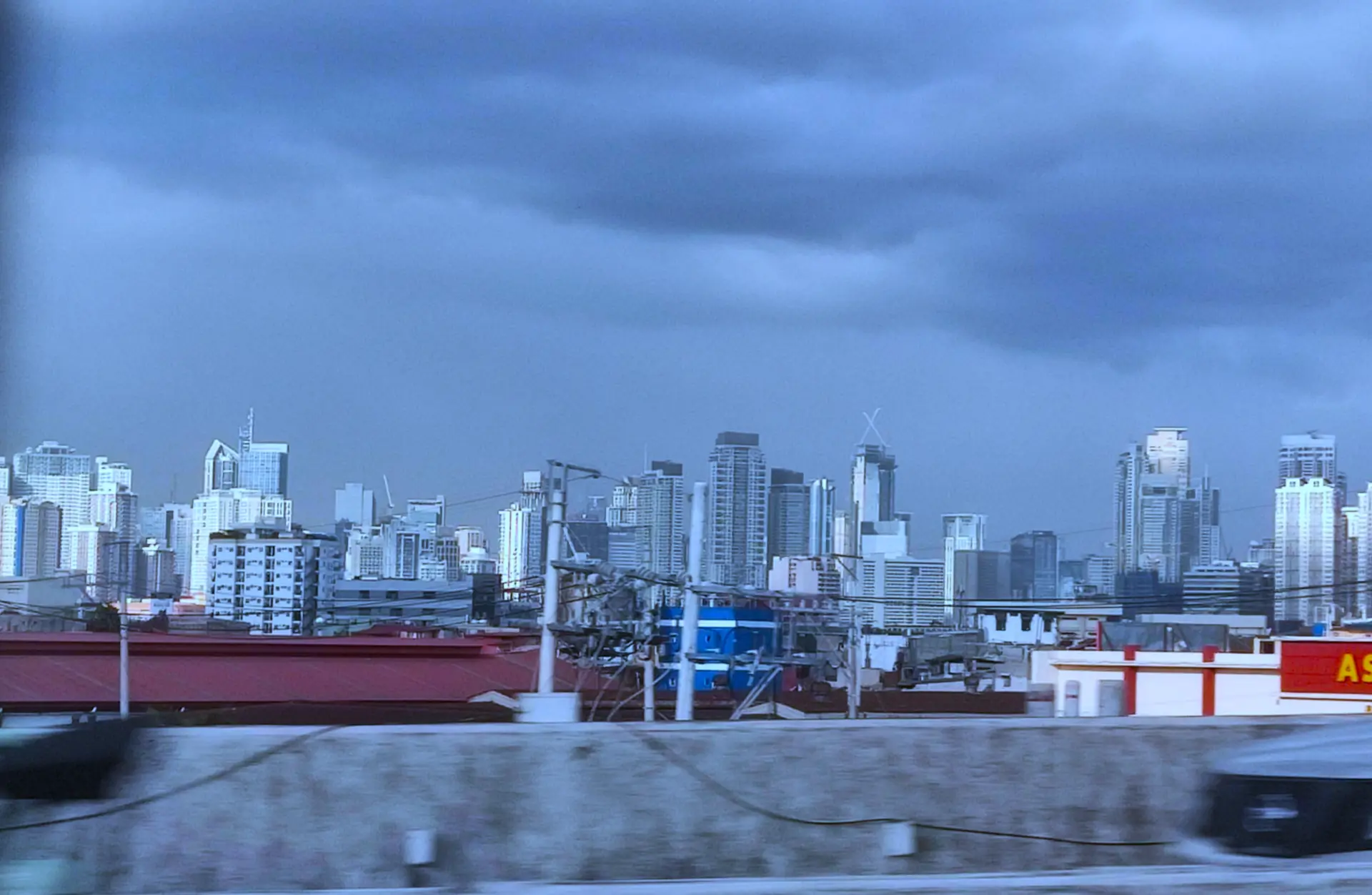
Can UAE Residents Buy Property in the Philippines?
Yes. A condominium unit on perpetual title in your own name, inside the project's 40 percent foreign cap, never the land. And the document that decides whether sale proceeds ever leave the country is one most buyers never collect.

// Short answer
Can UAE Residents Buy Property in the Philippines?
Yes — the unit, never the land, and one percentage decides whether you can buy in that building at all. A foreigner living in the UAE, whatever the passport, can own a condominium unit outright on a Condominium Certificate of Title, registered in their own name and held in perpetuity, provided foreign ownership in that condominium project stays within 40 percent. Land is the wall. Under the 1987 Constitution no foreign individual can own land in the Philippines, and residence in Dubai or Abu Dhabi changes nothing about either rule.
Worth pausing on the first half of that, because it is genuinely unusual in this region. The CCT is a perpetual title document. Not a 50 year term like Vietnam. Not a 25 to 30 year lease or a 30 plus 20 plus 30 right to use like Bali. Of the four Southeast Asian markets I underwrite, the Philippines gives a foreigner the strongest paper. That is the argument for the market, and it is a real one.
The second half is the constraint, and it is absolute. The land under the building belongs to the condominium corporation, and your unit title carries a proportionate interest in that corporation rather than in the ground. If a Gulf buyer's mental model of foreigner friendly ownership includes the plot, that model does not transfer here. There is no zone that fixes it and no structure that quietly works around it, because attempts to put land in a foreigner's hands through a local front run into the Anti Dummy Law.
The rest of this page is the part the listing does not cover: the 40 percent cap and how it can void a purchase, how the money gets out of the UAE and into the Philippines, the single document that decides whether it ever leaves again, and the tax stack that a zero tax environment never trained you to model. Research and information, not personalised tax or legal advice.
// Who can help you buy in the Philippines
Brinkman Data is an independent property research service for foreign buyers. It analyses every listing for sale in your city and budget, checks the rents against real lets, and sends you the five worth buying, with a spreadsheet of every listing. It is not an agent, takes no commission, and is paid only by the buyer. Any city, any country. See a real report ($499, delivered in 5 days).
What Can You Own, and What Is the Title Actually Called?
You own a condominium unit, and the title is the Condominium Certificate of Title, issued by the Register of Deeds in your name. It is perpetual and transferable. What it does not include is the land, which stays with the condominium corporation, and that is the structural trade every foreign condo buyer in the Philippines makes.
Long term leases of private land exist, and Gulf buyers are often pointed at them for house and lot products. Be precise about which regime is being described. An ordinary long lease of private land by a foreigner is commonly structured at 25 years with a renewal for a further 25. Republic Act 12252, signed in September 2025, amended the Investors' Lease Act to extend the maximum aggregate lease term to up to 99 years, but that applies to qualified foreign investors in priority sectors registered with the Board of Investments or another investment promotion agency. A personal holiday house is not that. Do not let a sales conversation blur the two.
And be equally precise about what is not available. Arrangements that place land in a Filipino individual's or corporation's name while the beneficial control sits with a foreigner run into the Anti Dummy Law, which carries real consequences and is not a technicality that gets waived because everybody does it. The clean path for a UAE resident is the condominium unit on a CCT, and it is clean precisely because it needs no structure at all.
The verification you want before any deposit moves is a written, dated certification from the condominium corporation stating the project's current foreign ownership percentage. Ask for it in writing. A number quoted verbally by a sales agent is not the number the Register of Deeds will use.
The 40 Percent Cap: Where a Perfect Wire Can Still Fail
The Condominium Act limits foreign ownership to 40 percent of a single condominium project, measured at project level rather than unit by unit. If your purchase would push the project past that line, the Register of Deeds will not issue a CCT in your name, and a transfer that breaches the cap is treated as void rather than merely delayed.
This is the failure mode that catches buyers who did everything else right. The money arrives cleanly, the deed is executed, and the title still cannot register, because the constraint is not about you at all. It is about how many units in that building are already foreign held.
For a Dubai based buyer this is the same procedural adjustment Thailand's 49 percent condominium quota demands, and the same one Vietnam's 30 percent building cap demands. Three different markets, three different numbers, one identical discipline: the cap is verified per building, in writing, dated, before any money moves. In the Emirates the freehold question is answered by the zone. Nowhere in Southeast Asia is it answered that way.
Get the certification from the condominium corporation, not from the developer's sales desk, and get it before the reservation fee. A developer who will not put the current percentage in writing has answered a different question than the one you asked, and the answer is useful.
How Does the Money Leave the UAE and Land in the Philippines?
By international wire from your own UAE bank account through an authorised agent bank in the Philippines, which converts the foreign currency to pesos and issues a Certificate of Inward Remittance. The UAE side is unrestricted: no exchange controls, no outbound cap, no permission to seek. The CIR is the Philippine side's evidentiary anchor, and you have to ask for it, in writing, for every single transfer.
The CIR is the bank issued proof that foreign currency actually arrived through the Philippine banking system. Everything downstream rests on it, including the registration described in the next section, so request it for every tranche of a staged developer payment plan rather than only for the first.
Two disciplines then carry the whole trail. The remitter name must match the buyer who will appear on the title, so a wire from a family trading company or a spouse's account breaks the chain at the point it matters most. And the amounts remitted should reconcile with the price stated on the Deed of Absolute Sale. A deed that says one number while the remittance records say another is exactly the sort of mismatch that surfaces years later, in front of a compliance officer, on a timeline you do not control.
Most UAE based buyers wire US dollars because the dirham is pegged to the dollar, but the requirement is about foreign origin arriving through the banking system and being documented, not about which major currency you start in.
The BSRD: The Document That Decides Whether Your Money Ever Leaves
BSP registration records your inward foreign investment with the Bangko Sentral ng Pilipinas and produces the Bangko Sentral Registration Document. It is not required in order to buy. It is what lets you buy foreign exchange from the Philippine banking system later, to repatriate your capital and remit related proceeds abroad. Skip it on the way in and the exit still exists, just through a much harder door.
Understand how this geometry differs from Thailand's. The Thai system gates the purchase: no FET certificate, no foreign freehold registration, and you find out immediately. The Philippine system gates the exit: nothing blocks the purchase, so the buyer who skips the paperwork feels no consequence at all, for years. That makes this the market where the omission is easiest to commit and most expensive to discover.
The mechanics are bank driven. You present the CIRs and the transaction documents, the deed and the CCT once issued, and the registering bank processes the registration under the central bank's foreign exchange rules. The output is a BSRD tied to your specific investment. File it with the CIRs and the deed. That folder is the Philippine equivalent of the Thai buyer's FET file.
Register at the time of purchase, not years later when you have decided to sell. Retroactive clean up may be possible in some cases, but it is slower, discretionary, and dependent on records you may no longer be able to reconstruct. For a buyer whose entire financial life sits in a jurisdiction with no exchange controls, this is the single least intuitive step on the page, and it is the one worth doing first.
One page per country: the title instruments a foreigner can actually hold, the ownership caps, the money in and money out rules, and the tax lines that decide the net. Built for the buyer comparing the Philippines against Thailand, Bali and Vietnam from a desk in the Gulf, instead of comparing three brochures.
Get the free SE Asia Ownership MapThe Tax Adjustment: Cheap to Hold, Expensive to Let From Abroad
The UAE levies no personal income tax and no capital gains tax on individuals, and no annual residential property tax. The Philippine stack has an unusual shape by comparison: the annual property tax is smaller than its headline rate because it is charged on assessed value rather than market value, while the rental tax is far larger than most foreign buyers model, at a flat 25 percent of gross rent for the typical non resident owner.
Take the annual carry first, because it is the pleasant surprise. Real property tax is levied by the local government on the assessed value, which is the fair market value multiplied by an assessment level, at up to 1 percent in provinces and up to 2 percent in Metro Manila, plus a common 1 percent Special Education Fund on the same base. Because the taxable base is a fraction of market value, the effective annual charge on what the unit is actually worth usually lands well under 1 percent. Light. The trap is administrative rather than fiscal: the bill does not chase you internationally, and unpaid arrears are the classic absentee owner failure, so diarise it or delegate it.
Then the rental line, which is where the Gulf reflex costs real money. A non resident foreigner not engaged in trade or business in the Philippines pays a flat 25 percent of gross rental income, with no deductions, typically collected by withholding. Not net. Gross. Before association dues, before management, before repairs, before a single vacancy month. A foreigner classified as engaged in trade or business is instead taxed at graduated rates on net income, and that classification boundary is fact specific, so confirm which side you fall on with a Philippine tax adviser before you buy a unit you intend to let remotely.
At purchase, budget roughly 2.5 to 4 percent above the price: documentary stamp tax at 1.5 percent of the higher of price or fair market value, local transfer tax of up to 0.5 percent in provinces or 0.75 percent in Metro Manila, and Registry of Deeds fees, with 12 percent VAT on new units above the PHP 3.6 million threshold usually already inside a quoted developer price. Confirm the VAT position in writing before comparing quotes.
At exit, 6 percent capital gains tax on the higher of the gross selling price or the fair market value. The name misleads: it is a transaction tax wearing a capital gains costume, charged on the full price whether you gained or not, and settled before the title can transfer via the electronic Certificate Authorizing Registration. Formally it is the seller's liability while the stamp tax and transfer tax are conventionally the buyer's, but Philippine contracts reallocate costs routinely. Read the allocation clause. A buyer pays all taxes clause quietly moves the seller's 6 percent onto you.
The Philippine stack a Dubai based buyer has to model
- Buying: 1.5 percent documentary stamp tax on the higher of price or fair market value, up to 0.5 percent provincial or 0.75 percent Metro Manila transfer tax, Registry of Deeds fees, and 12 percent VAT on new units above the PHP 3.6 million threshold, usually inside the quoted price.
- Holding: real property tax of up to 1 percent in provinces or 2 percent in Metro Manila on assessed value, plus a 1 percent Special Education Fund on the same base. Assessment levels compress the base well below market value.
- Letting: a flat 25 percent of gross rent for a non resident foreigner not engaged in trade or business, with no deductions. Graduated rates on net income apply if you are classified as engaged in business.
- Selling: 6 percent capital gains tax on the higher of gross selling price or fair market value, settled before the title moves, plus the eCAR step.
- Repatriating: no additional tax, but no banking system foreign exchange route either unless the inward investment was registered and you hold the BSRD.
Currency: The Peg Means Your Real Exposure Is the Peso
The dirham has been held at a fixed rate against the US dollar since 1997, so a UAE balance sheet behaves like a dollar balance sheet. The risk a Philippine purchase adds is not AED against USD. It is US dollar against Philippine peso, and it applies to the entry conversion, to every peso of rent, and to the proceeds you eventually convert back.
The peso floats. Years of peg stability train you to read a price as a fixed quantity, and a peso price is not one. Model entry, rent and exit across a range of rates rather than freezing one, because the buyer who models a single rate has taken a currency position without ever deciding to.
There is a second order point that is specific to this market. Your ability to convert pesos back into foreign currency through the banking system at exit is the thing the BSRD protects. So in the Philippines the currency question and the documentation question are joined: an unregistered investor is not only exposed to the rate, they are exposed on the conversion route itself. Register the inflow and the currency risk stays a pure market risk, which is the only kind worth carrying.
Can You Buy From Dubai Without Relocating?
Yes. A condominium purchase can be executed remotely from the UAE through a Special Power of Attorney granted to a trusted representative or lawyer in the Philippines, who signs the deed and handles registration on your behalf. The non negotiable parts stay the same wherever you are standing: the project's 40 percent cap has to have headroom, the funds must arrive through an authorised agent bank with a CIR, and the inflow should be registered.
Scope the power of attorney narrowly to the specific unit and the specific filings, and give it to someone who works for you rather than to someone introduced by the seller. A broad power of attorney handed to a counterparty's contact is not a convenience, it is an exposure with a stamp on it.
The attestation chain for a power of attorney executed in the UAE for Philippine use changes, so confirm the current requirement with the Philippine lawyer who will actually use the document before you sign anything in Dubai. This is the item on this page most likely to be out of date by the time you act on it.
One logistical note. The Philippines runs four hours ahead of the UAE, so working days overlap almost entirely and remote coordination from Dubai or Abu Dhabi is materially easier than running the same process from Europe or North America. The step that is genuinely easier in person is opening a local peso account, which many buyers fold into a single viewing trip and then handle everything else from home.
Dubai vs the Philippines: The Structural Comparison, Not the Income Comparison
Dubai gives a foreigner perpetual freehold including the land, inside designated zones, with a 4 percent Dubai Land Department transfer fee on entry and an unrestricted exit. The Philippines gives a foreigner a perpetual condominium title, never the land, inside a 40 percent project cap, with a documented exchange route out. The comparison worth running is structure and liquidity, not headline income, because those numbers sit on entirely different cost stacks.
On title strength the two markets are closer than most of the region. Both give you a perpetual, registered, transferable instrument. That is a genuine argument for the Philippines against Vietnam's 50 year term or Bali's leasehold, and a UAE buyer who values ownership certainty should weight it.
On liquidity the picture inverts. In Dubai your future buyer pool is broad and the exit is a market question. In the Philippines your unit competes for both a domestic pool and a foreign pool constrained by the same 40 percent cap that constrained you, and your proceeds then face a conversion step that only exists if you registered the inflow. Liquidity here is part market and part paperwork, which is not a distinction Gulf ownership ever forces you to make.
On carry the two markets diverge hardest. Dubai charges no annual property tax and no personal tax on rental income. The Philippines is cheap to hold on an assessed value basis but expensive to let from abroad, at 25 percent of gross for the typical non resident. That single line is why the Philippine case is strongest for eventual own use or long hold, and weakest as a purely remote letting play unless the gross rent clears that haircut with genuine room to spare. Run that number before the reservation fee, not after.
Six axes, side by side
- Title: perpetual freehold including land in Dubai's designated zones, versus a perpetual Condominium Certificate of Title in the Philippines, with the land held by the condominium corporation.
- Term: none in either. Both instruments are perpetual, which puts the Philippines ahead of Vietnam and Bali on this axis.
- Gate: settled by the zone in Dubai. Settled project by project in the Philippines, by a 40 percent foreign cap, with a breaching transfer treated as void.
- Money out: unrestricted from the UAE. In the Philippines, banking system foreign exchange for repatriation depends on having registered the inflow and holding the BSRD.
- Tax: no personal income tax, no capital gains tax and no annual property tax in the UAE, versus a light assessed value annual charge, a 25 percent gross rental charge for non residents, and a 6 percent exit on full price.
- Residency: the UAE runs a property linked golden visa route at an AED 2 million property value. A Philippine condo purchase does not itself confer residency.
Who the Philippines Is Genuinely Wrong For
The Philippines is the wrong market for a buyer who needs title to land, because the constitutional bar is absolute and no structure legitimately gets around it. It is wrong for a buyer whose entire case rests on letting the unit remotely, because 25 percent of gross rent is the standing price of absentee landlording. And it is wrong for anyone who will not register the inbound investment, because that decision is invisible for years and then decides the exit.
Add two more profiles. The short horizon buyer, because 6 percent of the full price at exit does not care how long you held or whether you gained. And the buyer who wants residency to fall out of the purchase, because it does not: the investor visa route generally excludes a condominium bought for personal use as a qualifying investment, and the retiree route runs on a deposit with its own approval process rather than on the purchase itself. Treat the visa as its own project.
None of that is a reason to write the market off. The Philippines is genuinely right for the buyer who values a perpetual title in their own name, verifies the 40 percent cap in writing before the deposit, registers the inflow on day one, and models the rental line on gross rather than on hope. Be that buyer. The paperwork is boring, cheap and decisive, which is the best combination available in any market.
What Actually Goes Wrong: The Registration Nobody Told Him To Do
This one is not a scam story, which is exactly why it is worth telling. Everything in it is legal, and it still costs the buyer his timeline.
A UAE based professional buys a Metro Manila condominium. The project has quota headroom, the CCT issues in his name, the unit lets steadily, and the annual real property tax turns out to be smaller than he expected. On every visible axis he did fine. He wired the money from his own account, in dollars, through a Philippine bank. He simply never asked for the Certificate of Inward Remittance on two of the four staged payments, because nobody told him to, and he never registered the inward investment with the central bank, because the purchase completed perfectly well without it.
Six years later he decides to sell. The 6 percent tax on the higher of price or fair market value is settled, the eCAR is issued, the title transfers, and he is holding several million pesos. Then he walks into a bank to convert the proceeds and send them to Dubai, and the conversation turns into a documentation request he cannot fully satisfy. The sale is not undone. The money is not confiscated. It is simply stuck on the wrong side of a route he never opened, and reconstructing six year old remittance records from a bank he no longer deals with becomes his new part time job.
The whole problem was preventable at the cost of a folder. Ask for the CIR on every tranche. Present the CIRs and the deed to the registering bank and obtain the BSRD at the time of purchase. File it with the title. That is it. Across 33,030 Thai listings analysed across four cities, the deals that go wrong are rarely the ones with a bad building. They are the ones with a missing document, discovered at the exact moment the owner wanted speed.
The Pre Wire Checklist for a UAE Based Philippine Buyer
- Get a written, dated certification from the condominium corporation stating the project's current foreign ownership percentage against the 40 percent cap, before any reservation fee moves.
- Confirm you are buying a condominium unit on a Condominium Certificate of Title, not a house and lot dressed in a structure, and never a land holding arrangement fronted by a local name.
- If a long lease of land is proposed, establish which regime is being described: an ordinary 25 plus 25 arrangement, or the investor route under the amended Investors' Lease Act, which requires registration with an investment promotion agency.
- Engage an independent Philippine lawyer who acts for you, not for the seller, and scope any Special Power of Attorney narrowly to the specific unit and filings.
- Wire from your own UAE account, in a major foreign currency, through an authorised agent bank in the Philippines. Match the remitter name to the buyer who will be on the title.
- Request the Certificate of Inward Remittance in writing for every single tranche, including each staged developer payment.
- Reconcile the total remitted against the price stated on the Deed of Absolute Sale before signing anything.
- Register the inward investment with the central bank and obtain the BSRD at the time of purchase, not at the time of sale. File it with the CIRs and the title.
- Budget 2.5 to 4 percent above the price for documentary stamp tax, transfer tax and registration, and confirm in writing whether 12 percent VAT sits inside a new build quote.
- Read the cost allocation clause in the contract. A buyer pays all taxes clause moves the seller's 6 percent exit charge onto you.
- Model rental at 25 percent of gross if you will be a non resident owner, and confirm your classification with a Philippine tax adviser before you commit to a letting plan.
- Set a standing arrangement to pay the annual real property tax locally. It does not chase you internationally, and arrears are the classic absentee owner failure.