Can Chinese citizens buy property in Malaysia? Yes, including landed title, with state approval and a price floor.

// Short answer
Yes. A foreign individual can be the registered proprietor of Malaysian land in their own name, landed title included, which is unusual in the region. It is a permission rather than a right: every acquisition needs the prior written approval of the State Authority, there is a minimum purchase price set state by state, and from 1 January 2026 a foreign buyer of residential property pays a flat 8 percent transfer stamp duty. The nationality specific work for a mainland buyer is the money leg out of China.
Destination rules as of September 2026, from each market's own fact sheet in research/new-markets and the sourced cluster pages on this site. China's foreign exchange rules are stated as published by SAFE, the State Administration of Foreign Exchange. Nothing here is foreign exchange, tax or legal advice, and a mainland buyer should take professional advice on lawful routes before committing to a purchase abroad. Every figure links to its source.
On this page
- Can Chinese citizens buy property in Malaysia?
- Is there a minimum price a foreign buyer has to meet?
- What do China's foreign exchange rules say about buying property abroad?
- Are Chinese nationals already the largest group in MM2H?
- Does buying in Malaysia give a Chinese citizen residency?
- What does a Chinese owner pay in Malaysia on the way in, on the rent and on the way out?
Can Chinese citizens buy property in Malaysia?
Yes. Part 33A of the National Land Code lets a non-citizen acquire land, including landed freehold, but only after the prior approval of the State Authority has been obtained on a written application. The approval can carry conditions and a levy, and a dealing done without it is null and void.
Two structural points a buyer from anywhere should hold on to. First, non-citizen in section 433A means a natural person who is not a Malaysian citizen, so a Malaysian permanent resident still needs approval. Second, the National Land Code covers the Peninsula and the Federal Territories. Sabah and Sarawak run their own land legislation, so any statement about Malaysian land law is about the Peninsula unless those two are named.
Nothing in Part 33A sorts applicants by nationality. The gate is the same for a buyer from mainland China, Japan or Britain.
The full position: Malaysia foreign land ownership, explained.
Sources
Is there a minimum price a foreign buyer has to meet?
Yes, and it is set state by state rather than nationally. RM1,000,000 is the federal benchmark and the most common state figure, not the bottom of the range. On the consolidated table published by Bar Council Malaysia as at October 2024, residential floors run roughly RM400,000 to RM3,000,000.
Date-stamp any figure you use. The only consolidated all-states table located is the one in Bar Council Malaysia Circular 444/2024, which itself carries the note that the information is as at October 2024 and should be checked with the state authority.
Two states break the general rule outright. Selangor allows foreign buyers strata and landed strata titles only, with no landed individual titles at any price. Perak has barred non-citizens from acquiring, owning, holding or inheriting freehold since September 2023, leaving 60 year leasehold.
Categories closed everywhere: Malay Reserved Land, units allocated to Bumiputera interests in a development, and low-cost and medium-low-cost residential. Several states add single-storey terrace houses, auction properties and agricultural land.
The state by state table: Malaysia minimum purchase price by state.
Sources
What do China's foreign exchange rules say about buying property abroad?
SAFE, the State Administration of Foreign Exchange, publishes an individual facility with an annual total equivalent to USD 50,000 per person. Overseas property purchase is not among the uses the individual foreign exchange purchase application form permits. Take professional advice on lawful routes before committing to a purchase abroad.
Article 2 of the Detailed Rules for the Measures for the Administration of Individual Foreign Exchange gives the annual total amount as the equivalent of 50,000 dollars for each person every year. SAFE's own explanation of those rules separates current account items, which run under the annual amount, from capital account items, which carry their own approval and registration steps.
Since 2017 an individual buying foreign exchange completes an application form stating the purpose. As SAFE's own form states, the form does not permit the foreign exchange to be used for property, securities or dividend paying insurance products abroad.
Malaysia adds a timing problem of its own. State Authority approval takes as long as it takes, the price floor is fixed in ringgit, and the stamp duty falls due on the instrument. A funding question that is still open when the approval lands is a funding question that costs money. Settle it with a qualified professional first.
This page states the published rules and does not set out ways around them. A developer's overseas sales desk is not a source of advice on Chinese foreign exchange law.
Sources
- State Administration of Foreign Exchange: press conference on the Detailed Rules for the Measures for the Administration of Individual Foreign Exchange (5 January 2007)
- Detailed Rules for Implementing the Measures for the Administration on Individual Foreign Exchange, Art. 2 (English text)
- SAFE: Application Form for Individual Purchase of Foreign Exchange (form text, safe.gov.cn)
- Bank Negara Malaysia: Foreign Exchange Policy Notices (the Malaysian side lets a non-resident repatriate freely in foreign currency)
Are Chinese nationals already the largest group in MM2H?
On the published research, yes. Writing for FULCRUM, the ISEAS Yusof Ishak Institute's commentary platform, Koh Sin Yee reported on 15 August 2025 that across 2002 to 2019 the top three origin countries for Malaysia My Second Home participants were China at 32.8 percent, Japan at 10.6 percent and Bangladesh at 8.9 percent.
Read that for what it is. It is a share of MM2H pass holders over a long window, not a share of property transactions, and no equivalent transaction level nationality table was located for this page. Anyone quoting a property market share figure for Malaysia should be asked where it comes from.
What it does tell a buyer is that the programme and the property purchase are joined at the hip in this market, which is not true in most others. That is the next section.
Does buying in Malaysia give a Chinese citizen residency?
Not by itself. Malaysia My Second Home is a long stay pass programme, not permanent residence, and it runs the other way round: you qualify on a fixed deposit, then the purchase of a residence is compulsory. The pass categories carry their own minimum property prices.
The official category sheet sets a fixed deposit of USD 1,000,000 for Platinum, USD 500,000 for Gold and USD 150,000 for Silver, with compulsory residential purchase minimums of RM2,000,000, RM1,000,000 and RM600,000 respectively. The official guide states that selling the residence is not allowed for 10 years unless you are upgrading to one of higher value, and that failure to comply with any term results in the pass being revoked.
An announcement of 28 May 2025 gave Platinum, Gold and Silver participants one year from pass endorsement to complete the house purchase. Note also that the widely repeated claim that Medini and Forest City are exempt from the Johor price floor is not supported: the government's own MM2H document says the SEZ purchase floor is subject to Johor state policy.
Sources
What does a Chinese owner pay in Malaysia on the way in, on the rent and on the way out?
A flat 8 percent transfer stamp duty from 1 January 2026 for a buyer who is not a citizen and not a permanent resident. Rent is taxed at a flat 30 percent for a non-resident. On sale, real property gains tax is 30 percent within five years and 10 percent from the sixth.
The 8 percent comes from the Finance Act 2025, which inserted item 32(ab) into the First Schedule of the Stamp Act 1949: RM8.00 for every RM100 of the consideration or market value, whichever is greater, on a sale of residential property from 1 January 2026 to a foreign company or a person who is not a citizen and not a permanent resident. The same Act defines residential property as a house, condominium, apartment, flat, service apartment or small office home office solely to be used as a dwelling house.
The 7 percent retention is section 21B of the Real Property Gains Tax Act. The buyer must retain up to 7 percent of the consideration and pay it to the Director General within sixty days of the disposal. That is the real exit friction in Malaysia rather than currency control, because Bank Negara lets a non-resident repatriate rent and sale proceeds in foreign currency.
The full stack: Malaysia property tax for foreigners, and Malaysia property buying costs.
Sources
- Laws of Malaysia: Finance Act 2025 [Act 874], First Schedule item 32(ab) and s.26
- HASiL (LHDN): Tax Treatment Residents and Non-Residents (30% flat, from year of assessment 2020)
- Attorney General's Chambers: Real Property Gains Tax Act 1976, Schedule 5 Part III and s.21B
- Bank Negara Malaysia: Foreign Exchange Policy Notices
// Buying abroad from China?
Every listing in your budget, ranked on net yield, appreciation and resale. Any market with public listing data; book a free call first so I can confirm your city has the data.
See the $499 report, page by pageFrequently Asked Questions
Can a Chinese citizen own landed freehold in Malaysia?
What is the minimum property price for a foreign buyer in Malaysia?
How much stamp duty does a foreign buyer pay in Malaysia in 2026?
Does MM2H require buying a property?
Can a Chinese buyer use the USD 50,000 annual facility to pay for a Malaysian house?
Can rent and sale proceeds be taken out of Malaysia?
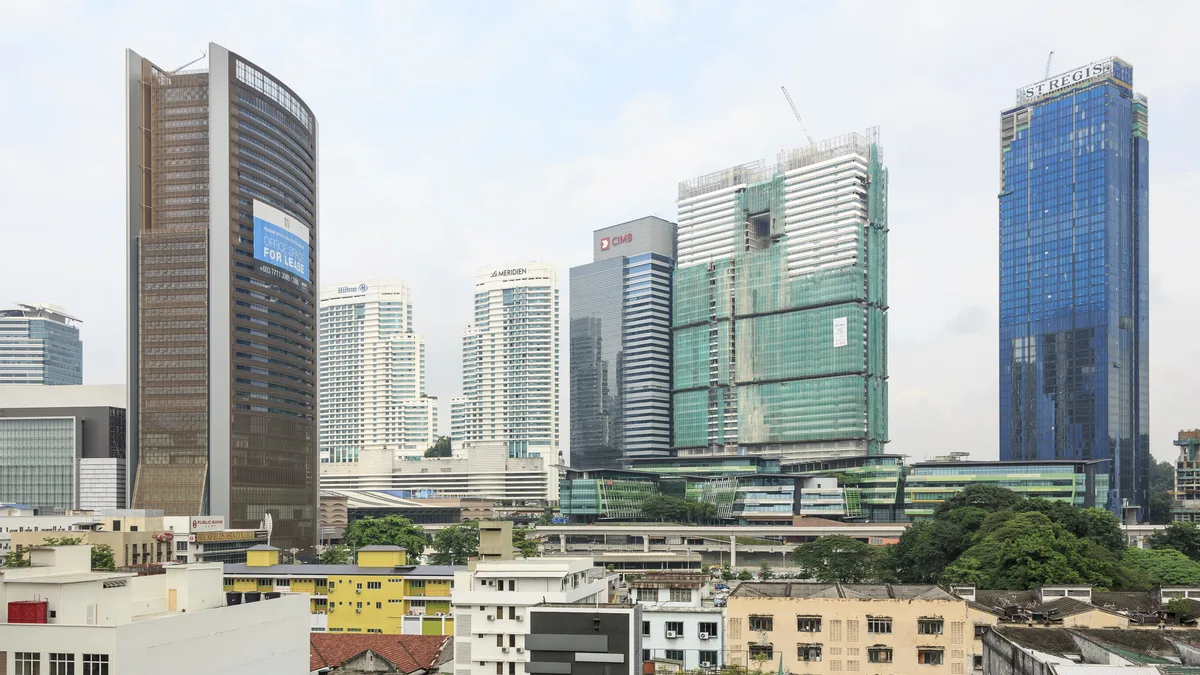
Header photo: CEphoto, Uwe Aranas, CC BY-SA 3.0, via Wikimedia Commons. All credits: image credits.