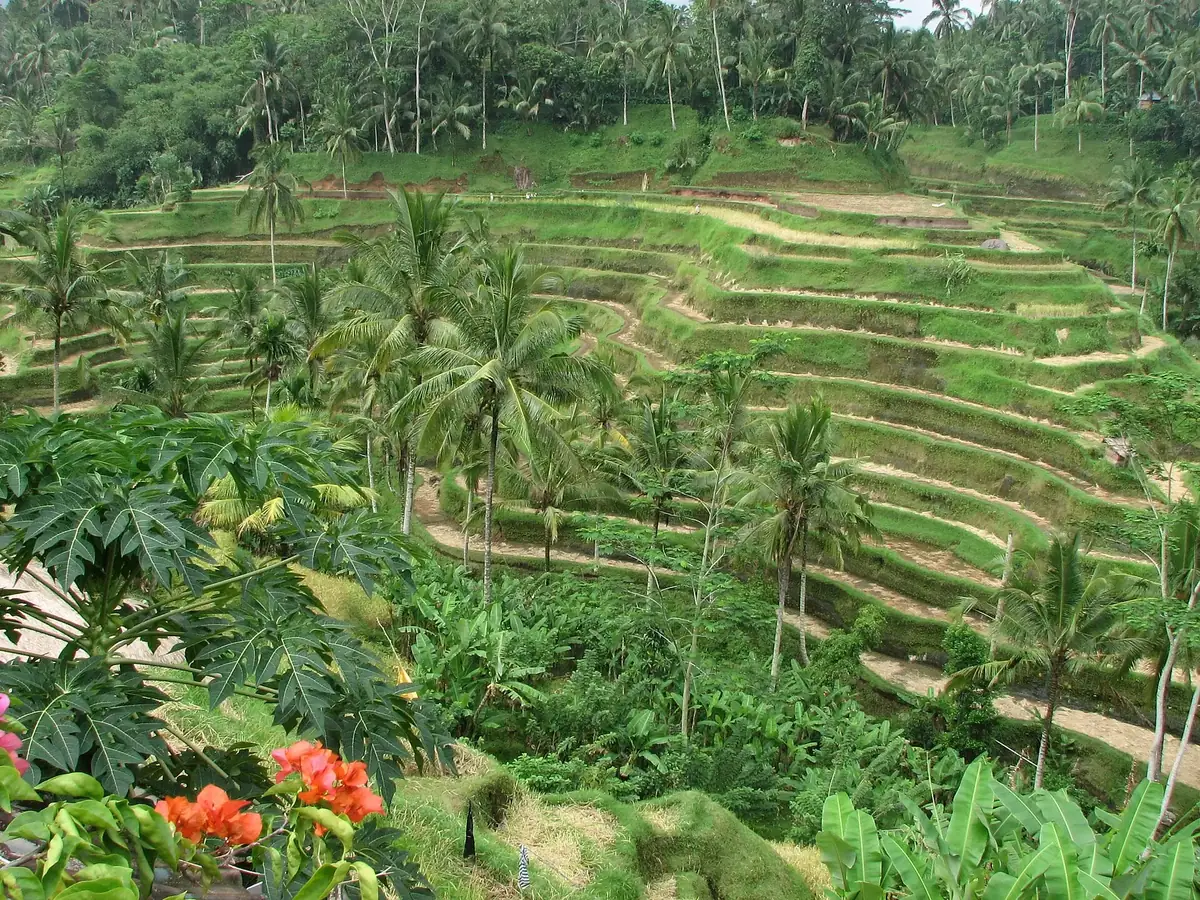
Sertifikat Hak Milik (SHM): the strongest title in Indonesia, and the one you cannot have
SHM is Indonesian freehold. It is perpetual, inheritable, mortgageable, and reserved by statute for Indonesian citizens. If a listing in English says freehold and you are not an Indonesian citizen, the certificate is not describing you. This page explains what SHM is, why the door is closed, and what a foreign buyer actually holds instead.
// Short answer
What is a Sertifikat Hak Milik (SHM)?
A Sertifikat Hak Milik (SHM), in English a “certificate of ownership”, is the certificate of Hak Milik, the right of ownership over land under Indonesia's Basic Agrarian Law (Law No. 5 of 1960). It is the strongest and most complete land right in the Indonesian system: perpetual, with no expiry date and no renewal cycle, freely transferable, inheritable, and usable as bank security. It is issued and registered by the Ministry of Agrarian Affairs and Spatial Planning / National Land Agency (ATR/BPN).
Articles 20 and 21 of the Basic Agrarian Law define Hak Milik. Article 20 describes it as the fullest and most complete right a person can hold over land. Every other Indonesian land right is defined downward from it. Hak Guna Bangunan is a right to build. Hak Pakai is a right to use. Hak Sewa is a contractual right to rent. All three are time bound. Hak Milik is not.
That single structural fact drives the entire Bali ownership conversation. When a villa is described as freehold in an English listing, the underlying Indonesian document being referred to is an SHM. The English word freehold is a translation convenience. The legal object is Hak Milik, and Hak Milik carries an eligibility rule that the translation drops.
SHM also behaves differently at the bank. Indonesian lenders take Hak Tanggungan (mortgage security) over SHM land routinely. A time bound right with 18 years left on the clock is a much weaker security object. That is why SHM parcels price at a premium over the same parcel offered on a lease, and it is why the word gets used so freely in marketing copy aimed at foreigners.
Why can a foreigner not own SHM land in Indonesia?
Article 21(1) of the Basic Agrarian Law states that only Indonesian citizens may hold Hak Milik. It is a citizenship test, not a visa test, not a tax residency test, and not a company test. No stay permit, no length of residence, no marriage and no local company converts a foreign national into someone eligible to hold SHM over land.
The rule is a nationality gate written into the founding land statute in 1960, and it has survived every reform since, including the Job Creation Law (Law No. 11 of 2020, re enacted as Law No. 6 of 2023) and its land implementing regulation, Government Regulation No. 18 of 2021. Those reforms extended and clarified the rights foreigners can hold. They did not touch the citizenship gate on Hak Milik.
Government Regulation No. 28 of 2025, which some 2026 listings cite as a change in foreign ownership, is a risk based business licensing regulation. It changes how permits are processed. It does not change who may hold which land right. If a page tells you a 2025 regulation opened freehold to foreigners, it is describing licensing reform and calling it something it is not.
A PT PMA does not solve it either. An Indonesian limited liability company with foreign shareholding is an Indonesian legal entity, but Hak Milik for legal entities is restricted to a narrow list designated by government regulation, such as certain state banks, agricultural cooperatives and religious or social bodies. A villa holding company is not on that list. A PT PMA holds Hak Guna Bangunan, not Hak Milik. HGB, the title a foreigner can be on. The mechanics of that route sit in the PT PMA breakdown.
Stop trying to find the workaround. Start underwriting the right you can actually register.
What is the full Indonesian land title ladder, and where does a foreigner actually sit?
The ladder runs Hak Milik at the top, then Hak Guna Usaha (right of exploitation, agricultural), Hak Guna Bangunan (right to build), Hak Pakai (right to use) and Hak Sewa (right to rent) below it. A foreign individual can register on Hak Pakai and can contract into Hak Sewa. A foreign owned Indonesian company (PT PMA) can hold Hak Guna Bangunan. Hak Milik is off the ladder for all of them.
Under Government Regulation No. 18 of 2021, both Hak Guna Bangunan and Hak Pakai run on a 30 year initial grant, extendable by 20 years and renewable for a further 30, a nominal 80 years, on State land. Granted over Hak Milik land, they run up to 30 years and are renewed only by agreement with the landowner (Article 55(3)). The extensions are applications, not automatic rollovers. You re apply, you pay, the BPN reissues.
Hak Pakai is the only registered land title a foreign individual can hold in their own passport name. It requires a valid Indonesian immigration document. In practice notaris and land offices work to a KITAS, a KITAP or a Second Home Visa. It also carries provincial minimum price thresholds and residential zoning requirements. The full comparison sits in the Hak Pakai pathway guide.
Hak Sewa is not a title at all. It is a lease contract executed before a notaris. It creates no entry in the land register in your name. Its entire strength lives in the renewal clause. The title type comparison covers where that breaks.
So the honest sentence is short. A foreigner in Bali holds a registered right to use, a corporate right to build, or a contract. Never the top of the ladder.
The ladder, top to bottom
- Hak Milik (SHM). Perpetual ownership. Indonesian citizens and a narrow list of designated Indonesian entities only.
- Hak Guna Usaha (HGU). Right of exploitation over state land, agricultural and plantation use. Indonesian citizens and Indonesian legal entities.
- Hak Guna Bangunan (HGB). Right to build and own structures. Indonesian citizens and Indonesian legal entities including PT PMA. 30 plus 20 plus 30 years.
- Hak Pakai (HP). Right to use land or a building. Available to a foreign individual with a valid immigration document. 30 plus 20 plus 30 years.
- Hak Sewa. Contractual right to occupy for a fixed term. Notaris registered, not land registered. Open to anyone who can sign.
- Hak Milik atas Satuan Rumah Susun (HMSRS). Strata ownership of an apartment unit sitting on HGB or Hak Pakai land. Open to qualifying foreigners under Government Regulation No. 18 of 2021.
What happens to an SHM if it passes to someone who cannot legally hold it?
Article 26(2) of the Basic Agrarian Law makes any transfer of Hak Milik to a foreigner null and void by law, batal demi hukum. The right does not partially vest and it is not curable later. The land falls to the state, and the statute states that payments already made are not recoverable. Article 21(3) gives a narrow one year window where the foreigner acquired the right by inheritance or by mixed marriage: relinquish or convert within one year, or the right lapses to the state.
Read that again, because it is the whole risk in one clause. Void by law is not the same as voidable. A voidable contract stands until someone challenges it. A void arrangement never had legal force at any point. There is no moment at which the foreign buyer held anything.
The one year relinquishment window under Article 21(3) is the mechanism that actually catches ordinary people. A foreign spouse inherits. A foreign heir is named in a will. The clock starts. If the right is not transferred to an eligible Indonesian holder, or converted down to a right the foreigner can hold, within twelve months, it lapses.
The same relinquishment logic exists one rung down. A foreigner holding Hak Pakai who stops holding a valid immigration document, or a foreign heir who never had one, is required to divest inside a defined window rather than continue holding. The right is conditioned on eligibility, permanently, not just at the moment of purchase.
This is why the inheritance question belongs in your underwriting before the purchase, not in your will afterwards. Model who holds the asset when you are not around to hold it.
What is written on an SHM certificate, and how do you read one?
An SHM has two halves that must agree with each other. The buku tanah (land book) carries the right type, the right number, the registered holder's name and identity number, and the chain of registered entries including mortgages, blocking notices and seizures. The surat ukur (measurement letter) carries the parcel identification number (NIB), the surveyed area in square metres, and the boundary drawing. If those two halves disagree, or if either disagrees with the ground, you do not have a clean parcel.
Start with the header. It must read Sertipikat Hak Milik, not Hak Guna Bangunan, not Hak Pakai, and not a girik or Letter C document dressed up in a folder. The right number and the village (desa), district (kecamatan) and regency (kabupaten) identify the parcel inside the BPN register.
Then the holder. One named Indonesian citizen, or several named co holders, with identity numbers. Marital status matters here, because land acquired during a marriage is generally marital property under Indonesian law and a spouse's consent is part of a clean transfer.
Then the entries page. This is the page most foreign buyers never ask to see. It records subsequent registrations against the parcel: Hak Tanggungan (mortgage security), blokir (blocking notices lodged by a party asserting an interest) and sita (court seizure). A parcel with an unreleased mortgage entry is not sellable clean on the day you want to close.
Then the surat ukur. Compare the stated area to the area in the listing. Compare the boundary drawing to what you walked. A ten percent variance between certificate area and marketed area is not a rounding artefact, it is a question you must resolve before you pay anything.
Since Ministerial Regulation ATR/BPN No. 3 of 2023, land documents are also issued electronically. An electronic certificate carries a QR code and is tied to a land account keyed to the holder's identity number or passport number. Both analog and electronic forms are in circulation in 2026. A QR code on the document is a feature to verify, not a substitute for verifying.
How do you verify an SHM at the BPN before you wire money?
There are three layers and you should run all three. First, an online status check using the ATR/BPN Sentuh Tanahku application or the BHUMI portal, which returns basic registered status for a certificate number. Second, a formal pengecekan sertipikat at the Kantor Pertanahan of the regency where the land sits, lodged through a PPAT, which confirms the certificate matches the land office register and shows encumbrances. Third, a plotting check, where the parcel coordinates are matched against the BPN registration map so you know the paper parcel and the physical parcel are the same object.
The online check is free and takes minutes. It is a screening tool, not a clearance. It tells you a certificate number exists and returns basic particulars. It does not tell you that the document in the seller's hand is the document behind that number.
The pengecekan is the one that counts. It is lodged by a PPAT (Pejabat Pembuat Akta Tanah), the official authorised to draw land transfer deeds, against the physical certificate. The land office stamps the certificate to confirm it is consistent with the register. This is where a mortgage entry, a blocking notice or a mismatch surfaces.
The plotting check is the one buyers skip and then regret. Certificates are genuine and boundaries are still wrong, usually because of historical subdivisions recorded before the register was digitised. GPS plotting against the BPN map is how you find out whether the rice terrace view you priced is inside your boundary or inside your neighbour's.
Do all three before any money leaves your account. Not after the deposit. Not after the reservation fee. Before.
The verification sequence
- Get the certificate number, the parcel identification number (NIB) and clear photographs of every page, including the entries page.
- Run the online status check via Sentuh Tanahku or BHUMI against that certificate number.
- Instruct a PPAT to lodge a pengecekan sertipikat at the Kantor Pertanahan for the regency where the land sits.
- Commission a plotting check so the certificate boundary is matched to physical coordinates.
- Check the entries page for Hak Tanggungan, blokir and sita. Any live entry must be released before closing, not at closing.
- Confirm zoning against the regional spatial plan (RTRW) for the intended use, and confirm any existing structure has a PBG and, where applicable, an SLF.
What does 'the SHM will be converted to Hak Pakai' actually mean in a real transaction?
It means the seller's Hak Milik is extinguished and a fresh Hak Pakai is granted over the same parcel in the foreign buyer's name. It is not a relabelling of an existing certificate. The Hak Milik is released through a notarial deed of relinquishment (akta pelepasan hak) so the parcel reverts to state land, and the buyer then applies to the land office for a grant of Hak Pakai. You end up holding a new certificate with a new right number and a 30 year clock.
The practical sequence runs like this. The parties agree terms and the buyer's eligibility is documented, meaning immigration document, passport identity and the applicable provincial minimum price threshold. The certificate is checked at the land office. The seller's Hak Milik is relinquished by notarial deed. The application for Hak Pakai is lodged with the Kantor Pertanahan. Taxes are settled. The land office issues the Hak Pakai certificate in the buyer's name.
Two conditions decide whether this is even available. The land must be zoned for residential use, and the parcel must clear the provincial minimum value threshold for foreign acquisition. Those thresholds are set by ministerial regulation, differ by province and by property type, and are revised periodically. Confirm the current figure for Bali with your notaris and the provincial land office rather than trusting any published number, including one in an article.
Timing is not a same day event. Practitioner guidance in 2026 commonly quotes several weeks to a few months from deed execution to certificate issuance, with electronic processing shortening the tail. Treat any promise of a fast conversion as an assumption to test, not a term of the deal.
The conversion itself has its own rules, and they moved in 2022 and again in 2025: penurunan hak, the downgrade that has to happen before a foreign-funded sale. The transfer that follows it runs on the Akta Jual Beli.
The transaction tax stack is real and it is the buyer's problem. BPHTB, the land and building acquisition duty, is levied on the acquisition value at a rate up to 5 percent under Law No. 1 of 2022 on fiscal relations, with a non taxable threshold applied. The seller side carries a final income tax on the transfer under Government Regulation No. 34 of 2016, commonly 2.5 percent of gross transfer value. Add notaris and PPAT fees and land office registration fees. Model the full stack before you agree a headline price.
Who can own what, in which country, under which named document. Indonesia, Thailand, Vietnam, the Philippines and more, on one page. The title ladder, the eligibility gates, and the pathway a foreigner can actually register. Read the document before you read the brochure.
Get the free Ownership MapCan a foreigner ever hold a certificate with the words Hak Milik on it?
Yes, in exactly one situation, and it is not land. Under Government Regulation No. 18 of 2021 a qualifying foreigner may hold Hak Milik atas Satuan Rumah Susun (HMSRS), strata ownership of an apartment unit, where the building sits on land held under Hak Guna Bangunan or Hak Pakai. The certificate says Hak Milik. The object is a unit in a building, not the land under it. The land clock still belongs to the underlying HGB or Hak Pakai.
This is the single most misread document in the Indonesian system, and the confusion is understandable. The words are identical. The legal objects are not. Hak Milik over land is perpetual. HMSRS is ownership of a unit and a proportional share of common property, sitting on land whose right has an expiry date and a renewal cycle.
So the question to ask about any strata unit is not what the strata certificate says. It is what the land right underneath says, when it was granted, and how many years are left before extension. That is the number that governs the asset, and it is almost never in the brochure.
The eligibility conditions still apply: a valid immigration document, and the provincial minimum purchase price for the unit type. This is the pathway most relevant to apartment stock in Jakarta and to strata developments in Bali, and it is the closest structural parallel to the Philippine condominium certificate of title and the Vietnamese Pink Book, both of which grant unit level ownership on land the foreigner does not hold.
Read the land right, not the unit label. Every time.
What is a nominee arrangement, and why is it structurally unsafe?
A nominee arrangement is where an SHM is registered in the name of an eligible Indonesian citizen while a foreigner funds the purchase and holds a stack of side documents intended to give them control. Under Article 26(2) of the Basic Agrarian Law, arrangements designed to transfer the benefit of Hak Milik to a foreigner are void by law, and Indonesian courts have repeatedly held nominee constructions unenforceable where the intent to circumvent Article 21 was established. The register shows one owner. The side documents show another. Only the register is a land right.
This is not a trust question and it is not a character question. The structure fails on legal mechanics regardless of who the registered holder is or how well you know them. Frame it that way and the analysis gets simple.
There are four mechanical failure paths and none of them require anybody to behave badly. The registered holder can transfer the parcel, and the transfer registers because they are the registered holder. The registered holder can grant Hak Tanggungan over the parcel, and a secured creditor's claim runs against the land. The registered holder dies, and the parcel passes to heirs under Indonesian succession law, whose claim derives from the register rather than from your side letter. The registered holder's marriage ends, and the parcel is dealt with as marital property.
In every one of those paths, the foreign funder is holding contract documents that a court has to first accept as valid before it can enforce them, against a statute that says arrangements of this kind are void from the start. That is a losing sequence, and it is the sequence that has actually been litigated. The detailed failure mode breakdown sits in the nominee risk page.
The reason this structure keeps appearing is timing, not conspiracy. It closes quickly, the transaction costs are lower than a proper conversion, and the failure modes crystallise years later when the paperwork is filed away and everyone involved has moved on. Fast and cheap at signing. Structurally undefended for the next thirty years.
Amateurs optimise the closing. I underwrite the thirty years.
Do the loan agreement and the sale and leaseback wrapper fix the nominee problem?
No, and the reason is that all of the wrappers sit on the same side of the register as the arrangement they are wrapping. A loan agreement, an irrevocable power of attorney, a statement of beneficial ownership, a put option and a long lease back to the funder are all contractual instruments. None of them is a land right. If the purpose of the package is to give a foreigner the benefit of Hak Milik, the package inherits the Article 26(2) problem rather than curing it.
Walk through what each instrument is supposed to do and where it lands. The loan agreement is meant to recharacterise the purchase money as a debt so the funder can claim repayment. It is an unsecured personal claim against an individual unless it is secured, and if it is secured over the same parcel then the security itself is part of the arrangement being examined.
The irrevocable power of attorney is meant to let the funder deal with the land. Powers of attorney depend on the underlying relationship being valid, and Indonesian law places limits on powers that in substance transfer a right. A power that survives the death of the grantor is a particularly heroic assumption.
The statement of beneficial ownership is the weakest document in the stack, because it is a written admission that the beneficial holder is a foreigner. It documents precisely the fact the statute is aimed at.
The sale and leaseback wrapper is the most sophisticated looking and it deserves a specific note. A genuine, arm's length, properly valued Hak Sewa from an unrelated Indonesian owner is a real and legal structure. That is not what is under discussion here. What fails is a lease back to the person who funded the purchase, attached to a nominee registration, where the lease exists to give the funder the economics of ownership rather than the economics of a tenancy. The form is a lease. The substance is the thing the statute voids.
If your structure only works when nobody looks at the substance, it is not a structure. It is a delay.
How do adat land and the banjar interact with a certificated SHM in Bali?
Bali carries a second land layer alongside the national register. Customary land held by a desa adat (customary village) includes categories such as tanah druwe desa, tanah laba pura (temple land) and tanah ayahan desa, land held by a household in exchange for continuing obligations to the village. Provincial Regulation No. 4 of 2019 recognises the desa adat as a legal subject and provides for village land to be registered in the name of the desa adat. Where land sits in that layer, an individual SHM in a private name is a question to investigate, not a fact to accept.
The practical issue for a foreign buyer is that customary status and registered status are not always visible in the same document. A parcel can carry a genuine SHM in a private name and still sit inside a web of village obligations, access rights, ceremonial use and community expectations that the certificate does not record.
Tanah ayahan desa is the clearest example. It is land whose use has historically been tied to a household's ongoing duties to the village. Where such land has been individually certificated, the community position on transfer, and particularly on transfer out of the village, may not track the register at all.
Temple land and land adjacent to temples, springs and cemeteries carries additional use expectations. Setback and use conventions here are cultural as well as regulatory, and they can materially affect what you may build and how you may operate.
The underwriting move is unglamorous and it works. Establish the parcel's history before certification, not just after. Confirm the banjar and desa adat position on the transfer and on the intended use, in writing, through your notaris, and do it before you commit. A parcel that is clean at the BPN and contested in the village is not a parcel you have finished checking.
What are the specific red flags on Bali land in 2026?
The recurring ones are: a parcel documented only by girik, Letter C or petok D rather than a registered certificate, two certificates over the same parcel (sertipikat ganda), a boundary that does not plot to the certificate, a live mortgage or blocking entry, a green zone or protected zoning designation under the spatial plan, and a built structure with no PBG or SLF. Each is discoverable before you pay. None of them is discoverable from a listing.
The girik point is time critical and most 2026 buyers have not caught up with it. Article 96 of Government Regulation No. 18 of 2021 gave a five year window from 2 February 2021 for old evidence such as girik, Letter C, petok D and verponding to be used to register land. That window closed on 2 February 2026. Those documents are now an administrative reference rather than standalone proof of a right. If a parcel is offered to you on the strength of a girik in 2026, you are being offered a registration problem, not a title.
Sertipikat ganda means two or more certificates exist over the same parcel, usually traceable to record keeping before the register was digitised. Resolution runs through land office adjudication and it is slow. The pengecekan and the plotting check are how you find it.
Zoning is where the Bali specific money gets lost. The regional spatial plan (RTRW) assigns parcels to categories including tourism, settlement, and protected or productive agricultural land. Building on productive agricultural land, the green zone, is restricted, and enforcement has tightened. Rice paddy frontage is the most photogenic and the most restricted land on the island simultaneously. Check the designation on the government spatial planning system, not on a brochure map.
Building permits changed name and substance under the Job Creation Law. PBG (Persetujuan Bangunan Gedung) replaced the old IMB under Government Regulation No. 16 of 2021, and SLF (Sertifikat Laik Fungsi) certifies the completed building is fit for its function. An existing villa with no PBG, or a PBG that describes a smaller or different building than the one standing, is a structure with an unresolved permit position attached to the asset you are buying. The building approval behind the certificate, in full: what a PBG names, what the SLF adds after the build, and what a pre-2021 IMB is still worth.
Setback rules along coast, cliff, river and irrigation channels (sempadan) restrict what can be built near those features regardless of who holds the title. Beachfront and clifftop parcels are exactly where this bites.
If you cannot have SHM, what should you actually underwrite?
Underwrite the right you can register, and price the clock. For a single residential villa that means Hak Pakai where the zoning and value threshold permit, or Hak Sewa where the renewal clause is written properly. For a multi asset or commercial operation it means Hak Guna Bangunan through a PT PMA. The decision is arithmetic, not aspiration: term remaining, extension cost, exit liquidity, and the annual overhead of the structure.
Start with term. A time bound right is a depreciating asset unless you can price the extension. Model the extension application cost and the risk that the parcel's zoning or value threshold changes before your first extension is due. A right with 27 years to first extension is a very different object from one with 12.
Then exit. Hak Pakai transfers through the land office to another eligible foreign buyer, which means your exit pool is other foreigners who satisfy the same immigration and price threshold conditions. Hak Sewa transfers as an assignment of a contract, which means your exit depends on the assignability wording and on the years remaining. The narrower the exit pool, the wider the discount you take when you want out.
Then overhead. A PT PMA carries a capital commitment floor set by investment rules, audited annual accounts, quarterly investment reporting and Indonesian corporate tax. That overhead recurs whether or not the asset performs. It amortises against multiple assets or a large single asset and it does not amortise against a single modest villa.
That is the whole discipline. I read the legislation, I read the certificate, I plot the parcel, I price the clock. Across the site I have analysed 33,030 Thai listings across four cities, and the pattern is identical in every market: the buyers who lose money are the ones who priced the photograph and assumed the paperwork.
Don't chase a title you cannot register. Underwrite the one you can.
What actually goes wrong: the Canggu parcel that was freehold in English and something else in Indonesian
This is the pattern I run into most often when I screen Bali land, described as the sequence rather than as a single named deal, because it repeats almost identically each time.
A parcel comes to me marketed in English as freehold, priced accordingly, with rice terrace frontage and an existing two bedroom structure. The listing pack contains photographs of a certificate. The certificate is real. It reads Sertipikat Hak Milik. It is registered to a named Indonesian citizen. So far, everything the listing said is technically true.
The first question is not about the certificate. It is about the buyer. My client is not an Indonesian citizen, so Article 21(1) closes the door on that specific document being transferred to them. That reframes the deal immediately. What is being offered is not the certificate, it is a structure built around the certificate. The listing did not say which structure, because the English word freehold does not distinguish between them.
The second question is the entries page, which was not in the pack. Requested. When it arrives it carries a Hak Tanggungan entry, a mortgage security registration. Not fatal, and not unusual, but it means the release of that security is now a condition precedent to any closing rather than an administrative afterthought.
The third question is the boundary. The certificate area and the marketed area differ by roughly eight percent. Plotting the parcel against the land office map explains it: part of the frontage that appears in the photographs is not inside the certificate boundary. The view is real. The ownership of the ground producing the view is not.
The fourth question is zoning, and this is where the deal dies. The parcel's designation under the regional spatial plan is not the residential category. That matters twice over. It restricts what can be built and operated, and it removes the Hak Pakai conversion route, because Hak Pakai for a foreign individual is a residential land instrument. The only remaining routes are a corporate structure with its own capital and reporting overhead, a lease, or the arrangement I will not underwrite.
Elapsed time to reach that conclusion: under three weeks, most of it waiting on the land office check. Cost of reaching it: a fraction of one percent of the purchase price. Cost of not reaching it: the entire deposit plus a structure that only holds while nothing changes.
None of the parties involved did anything wrong. The certificate was genuine, the seller was the registered holder, the parcel was real. The failure was entirely on the buy side, in a buyer who read an English adjective and assumed it described an Indonesian legal object.
The SHM pre commitment checklist
- Confirm the document type in Indonesian, not English. Sertipikat Hak Milik, Hak Guna Bangunan, Hak Pakai and Hak Sewa are four different objects and only one word gets used for all of them in marketing copy.
- Confirm your own eligibility first. Passport nationality decides whether Hak Milik is even on the table. It is not a negotiable term.
- Get every page of the certificate, including the entries page and the surat ukur, not a photograph of the cover.
- Run the online status check on Sentuh Tanahku or BHUMI against the certificate number.
- Have a PPAT lodge a formal pengecekan sertipikat at the Kantor Pertanahan for the regency where the land sits.
- Commission a plotting check matching the certificate boundary to physical coordinates before you agree a price per square metre.
- Check the entries page for Hak Tanggungan, blokir and sita, and make release of any live entry a condition precedent to closing.
- Verify the zoning designation under the regional spatial plan for your intended use, on the government system, not a brochure map.
- Verify PBG for any existing structure and SLF where applicable, and confirm the permitted building matches the building standing.
- Confirm any coastal, cliff, river or irrigation setback that applies to the parcel.
- Establish the parcel's pre certification history and the desa adat position on transfer and intended use, in writing, through your notaris.
- Confirm the current provincial minimum value threshold for foreign acquisition with your notaris and the provincial land office, not from an article.
- Model the full transaction tax stack (acquisition duty, seller side final tax, notaris and PPAT fees, land office registration) before agreeing a headline price.
- If the answer to 'which legal structure am I buying' is anything other than a named Indonesian land right, stop and get the name.