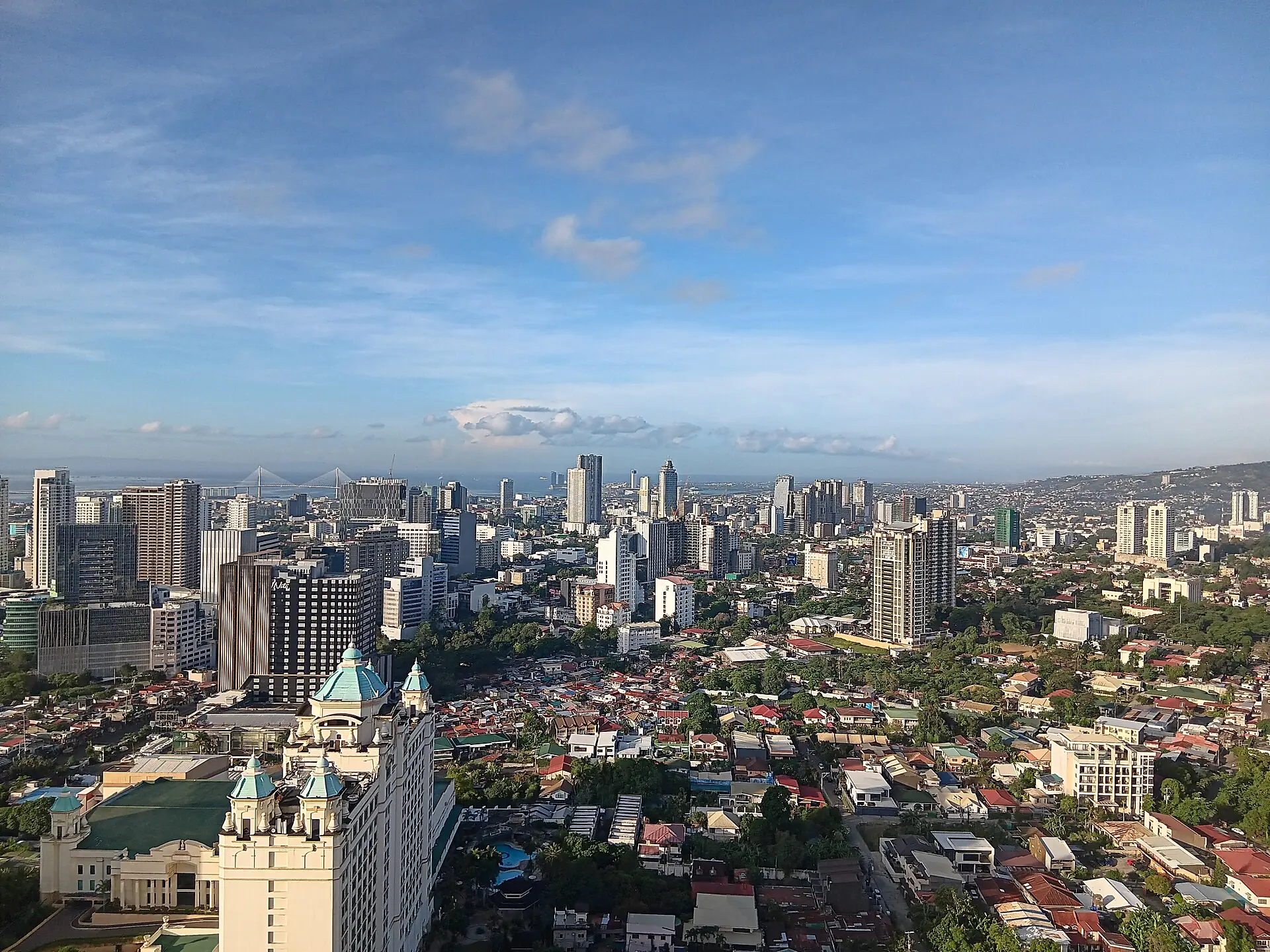
Cebu is two markets across one bridge. Cebu Business Park and IT Park run on a deep, durable BPO workforce that supplies a defensible long-let demand floor at saner entry pricing — the risk-adjusted sweet spot for a first foreign condo. Mactan, across the water, is a seasonal resort short-let market with a different operating model and a resort-scheme structure that can quietly change your economics. Both put the unit in your name perpetually on a CCT, behind the same 40% cap. The structural frame sits at the Philippines foreign-buyer reality check.
The BPO Floor
Cebu Business Park and IT Park are the steadier value play in this section. Cebu’s twin business districts are anchored by a deep, durable BPO — business-process-outsourcing — employment base that drives consistent long-let residential demand at lower entry pricing than Metro Manila. The region-scout matrix places realised long-let occupancy in the mid eighties to ninety for well-positioned units, driven by that workforce floor, with the appreciation projection in the Med band, roughly 4–7% annualised over a five-year forward horizon.
This is the risk-adjusted sweet spot for a first foreign condo in the Philippines — a lower entry point than Metro Manila with a more defensible demand floor than the oversupplied Manila Bay area. Lower headline glamour than BGC, better risk-adjusted fundamentals. The buyer who wants a long-term lease against a sticky BPO tenant base is the right buyer here; the buyer chasing premium short-let yield or trophy positioning is not — the prime ADR ceiling and corporate-covenant depth are both thinner than Metro Manila.
The projection band is an independent-research estimate, not a forecast and not a promise — independent sources project both higher and lower. Run the net-yield math on a BPO-anchored lease before you compare it to a Mactan nightly figure.
The Resort Across The Bridge
Mactan is the resort and short-let island across the bridge — beaches, the international airport, leisure-driven demand. It is a different operating model from the business districts: shorter stays, seasonal swing, leisure rather than BPO tenants. The matrix places realised short-let occupancy in a seasonal, leisure-dependent band roughly in the low-to-mid seventies, with the appreciation projection in the Low-med band, roughly 3–6% annualised.
The honest model is built on the blended annual occupancy, not the peak week. The buyer who can genuinely run a professional booking operation through a seasonal calendar, or who wants a usable secondary-residence-plus-yield hybrid near the airport and beaches, fits Mactan. The buyer who wants stable, predictable long-let income does not — a soft travel year hits Mactan occupancy directly, and the demand is tourism-driven by nature.
This is the same operate-it-do-not-park-it discipline that governs every coastal short-let market in the region — the Makati comparison shows the opposite end of the axis, a stable established long-let with none of the seasonality.
The Resort-Scheme Trap
The matrix rates Mactan’s complexity Med-high, and the reason is the resort scheme. Many Mactan units sit inside managed resort structures with mandatory rental-pool or management terms that materially change your economics and your control. A rental-pool clause can mean you do not set your own nightly rate, do not choose your own management, and share revenue on terms written by the operator, not you. None of that is hidden — but it is in the master deed and the management agreement, not the sales brochure.
So read the management agreement and the master deed before you buy. A sea-view unit inside a rental pool you cannot exit is a different financial instrument from a unit you control. And confirm the project’s foreign-ownership cap status — resort projects hit the 40% cap quickly because foreign demand concentrates there.
This is the generic off-plan & oversupply risk layered onto a seasonal resort scheme. On pre-selling resort stock, confirm the developer’s DHSUD License to Sell and verify the CCT at the Registry of Deeds — the BPO demand floor protects rent in the business districts, but it does nothing for a defective title on a Mactan resort unit.
92-page PDF · Instant download
The Philippines Property Buyer’s Playbook walks the 40% cap, the CCT title, VAT vs resale math, the fee stack, and the exit reality — the full framework this research page is built on.
Get The Philippines Playbook — $39The Underwriting Filter
A hypothetical worked example: a Cebu Business Park two-bedroom in the region-scout indicative band sits around USD 175,000 — recompute against live listings and the live USD/PHP rate, and against the documentation you will need to repatriate proceeds later.
// FAQ
Related research
Buying a Condo in the Philippines as a Foreigner
the pillar that frames Cebu inside the perpetual-CCT model.
Read →
Makati CBD Condos
the opposite end of the axis — a stable established long-let, no seasonality.
Read →
Philippines Condo Rental Yield
the net-after-fees math on a BPO lease versus a seasonal short-let.
Read →
Philippines Off-Plan & Oversupply Risk
the developer-performance and resort-scheme gap, sharpest on Mactan stock.
Read →
The SE Asia Ownership Map
free — who can own what across six countries, side by side.
Read →
// Same math, other markets
Vietnam
Vietnam: the 50-year clock & the 30% cap
The 30% quota, the 50-year clock, the pink book — the full research cluster.
Bali
Bali: leasehold decay & the four pathways
Leasehold decay math and the four legal ownership pathways — the full research cluster.
Free PDF
SE Asia Ownership Map — who can own what across 6 countries
Email-gated. Instant download.
TWO MARKETS, ONE BRIDGE
The First-Condo Sweet Spot
The BPO demand floor. The Mactan seasonal reality. The resort-scheme trap. The 40% cap and clean-CCT check. One PDF, for the operator.
Get The Philippines Playbook $39Or start free with the SE Asia Ownership Map — who can own what across six countries.
Instant PDF · 7-Day Guarantee · Secure Checkout
Brinkman Data Analytics is an independent research service. Not financial, investment, tax, or legal advice. Philippine property law is jurisdiction-specific. A foreigner cannot own land in the Philippines. Engage a licensed Philippine lawyer, verify every title at the Registry of Deeds, and consult a qualified tax adviser before acting. International real estate carries risk of partial or total loss of capital.