Can Germans buy property in Dubai? Yes. Dubai takes nothing. Germany has its own view.

// Short answer
Yes. A German buyer can hold Dubai property freehold, without a time limit, in the areas the Ruler has designated, with no residency requirement and a passport accepted at the Land Department. The UAE charges individuals no income tax. What Germany does with that is a separate question, and it is the one worth paying for.
Rules and fees as of September 2026, for Dubai unless another emirate is named. Freehold areas are set plot by plot and the designated list has been extended by later amendments, so check the Land Department for a specific address. Nothing here is tax advice for your own country. Every figure links to its source.
On this page
Can Germans buy property in Dubai?
Yes, in designated areas. Dubai Law No. 7 of 2006 lets non-UAE nationals, in areas determined by the Ruler and subject to his approval, hold freehold ownership without a time limit, or usufruct and leasehold for up to 99 years. Outside those designated plots a non-GCC foreigner cannot hold freehold.
Regulation No. 3 of 2006 lists the areas, among them Dubai Marina, Palm Jumeirah, Palm Jebel Ali, Emirates Hills, Jebel Ali, Al Barsha South, Sheikh Zayed Road, Al Jaddaf, Mirdif, Nad Al Sheba and Warsan 1. The list has been extended by later amendments, and the right attaches to specific land plots on the Land Department's maps rather than to a community name in a brochure.
There is no residency requirement. The Land Department accepts a valid passport for non-resident foreigners in place of an Emirates ID. What a foreign owner holds across the UAE: UAE foreign property ownership, explained.
Sources
What does Germany do about a Dubai property?
Germany treats anyone with a residence or habitual abode in Germany as unlimited income tax liable under EStG section 1(1), and the country where you are tax resident can usually tax your total worldwide income. So the UAE charging nothing does not mean nothing is owed anywhere. It means the German position decides.
One German mechanic is worth knowing before anyone quotes you a tax-free number. Where a double taxation agreement exempts foreign income, EStG section 32b can still count that income when setting the rate on the rest of your income, the Progressionsvorbehalt. Section 32b carves out letting income from immovable property that is not in a third country, that is to say property inside the EU and EEA. The UAE is not in either, so a Dubai property does not sit in that carve-out.
Whether any treaty exempts the income in the first place is not something this page answers, and it is exactly the question a German adviser is for. Do not take it from a Dubai sales office, and do not take it from here. This page is not tax advice.
Sources
What does the UAE itself charge a German owner?
For an individual: no personal income tax on rent, no capital gains tax on a sale, no inheritance, estate, gift or wealth tax, and no annual property tax on the capital value in Dubai. The recurring charge is a municipality housing fee of 5% of annual rent, paid by the tenant or by the owner where the property is owner-occupied or vacant.
The exception is short letting. A natural person falls inside UAE corporate tax only where turnover from business activities exceeds AED 1 million in a calendar year, and real estate investment income, meaning selling, leasing or sub-leasing UAE property not conducted through a licence, is disregarded whatever the amount. An Ejari registration is an administrative record, not a licence. A Department of Economy and Tourism holiday-home permit is a licence, and the Federal Tax Authority's worked example puts permitted holiday-home income inside corporate tax.
Service charges in jointly owned buildings are approved by RERA and published project by project in the Land Department's service charge index. Look them up for the specific tower before you model the running cost.
Sources
What does a German buyer pay to buy in Dubai?
A 4% Land Department transfer fee on the sale value, officially split 2% seller and 2% buyer, though in practice the buyer commonly pays all of it. Add a trustee fee of AED 4,000 plus VAT at AED 500,000 or more, AED 250 for the title deed and small fixed fees. There is no VAT on a home.
Supplies of residential property are generally VAT-exempt and the first supply of a residential property within three years of completion is zero-rated, so a buyer of a new or resale home pays no VAT on the price. Commercial property is standard-rated at 5%. Mortgage registration is 0.25% of the mortgage value.
Agent commission has no official cap that could be found on a Land Department or RERA page, so the commonly quoted 2% is market convention, not a rule, and is negotiable. Abu Dhabi runs a different fee regime, where the rules allow a registration fee of not less than 1% and not more than 4% per transaction, split equally between seller and buyer unless agreed otherwise. Every fee: UAE property buying costs.
Sources
How does the money move, and what gets reported?
Freely. There are no exchange controls, the UAE keeps an exchange system free of restrictions on payments and transfers for current international transactions, and the dirham has been pegged to the US dollar since 2002 at AED 3.6725. The reporting that does exist sits with the broker, not the buyer.
Licensed real estate brokers and agents must file a Real Estate Activity Report on freehold sales or purchases paid in cash of AED 55,000 or more, paid in virtual assets, or funded by money converted from virtual assets, and keep records for at least five years. Lawyers and law firms carry the same duty. Expect know-your-customer checks and source-of-funds questions.
Because the dirham tracks the dollar, a euro buyer carries euro-dollar exposure rather than an independent dirham risk. That is a planning point for the purchase date and for the eventual repatriation, not a reason to hedge badly. How money in and out actually works: transferring money to the UAE for a property.
Sources
Can a German buyer borrow, and does buying get residency?
Borrowing has caps, not guarantees: for expatriates the central bank sets a maximum loan-to-value of 80% on a first home valued at AED 5 million or less, 70% above that, 60% for a second or investment home and 50% for off-plan regardless of purchaser. Residency is possible at AED 2,000,000 of property.
The central bank regulation does not create a separate non-resident category, so whether a bank lends to a non-resident German buyer, and at what loan-to-value, is lender policy. Read the caps as market ceilings, not as an offer. Maximum tenor is 25 years and the debt-burden ratio is capped at 50%.
On residency: a real estate investor qualifies for a Golden Visa with one or more properties worth in total at least AED 2,000,000, wholly owned, and the identity authority sets the permit at 10 years. Dubai accepts mortgaged property with a bank no-objection letter showing amounts paid and outstanding; Abu Dhabi requires the AED 2,000,000 outside a mortgage. Rules differ by emirate, so confirm with the Land Department or the identity authority.
Sources
// Buying in United Arab Emirates?
Every listing in your budget, ranked on net yield, appreciation and resale. Any market with public listing data; book a free call first so I can confirm your city has the data.
See the $499 report, page by pageFrequently Asked Questions
Do Germans need a residence visa to buy in Dubai?
Is a Dubai apartment tax free for a German owner?
Does the Progressionsvorbehalt apply to Dubai rental income?
Who pays the 4% Dubai transfer fee?
Is there currency risk for a euro buyer in Dubai?
How much can a German buyer borrow in Dubai?
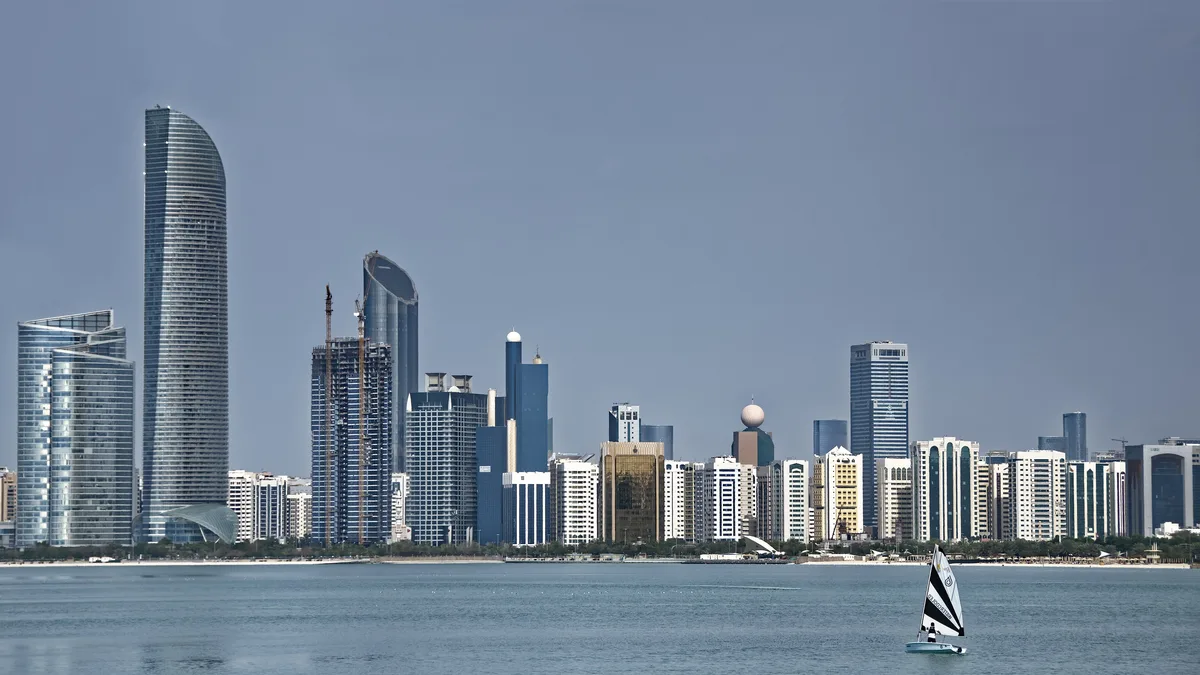
Header photo: Makalu, CC0, via Wikimedia Commons. All credits: image credits.