Can the Dutch buy property in Spain? Yes. Spain taxes it at 19%. Box 3 still sees it.

// Short answer
Yes. A Dutch buyer can buy a Spanish flat or house outright and sits on the EU side of Spain's rules, which means 19% rather than 24% on property income and expenses deductible from rent. Then the Dutch side starts: a second home abroad is an asset in box 3 and has to be declared.
Rules and rates as of September 2026. Purchase tax is set by each region and changes in December budget laws, and the proposed 100% tax on non-EU buyers is a bill that has not passed a vote. Nothing here is tax advice for your own country. Every figure links to its source.
On this page
Can the Dutch buy property in Spain?
Yes. There is no general nationality or residency restriction on buying urban residential property in Spain, and a Dutch buyer takes full ownership, pleno dominio, recorded in the Registro de la Propiedad. You need an NIE first, requested on form EX-15 in Spain or through a Spanish consulate.
The deed is signed before a notary as an escritura publica, because only a public deed can be registered, and registration is what protects the buyer against a third party who acquires in good faith. Before signing, the document to read is the nota simple, the Registry extract showing the registered owner, the description and any charges.
The rules in full: foreign property ownership in Spain, explained, and the two documents themselves: the nota simple and the NIE.
What does the Belastingdienst do with a Spanish second home?
It goes into box 3. The Belastingdienst states that a second home, such as a holiday home inside or outside the Netherlands, belongs to your assets in box 3. For a second home outside the Netherlands you declare the value in economic traffic in an unoccupied state on 1 January of the year before the year of the return.
Double taxation is handled separately. The Belastingdienst's own guidance covers relief where a tax treaty gives the taxing right to the other country, and for immovable property abroad in box 3 the relief works through an exemption method rather than a credit.
Two practical consequences. You need a defensible valuation of the Spanish property on the right 1 January, not an estate agent's optimistic number. And the Dutch and Spanish filings run on different calendars and different bases, so treat them as two jobs. This page is not tax advice; take your own facts to a Dutch adviser.
Sources
What is EU residence worth on the Spanish side?
Five points of tax and a deduction. Non-resident income tax is 19% for residents of the EU, Iceland and Norway and 24% for everyone else, and only EU and EEA residents with effective tax-information exchange may deduct expenses directly related to the Spanish income from let-property income. A Dutch tax resident is on the better side of both.
The test is tax residence, not the passport. A Dutch national who has become tax resident outside the EU is treated as a non-EU resident, pays 24% and loses the deduction.
The same line shows up in the proposed complementary state tax of 100% on acquisitions by people not resident in the EU. That is a bill filed in May 2025 which, on the Congreso record consulted for this page, was still waiting for its first plenary vote. It is not law, it should not be priced into a purchase, and as drafted it would not reach a buyer resident in the Netherlands.
Sources
What does Spain charge a Dutch owner every year?
IBI on the cadastral value, at a minimum 0.4% and a maximum 1.10% for urban property before council increases. Plus non-resident income tax at 19%, either on net rent or, when the property is empty or kept for your own use, on imputed income of 1.1% or 2% of the cadastral value.
The imputed income is the surprise. Nothing has been received and a return is still due, on Modelo 210, accruing on 31 December and pro-rated by days owned and days let. The 1.1% rate applies where the municipality's cadastral values were collectively revised and in force from 1 January 2012 onwards, and 2% otherwise.
Wealth tax also reaches non-residents by obligacion real on assets situated in Spain, with a minimum exempt amount of EUR 700,000, tested on 31 December, and non-residents may apply the rules of the region where the greatest value of their Spanish assets sits. Spanish wealth tax and Dutch box 3 are two separate systems looking at the same flat. Line by line: Spain property tax for foreigners.
Sources
Can a Dutch owner let the Spanish flat out?
It depends on the building and the region, and increasingly on neither being willing. Since 3 April 2025 a vote of three fifths of the owners, representing three fifths of the participation quotas, can approve, limit, condition or prohibit tourist-rental activity in a building, and raise the fee share of units used for it by up to 20%.
Long lets have their own constraint. Under the housing law of 2023, regions may declare stressed residential market zones in which the rent on a new contract may not exceed the last rent of a habitual-residence contract in force in the previous five years, with limited uplifts. The declared zones include Catalonia, the Basque Country, Navarra, parts of Galicia and parts of Asturias, and contain no municipality in Madrid, the Comunitat Valenciana, Andalucia, the Balearics or the Canaries.
So the same purchase has a completely different letting profile in Barcelona and in Malaga. Check the community's rules and the zone status before the offer, not after the deed.
Sources
What happens when a Dutch owner sells?
The buyer withholds 3% of the agreed price on Modelo 211 within one month of the transfer, as a payment on account. The gain is taxed at 19% for all non-residents. The seller files Modelo 210 within three months after that one-month period, and any excess withheld is refundable.
The gain is computed as the sale value net of the seller's costs, minus the acquisition value including improvements and the purchase costs and taxes. Keep every invoice from the purchase, because the acquisition side of that subtraction is where money is lost by people who did not file anything for ten years.
The municipal plusvalia on the increase in value of urban land is also due on a sale, at a rate set by each municipality and capped at 30%. Step by step: selling property in Spain as a foreigner.
Sources
// Buying in Spain?
Every listing in your budget, ranked on net yield, appreciation and resale. Any market with public listing data; book a free call first so I can confirm your city has the data.
See the $499 report, page by pageFrequently Asked Questions
Do I have to declare a Spanish holiday home to the Belastingdienst?
Am I taxed twice on a Spanish property?
What rate does a Dutch owner pay in Spain?
Is there Spanish tax if the flat sits empty?
Can I put a Spanish flat on a short-let platform?
How much is withheld when I sell?
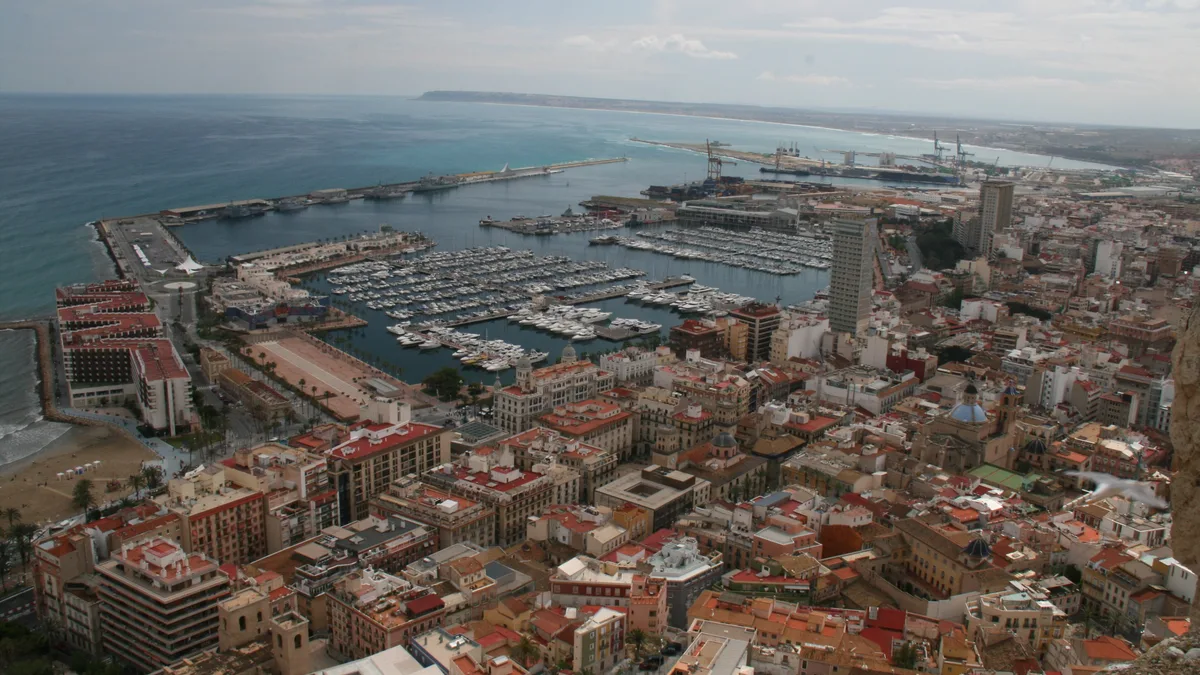
Header photo: Tamorlan, CC BY 3.0, via Wikimedia Commons. All credits: image credits.