Best Areas to Buy a Condo in Phuket (2026): Ranked by the Data, Not the Brochure

The best area to buy a condo in Phuket depends on which game you are playing: Bang Tao / Laguna for transaction depth and the branded-residence market, the Thalang airport corridor for new mid-market stock, Rawai–Nai Harn for long-stay value, Patong for the year-round tenant engine, Surin–Kamala for the boutique premium, Karon–Kata for family tourism, Kathu for inland value, and Phuket Town for the cheapest entry on the island. Below is each catchment with the numbers from my 2026 Phuket scan, who each one suits, and a verdict — counted down from #8 to the best condo catchment on the island. No brochure adjectives. Numbers first.
What a condo is listed for in each of the five cities, by size: how much a condo in Thailand costs.
Where These Numbers Come From
Every figure on this page comes from my 2026 Phuket scan: 506 condo listings pulled from public portals, each with a source URL retained, off-plan and nominee structures excluded. Two cuts feed this page. Median asking prices per area come from the eligible 3–12 million THB band, as published in the Phuket case study. Per-square-metre medians and sample sizes come from the rent-validated cut of 505 listings, in which 178 buildings carry multi-source-verified rents. The medians are asking prices, not closed prices — treat every number as a ceiling, not a valuation. Sample sizes are published per area because a median without its sample size is a marketing number, and Phuket's validated coverage is deep inland (Phuket Town n=266, Thalang n=137, Kathu n=82) and thin in the beach zones (single digits) — I flag every thin sample below. Five-year appreciation figures are not mine: they come from industry trackers (C9 Hotelworks, Knight Frank, Colliers) and are attributed where used.
The Best Areas to Buy a Condo in Phuket, Ranked — Counting Down to #1
8. Phuket Town — Cheapest Entry, Domestic Exit
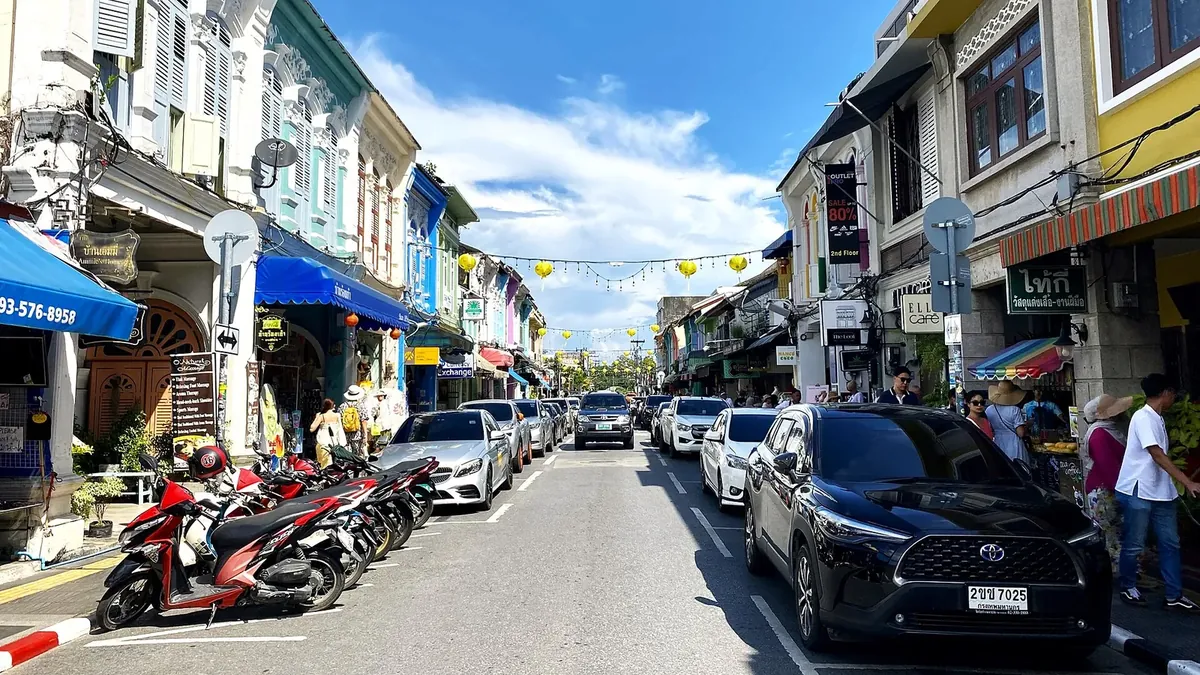
Phuket Town is the cheapest area to buy a condo in Phuket, with a median asking price of 4.26 million THB in the eligible band and roughly 96,900 THB per square metre in my rent-validated cut — across 266 listings, the deepest sample on the island. This is where Phuket's actual residents live: the buyer pool is Thai owner-occupiers, Thai investors and Bangkok money, with a thin foreign expat layer on top.
Asking rents in the sampled segment run a median near 23,700 THB per month, with the middle half of the sample between roughly 18,300 and 32,000 THB. The catch is the exit: what a foreign seller inherits here is a mostly domestic resale market, and that can drag time-on-market. Industry trackers put the town at the bottom of the island's five-year price-growth range — insulated from the foreign demand cycle in both directions.
Verdict: the cheapest and deepest market on the island — and a domestic one. Buy it to live in a real town at the island's lowest entry. Do not buy it expecting a foreign buyer to appear at exit.
7. Kathu / Central — The Inland Value Tier
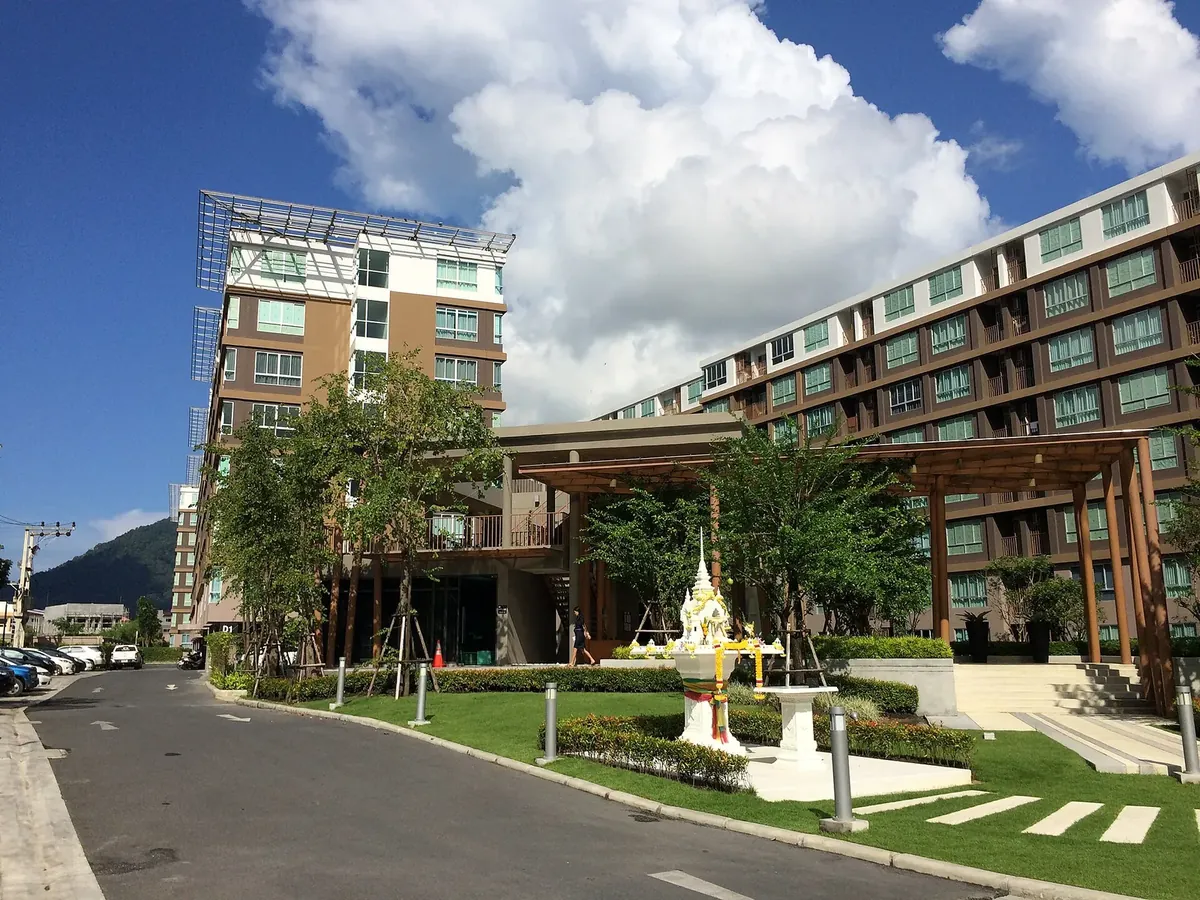
Kathu is the inland corridor between Phuket Town and Patong, and it is the island's quiet value tier: a median asking price of 5.07 million THB in the eligible band, roughly 98,200 THB per square metre in the validated cut (n=82), with the largest median unit sizes of the three deep-sample catchments at 57.5 square metres. No beach premium, because there is no beach.
The tenant base is long-stay by default: people who work the west coast but refuse to pay to sleep next to it, golf-belt residents, families near the international schools. Asking rents in the sampled segment post a median near 29,500 THB per month, middle half roughly 24,700 to 38,000 THB. That is a real rent base for an area the brochures skip entirely.
Verdict: what you give up in postcard, you keep in price. The operator's inland play: Patong's tenant catchment at a discount, without Patong's operating model.
6. Karon / Kata — Family Tourism, Mid-Tier Everything
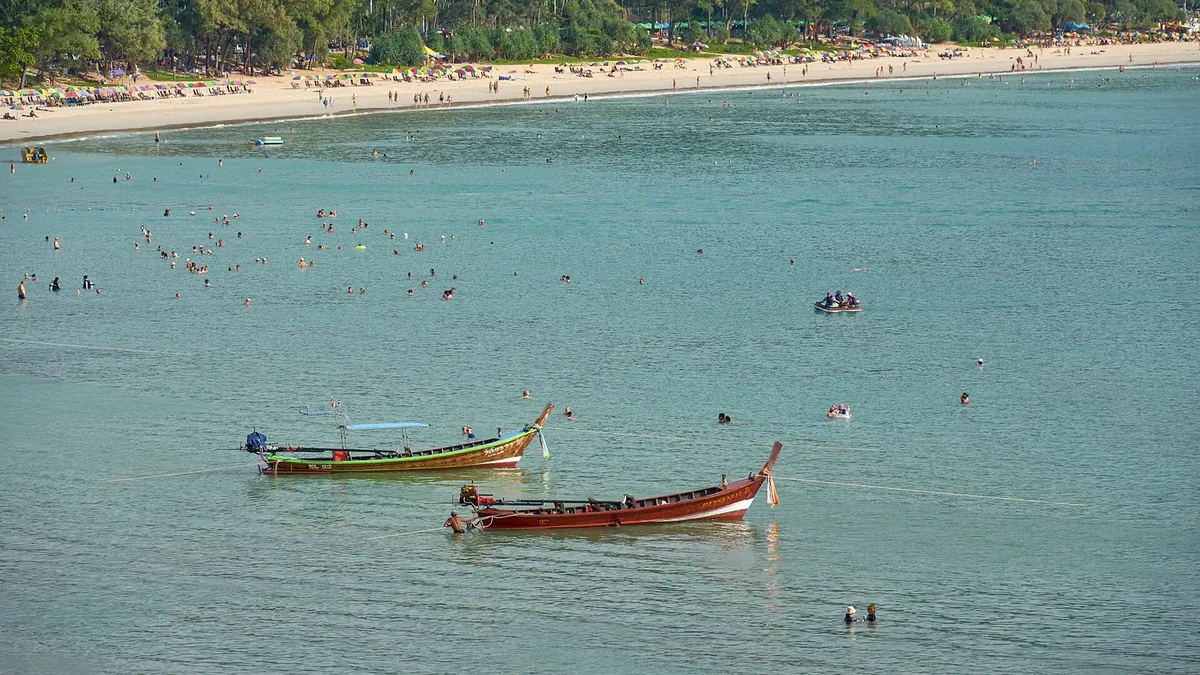
Karon and Kata are the mid-tier of Phuket's beach zones on almost every dimension: a median asking price of 6.50 million THB in the eligible band, between Patong's pricing and the south's, with a family-tourism demand profile — European families, Scandinavian winter long-stays — that runs steadier through the seasons than Patong's peaks. In my rent-validated cut this catchment surfaced only a single listing (n=1), so I publish no per-square-metre median of my own here; industry trackers place the zone around 116,000 THB per square metre.
The honest read: the same trackers that price the zone also flag its resale market as oversupplied heading into 2026, like Patong's. The demand is real and the seasons are gentler, but the buyer assumption that a pleasant bay comes with a quick exit is exactly the assumption the time-on-market data punishes.
Verdict: a steady-but-unspectacular hold. Buy the gentler seasonality if it fits your tenant, and underwrite the exit before the view.
5. Surin / Kamala — The Boutique Premium
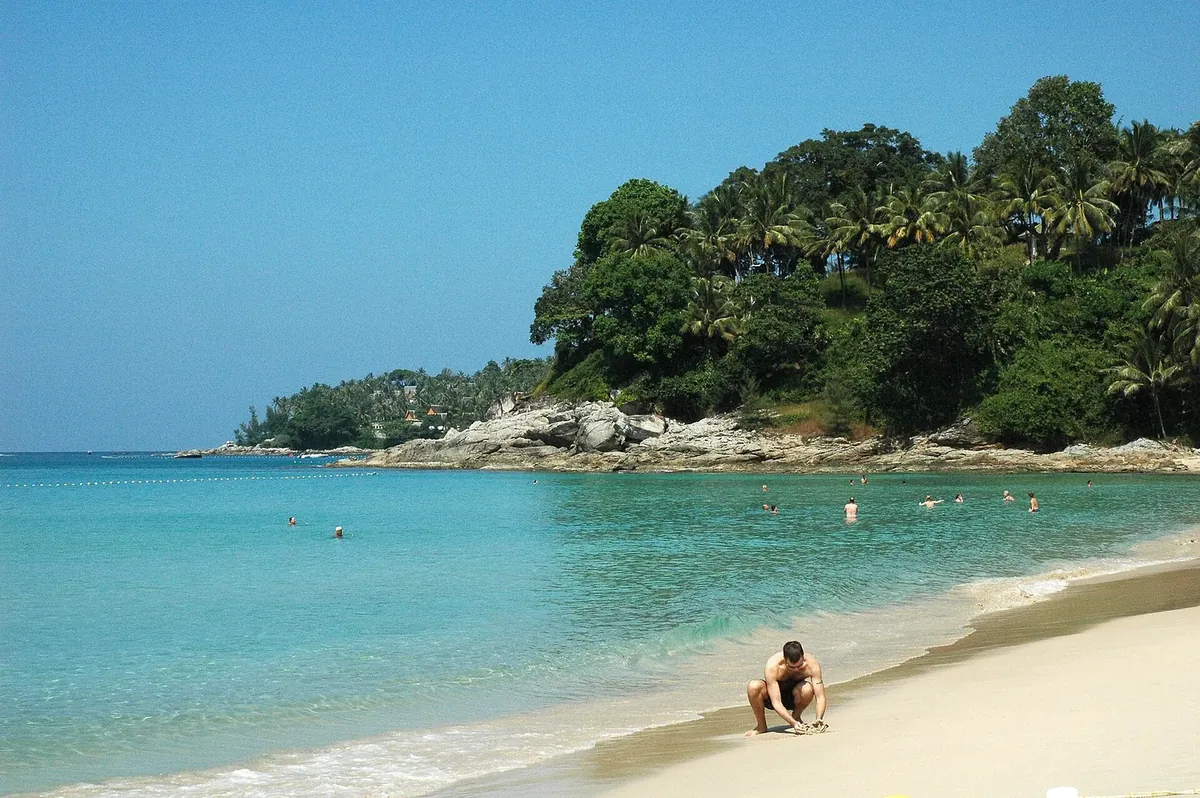
Surin and Kamala are the boutique premium tier: low-density, terrain-capped, deliberately thin on new supply. In the eligible 3–12 million THB band the median asking price is 4.90 million THB — but that band clips the top of this market, where beachfront stock trades far above the eligible ceiling. My validated cut here is five listings (n=5), skewed to large units (median 100 square metres), so treat its roughly 88,000 THB per square metre as indicative of the big-unit segment, not the catchment. Industry trackers put Surin proper at a 25–35% premium over Kamala.
The supply cap is the thesis. Zoning and terrain keep the pipeline thin, which is why trackers place this tier just behind Bang Tao on five-year price growth. The tenant pool skews long-stay premium rather than package-tour volume; in my five-listing sample, asking rents clustered around the low-40,000s THB per month — a thin sample, disclosed as such.
Verdict: buy the scarcity, accept the thin data. This is a building-by-building market; the catchment average describes almost nobody in it.
Full Surin / Kamala breakdown →
4. Patong — The Rent Engine With a Resale Problem
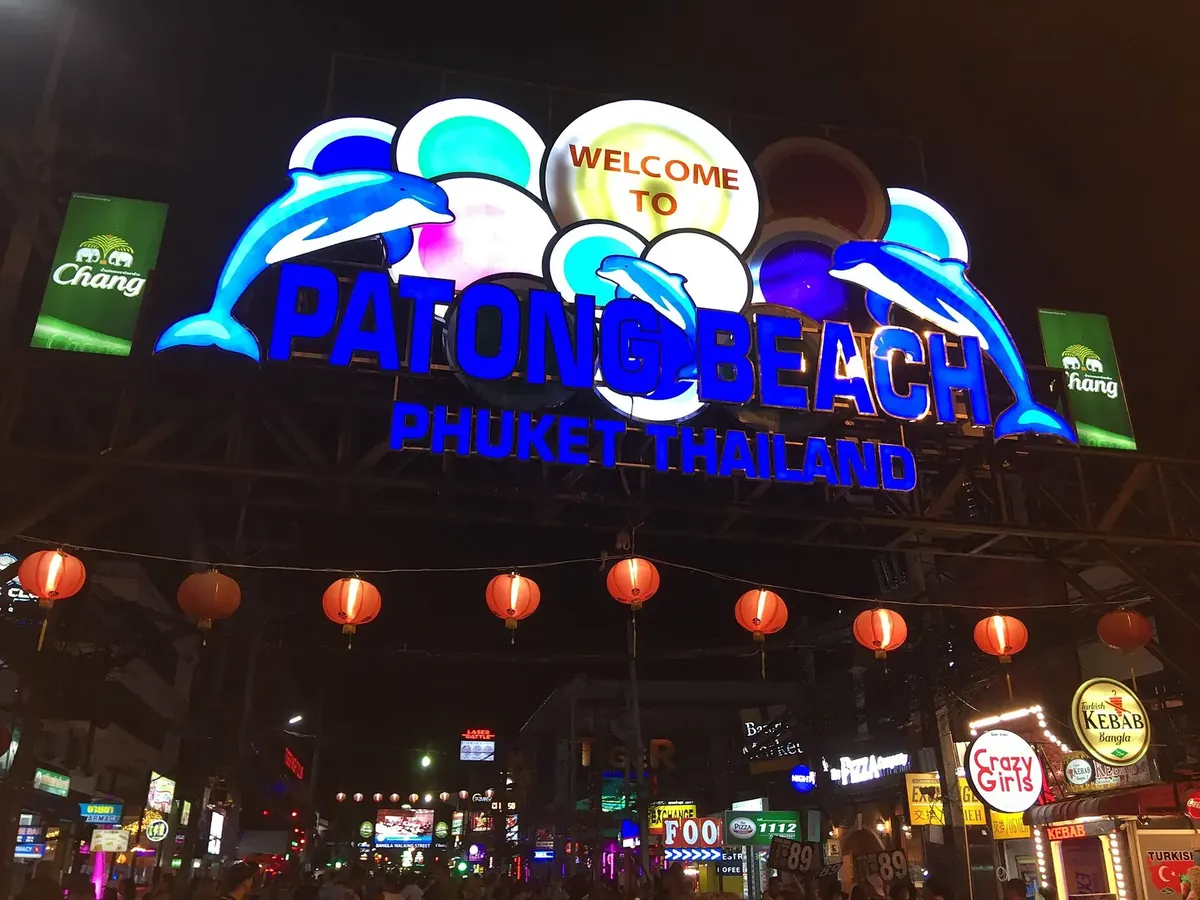
Patong is the strongest tenant engine on the island and the weakest beach-zone resale story, and both facts come from the same source: mass tourism. The eligible-band median asking price is 6.35 million THB; my validated cut here is six listings (n=6) at roughly 114,000 THB per square metre, indicative only. Sampled asking rents run in the high-30,000s THB per month, propped by year-round short-stay demand that no other catchment matches.
Now the other half. Industry trackers flag Patong's secondary market as oversupplied, with 8 to 14 months of time-on-market for resales. The buyer assumption this punishes is a common one: that a strong rent number solves everything. It does not solve the exit, and it comes with an operating model attached — turnover, management, seasonality of guests if not of occupancy. Foreign quota, for what it is worth, is widely available in the older stock.
Verdict: an operating business wearing a condo title. Buy Patong if you want to run the machine. Do not buy it expecting the machine to also appreciate like the north.
3. Rawai / Nai Harn — The Long-Stay South
Rawai and Nai Harn are the value end of Phuket's beach-anchored market, and the demand profile is the point: retirees, remote workers and long-stay Europeans who sign leases instead of booking nights. The eligible-band median asking price is 4.90 million THB; my validated cut is seven listings (n=7) at roughly 91,100 THB per square metre — thin, disclosed, indicative. Sampled asking rents ran roughly 31,000 to 40,000 THB per month across those seven listings.
Structurally, this is the opposite of Patong: long-term rental demand is stronger than short-let demand, the supply pipeline is modest because terrain and zoning protect the incumbent stock, and buyers priced out of Bang Tao and Surin keep pushing south. Industry trackers credit the zone with mid-range five-year price growth off the lowest beach-zone base — the percentage moves faster when the denominator is small.
Verdict: the long-stay value beach. The cheapest beach-anchored entry with tenants who stay by the year. The data is thin here; the demand logic is not.
Full Rawai / Nai Harn breakdown →
2. Thalang / Airport Corridor — Where the New Supply Lands
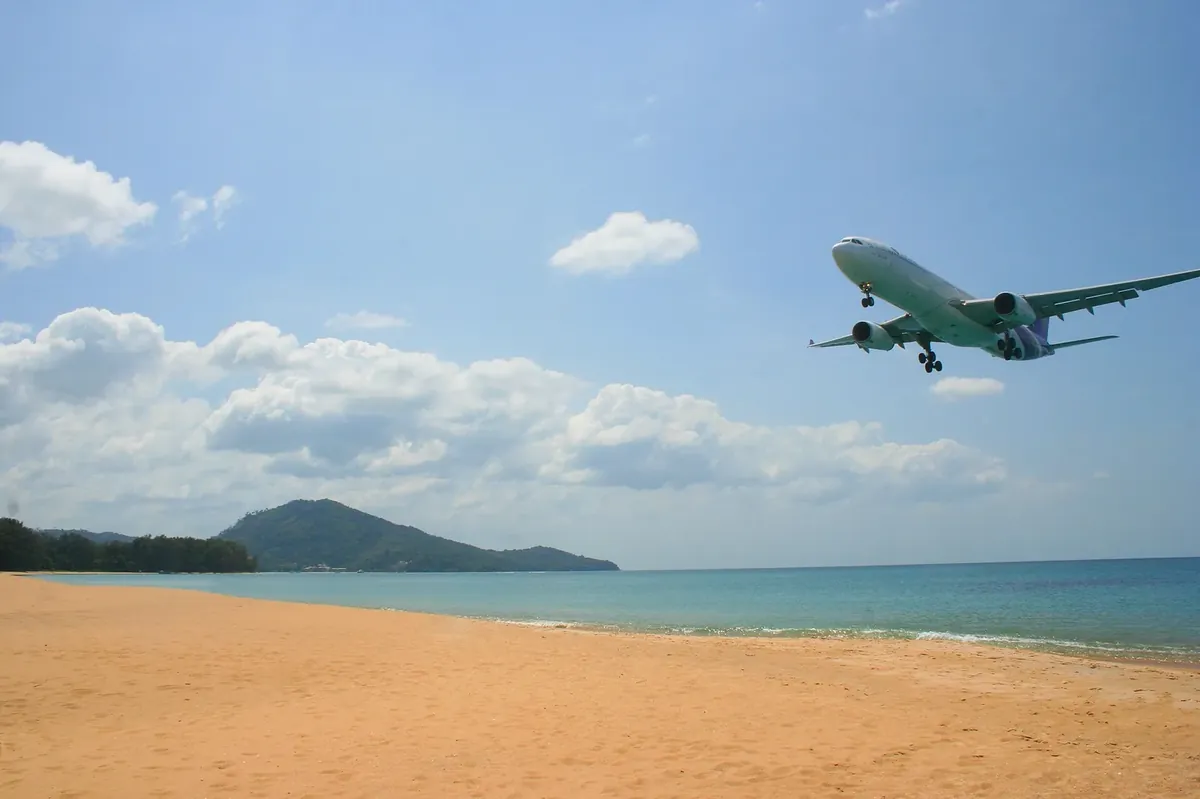
Thalang — the island's north, from the airport down through Cherng Talay's edges — is where Phuket's new mid-market condo supply actually lands, and my data shows it: 137 validated listings, the second-deepest sample in the scan, with the highest per-square-metre median of the deep-sample catchments at roughly 119,000 THB. The units are the newest and smallest in the pull (median 39 square metres), which is what fresh investor-grade stock looks like. The eligible-band median asking price is 4.60 million THB.
Asking rents in the sampled segment post a median near 31,000 THB per month, middle half roughly 25,000 to 44,200 THB — buoyed by spillover from the Bang Tao / Laguna employment and leisure economy next door. The risk word here is absorption: a corridor that builds this much must also fill this much, and a launch brochure will never show you the building's actual occupancy. Underwrite the specific building's absorption, not the corridor's story.
Verdict: the airport corridor is the volume play. New stock, real rent base, honest entry pricing — and an absorption question you must answer building by building.
1. Bang Tao / Laguna — The Branded Epicenter
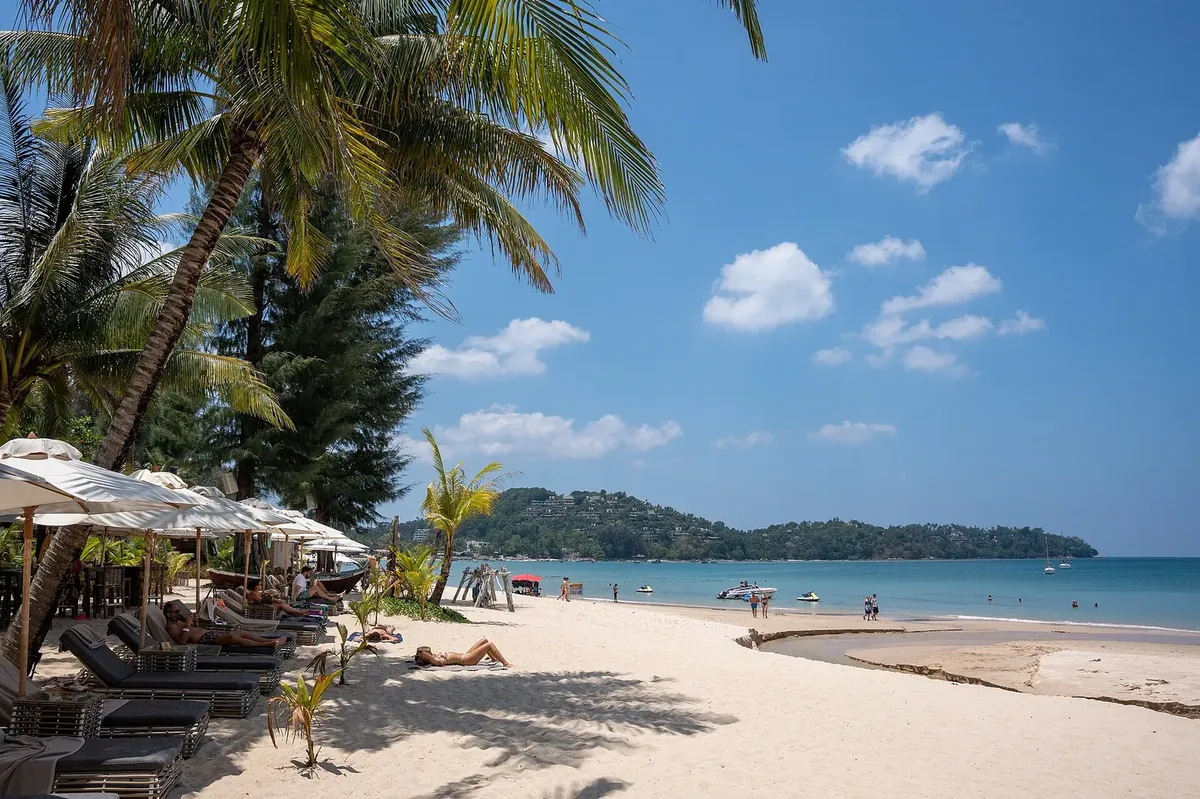
Bang Tao / Laguna is the best area to buy a condo in Phuket for transaction depth and the branded-residence market — per industry trackers, the Cherng Talay/Laguna zone captured roughly 68% of the island's 2024 condo transactions and concentrates the entire branded pipeline: Banyan Tree, Angsana, Montage, Wyndham Grand, Outrigger. Its eligible-band median asking price of 8.80 million THB is the highest of the eight catchments, and the band clips this market hard: trackers place zone pricing around 150,000–220,000 THB per square metre, with branded units inside Laguna above 250,000. In my rent-validated cut only one listing landed in this bucket (n=1) — most Bang Tao-adjacent stock files under the Thalang corridor — so the pricing picture here leans on the published trackers, attributed, not on a median of mine.
Two things to underwrite before the premium. First, the divergence: trackers report branded product absorbing at 85–90% while the wider market sits near 64%, and branded resale has consistently outrun bare-shell secondary stock in the same zone — these are two different markets wearing one postcode, and the 10,000+ units launched in 2024 will test the bare-shell side hardest. Second, the quota: top-tier branded launches sell out their foreign-quota slots in weeks. Confirm quota in writing before any deposit, and read how Thai foreign freehold actually works before anyone explains a “workaround.”
Verdict: the island's capital marketplace. Pay the premium for depth and the branded engine — and know exactly which of the two Bang Tao markets your building belongs to.
Full Bang Tao / Laguna breakdown →
Phuket Area Comparison: Asking Price, Sample, Verdict
| Area | Median asking (3-12M band) | Median THB/m² (validated cut) | n | Verdict |
|---|---|---|---|---|
| Bang Tao / Laguna | ฿8.80M | —† | 1† | Branded epicenter, two markets |
| Thalang / Airport Corridor | ฿4.60M | ~119,000 | 137 | New supply, absorption homework |
| Rawai / Nai Harn | ฿4.90M | ~91,100† | 7† | Long-stay value beach |
| Patong | ฿6.35M | ~114,000† | 6† | Rent engine, slow resale |
| Surin / Kamala | ฿4.90M | ~88,000† | 5† | Boutique premium, capped supply |
| Karon / Kata | ฿6.50M | —† | 1† | Family tourism, mid-tier hold |
| Kathu / Central | ฿5.07M | ~98,200 | 82 | Inland value tier |
| Phuket Town | ฿4.26M | ~96,900 | 266 | Cheapest entry, domestic exit |
Rows in rank order. Median asking prices from the 506-listing 2026 Phuket scan, eligible 3–12 million THB band, as published in the Phuket case study. Per-square-metre medians and sample sizes from the rent-validated cut (505 listings). Asking, not closed. † Thin validated sample — indicative only; Bang Tao and Karon / Kata surface a single validated listing each, so no per-square-metre median of my own is published for them. Much Bang Tao-adjacent stock files under the Thalang corridor bucket.
Cite this data
Across a 2026 scan of 506 Phuket condo listings, eligible-band median asking prices ranged from 4.26 million THB in Phuket Town to 8.80 million THB in Bang Tao / Laguna: a 2× spread inside one island. In the rent-validated cut, the deep-sample catchments ran from roughly 96,900 THB per square metre in Phuket Town (n=266) to roughly 119,000 THB in the Thalang airport corridor (n=137).
Source: Brinkman Data, Best Areas to Buy a Condo in Phuket (2026).
Free, before you sign
The Thailand condo breakdown
The 49% foreign-quota check, the full cost stack, and a worked case study of a unit I own in Chiang Mai. One email, instant download.
How to Choose Between These Areas
Start from the tenant, not the postcard. If your tenant books by the night, you are choosing between Patong's engine and Karon–Kata's gentler seasons, and you are buying an operating business either way. If your tenant signs a lease, the south (Rawai–Nai Harn) and the inland tiers (Kathu, Phuket Town) carry the structural demand at the honest prices. If your thesis is capital and depth, it is Bang Tao and the Thalang corridor — branded versus bare-shell in the first case, absorption in the second. And a note on the demand base itself: industry trackers report Russian buyers became the island's largest foreign condo-buyer group after 2022, holding roughly 40% of foreign-owned Phuket condos — a step-change concentrated in the beach zones. A demand base that arrived fast deserves one underwriting question: what happens to your exit if it thins. One more structural note: this page ranks condo catchments because a condo inside the foreign quota is the clean freehold path — a foreigner cannot own the land under a villa outright, so read the freehold explainer before anyone sells you a “structure.”
Whatever the catchment, run the full cost stack before you trust any rent number: common-area fee, sinking fund, vacancy, management. Across my three-city Thai dataset, the distance between the brochure's gross number and the net that survives the fee stack is roughly a third — the net yield gap study documents it on 3,353 listings, 506 of them in Phuket. The rent side for each catchment: Phuket rental yield, area by area. Run your own numbers in the Thailand rental yield calculator; the deduction stack is built in.
THE CATCHMENT DECIDES BEFORE THE UNIT DOES
Pick the Catchment With a Protocol, Not a Vibe.
Every catchment above was mapped with the same 5-step underwriting sequence I run on every Thai market: catchment, building, unit math, legal stack, exit. It is the sequence behind the commissioned Phuket report and the 506-listing scan on this page. It costs less than one beach chair season in Bang Tao.