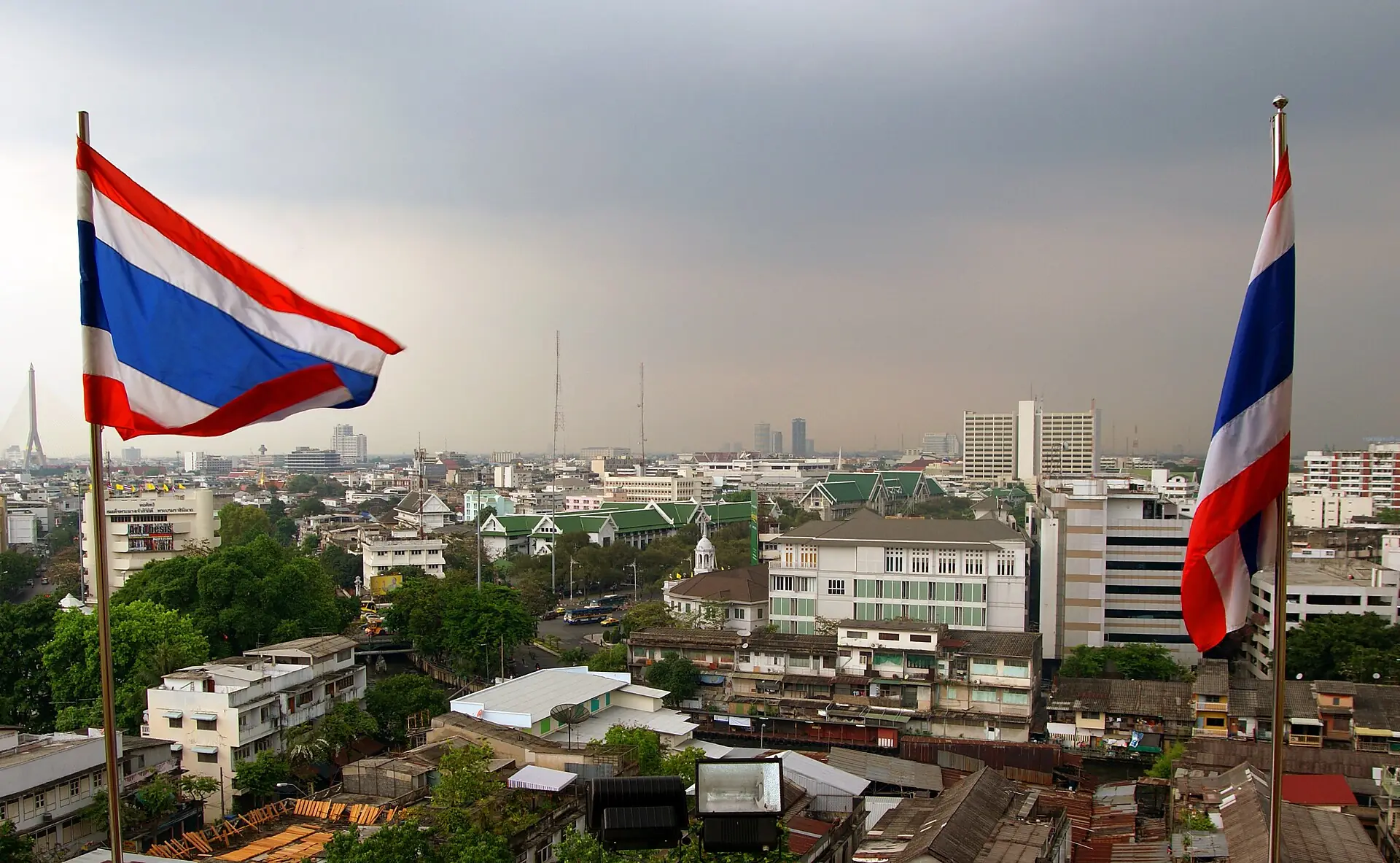
Buying Property Abroad
Buying property abroad is sold as a feeling. A sunset, a balcony, a price that looks impossibly low against your home market. I don't underwrite feelings. A cross-border purchase is a position with five hard edges. What you actually own, how the money moves, what it really costs to hold, whether you can ever sell it, and which tax authorities want a piece. Get those five right and the sunset is a bonus. Get them wrong and the cheap price was the most expensive thing in the room. This page is the framework I run before any market, and the map to the country-specific math underneath it. It's independent research, not personalized advice.
Why People Buy Abroad. And Why Most Do It Backwards
There are honest reasons to own property in another country. Entry prices in parts of Southeast Asia are a fraction of a Western capital. Some markets are growing faster than the mature economies most buyers come from. A second base in a region you actually want to spend time in has a value the spreadsheet can't fully capture. None of that is the problem.
The problem is the order of operations. The Lifestyle Buyer picks the destination first, the building second, and the math never. They fly in, fall for a show unit, and reverse-engineer a justification on the flight home. The marketing brochure is built for exactly this person. It leads with the view and buries the lease term, the foreign-ownership cap, the sinking fund, and the fact that the headline yield was gross, pre-fee, pre-tax, and pre-vacancy. The brochure is not lying to a tourist. It's just answering a question the operator never asks.
The Capital Allocator inverts it. Framework first, country second, specific unit last. You don't ask "is Bali nice?". Obviously it's nice. You ask "what right do I actually get, what does it cost to move the money, what's the all-in carry, can I exit, and who taxes me?" The destination becomes an input, not the conclusion. That reframe, operator versus tourist, is the entire difference between a property you own and a property that owns you.
The Five-Axis Decision Framework
Every cross-border property decision, in every country, reduces to five questions. Run them in this order. If any one fails hard, the rest don't matter.
1. Ownership rights. What do you actually get?
This is first because it's the one that can be a zero. The word "buy" hides an enormous range. In some markets a foreigner takes outright freehold on a condominium unit inside a quota, but is barred from owning land at all. In others the only thing on offer is a long-term leasehold that decays toward zero on a clock that's already running. A few grant near-perpetual title. The brochure says "own." Your job is to establish exactly which right that means (freehold, leasehold, or a usage right), and how it transfers and inherits. A view you can only rent for 27 more years is a different asset from a deed in your name, and it should be priced as one. The cleanest version of this rule, Thailand's foreign-freehold quota, is the reference case.
2. The money trail. How does the currency move, in and out?
A property you can't get the money out of is a position, not an asset. Most markets that allow foreign freehold require the purchase funds to arrive from abroad in foreign currency, with a documented record of that inflow. In Thailand that record is the FET (Foreign Exchange Transaction form); the principle exists in some form across the region. That same inbound document is usually the key to your exit. It's what lets you repatriate the proceeds in foreign currency when you sell. Skip it, lose it, or improvise the wire, and you've manufactured a problem for future-you at the worst possible moment. Move the money the documented way, and keep the paper like it's a second deed.
3. Total cost of ownership. What's the real carry?
The sticker price is the down payment on the truth. The all-in number includes the transfer taxes and registration fees at purchase, the agent and legal costs, the annual juristic or HOA fees, the sinking fund, maintenance, vacancy between tenants, currency conversion spread every time money crosses the border, and the management cut if you're not on the ground. Stack those honestly against the headline and a "high-yield" listing routinely compresses to something ordinary. That compression isn't a tragedy. It's the actual asset. The mistake is underwriting the brochure's gross number and discovering the carry only after the wire clears. The data study on exactly how far gross-to-net falls once the stack is applied.
4. Exit liquidity. Can you actually sell it?
Entry is easy; everyone wants your money on the way in. Exit is where foreign property quietly traps capital. A leasehold with a shrinking term gets harder to sell every year it runs. A unit in an over-supplied tower competes with a hundred identical listings and the developer's own unsold inventory. A market with thin foreign-resale demand can leave you holding for years. Underwrite the sale before the purchase: who is the next buyer, what will they be able to own, and how long will it take. If you can't name the exit, you don't have an investment. You have a holiday home you overpaid for.
5. Tax exposure. In two countries at once
Cross-border ownership means you usually answer to two tax authorities. The country where the property sits taxes the transfer, the rental income, and the gain on sale. Your home country may tax the same rental income and gain, with a foreign tax credit or a tax treaty mediating the overlap. For US citizens there's an additional disclosure layer (FATCA, FBAR, Form 8938) that follows the passport regardless of residence. None of this is a reason not to buy; it's a reason to map the exposure before the wire, with a cross-border tax professional, rather than discover it at filing time. I flag the structure and treaty questions as items to confirm with a qualified professional, not as advice I'm giving you. The full breakdown of buying-abroad tax exposure.
THE ONE-LINE VERSION
The 5-step underwriting protocol I run on a cross-border deal before a single dollar leaves the account. The ownership check, the money trail, the fee stack, the exit test. PDF.
Get The Thailand Underwriting Protocol — $20Per-Region Snapshot: Where the Framework Lands
The five axes are universal; the answers are country-specific. Here's the one-line version for the four Southeast Asian markets I underwrite, each routing to the full breakdown. The pattern repeats every time: the ownership right is the gate, the money trail is the plumbing, and the brochure is selling the view.
- Thailand. The cleanest foreign-freehold story in the region: outright title on a condo inside the building's 49% foreign quota, no land for individuals, money in and out via the FET. Thailand foreign freehold, explained.
- Bali (Indonesia). The leasehold-decay market: most foreign villa exposure runs on a lease with a clock, or a Hak Pakai usage right, not freehold. The term is the asset. Bali foreign-buyer pathways.
- Vietnam. The 50-year clock and the 30% per-building foreign cap: pink-book title, real growth, leasehold math that has to be run before you sign. Vietnam foreign-buyer rules.
- Philippines. Near-perpetual condominium title under a 40% per-project foreign cap, with a VAT and fee stack that decides the net. Philippines foreign-buyer rules.
If you want the whole region on one page, who can own what across six countries, the free SE Asia Ownership Map is the fastest way to triage which markets even clear axis one for you. And before you assume financing is part of the plan at all, read why the Western mortgage convention may be working against you on a cross-border purchase.
The Operator's Bottom Line
Buying property abroad isn't reckless and it isn't a guaranteed win. It's a decision you either underwrite or gamble. The five axes are the underwrite. The country pages are the country-specific answers. The brochure is the thing you read last, if at all, and only to confirm what the spreadsheet already told you.
Pick the framework first. Let it pick the country. Let the country's rules pick the unit. Do it in that order and "abroad" stops being a leap of faith and becomes what it should have been all along. A position you sized, priced, and can defend. That's the operator's number. Everything else is the view.