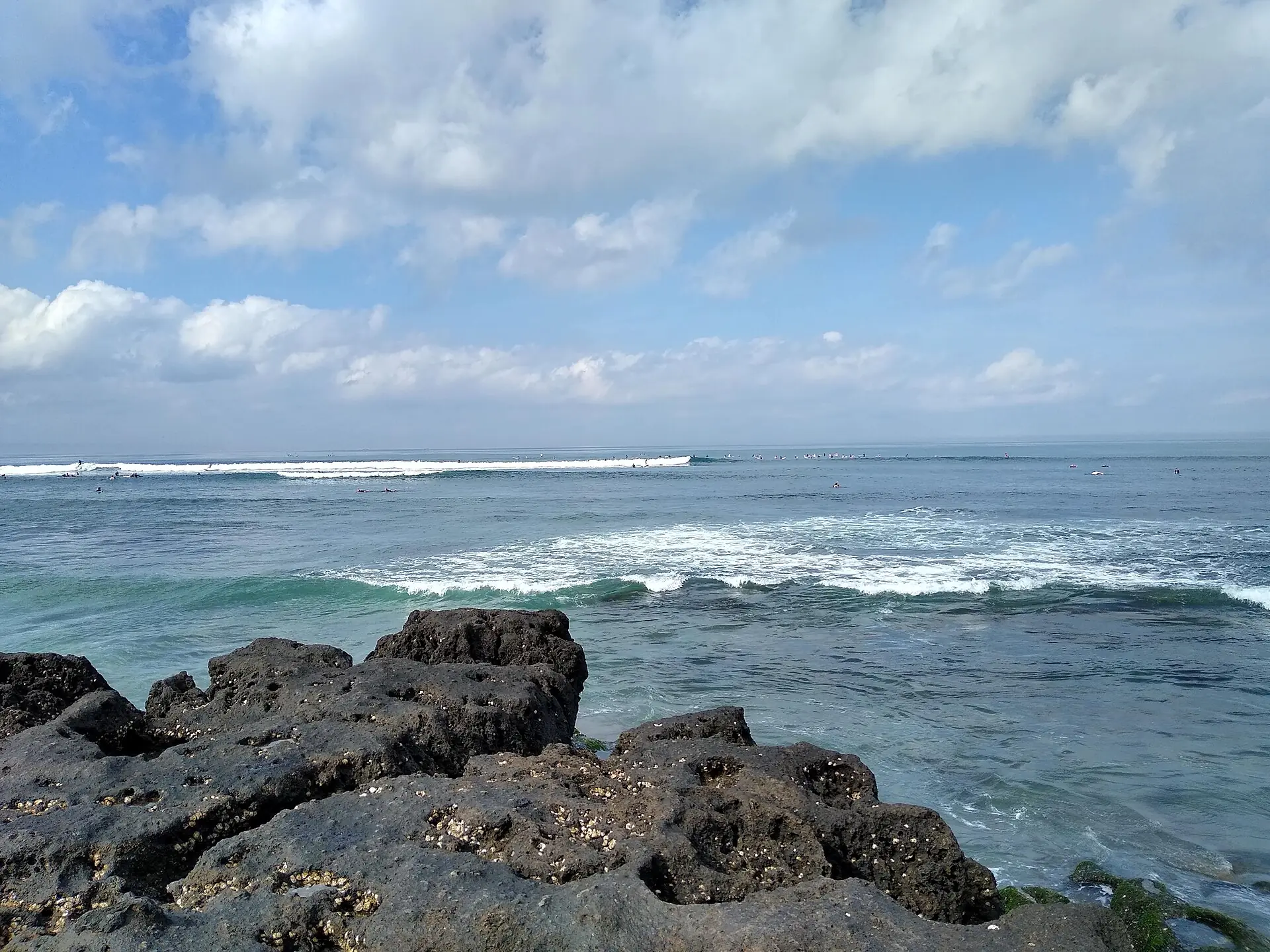
Canggu beach, Bali. The villa investment case for the island's busiest surf town
Bali Geography · Canggu

Canggu villa investment: the yield, the fees, the saturation math.
Canggu Villa Investment. The Saturation Math. Brinkman Data SEO brand card.

Canggu is the saturation case. Supply has grown for five straight seasons. ADRs have compressed. Occupancy holds up only because direct-booking infrastructure and influencer-driven traffic offset the platform-traffic dilution. The yield headlines on a Canggu villa look attractive on a brochure; the net after the fee stack and the leasehold-decay clock looks different. The pillar-level frame sits at the Bali foreign-buyer reality check.

5
Seasons of supply growth
10-14%
Opex, % of value yearly
25-30 yr
Typical leasehold term

The Saturation Case

Five seasons of supply growth. The ADRs noticed.

Canggu was the breakout region of post-pandemic Bali. Demand pulled north from Seminyak. Supply followed. By 2024 the new-build wave was visible from any rooftop. By 2026 the supply curve is the dominant variable in the local underwriting.

ADRs have compressed year over year for several seasons. Occupancy has stayed broadly steady, the demand pull is real, but it has stayed steady against an ever-expanding inventory base, which means the per-property revenue line has not kept up with the headline market growth. A villa that produced X gross in 2022 may not produce X + inflation in 2026 against a doubled local supply.

The compression is region-internal. Demand for Bali as a destination is not the bottleneck; demand for any specific Canggu villa against forty others within walking distance is. Direct-booking infrastructure, brand recognition, and review depth become the meaningful variables. The Seminyak comparison shows the mature alternative. The Bali villa market in 2026, by area.

The Brochure vs the Net

Gross is the marketing. Net is the deposit.

Most Canggu villa listings quote a gross occupancy revenue divided by the asking price. The number looks healthy. The number is mostly fiction once the operating layer comes out.

The Canggu fee stack typically runs at the upper end of the Bali range because the operating intensity is higher. Cleaning turnovers are more frequent (short-stay-dominant model). Marketing spend is higher (direct booking required to offset platform commission). Staffing skews service-intensive and guest-facing. Total opex commonly clears 10–14% of property value annually before booking-platform fees.

Layer the platform fee on top, 15–20% across the funnel, and the gross-to-net gap eats the headline. The worked example on a A$280K Canggu villa shows what that means in actual cash.

The Leasehold Clock

If you bought a 25-year lease, you bought a depreciating asset.

The majority of foreign-owned Canggu villas sit on leasehold (Hak Sewa) structures. The initial term is typically 25–30 years. The clock starts on day one.

By year 12, you are trying to sell a 13–18-year remaining-term contract into a market where new builds are still launching on fresh 25-year leases. The discount on the unexpired term accelerates as the calendar runs. The compounding yield over the hold and the compounding depreciation of the title cancel each other in a way that the brochure mathematically cannot reflect.

The serious Canggu trade requires either (a) a Hak Pakai parcel where the title structure does not decay, or (b) a leasehold with a renewal clause whose price formula, consent condition, and heirs binding are all explicit and clean. The four pathways breakdown covers the trade-offs.

The Direct-Booking Question

The variable that decides whether the math closes.

In a saturated market, the platform-traffic share of bookings collapses against the supply curve. The villa that wins is the one with a direct-booking pipeline: brand presence, repeat guests, influencer network, and an SEO surface that captures Canggu-search traffic without paying the platform commission.

This is operationally expensive. It requires a website, marketing investment, a content cadence, a CRM, dynamic-pricing tooling, and an operator with the appetite to run all of it. The Canggu villa sold "as a passive holding" is almost never the one producing the headline yield numbers; the headline yield numbers belong to operators with active marketing infrastructure.

Underwriting a Canggu villa as a "set and forget" asset is the single most common error among first-time foreign buyers. The honest math models a real operator, not a fantasy version of the buyer who plans to manage the villa from Sydney.

The Underwriting Filter

Four Canggu-specific checks before the wire.

  1. Title structure and remaining term. Hak Pakai is the strongest; clean-renewal leasehold is workable; leasehold-with-silent-renewal is a depreciating clock on a fixed timeline.
  2. Direct-booking infrastructure. Does the existing operator transfer their booking funnel, repeat-guest list, and brand identity? Or are you starting from zero?
  3. Local supply pipeline. Walk the immediate surrounding parcels. Count the active construction sites. The supply landing on your block over the next 24 months compounds against your ADR.
  4. Zoning and short-let licensing reality. Tourism zoning, residential zoning, and the local banjar all matter. The 5-step due diligence framework walks each layer.

// FAQ

Is Canggu still a viable villa investment in 2026?
Canggu remains an investable region but it is the saturation case of the Bali market. Supply growth has compressed ADRs for several seasons. Yields hold up only for villas with established direct-booking infrastructure, brand presence, and repeat-guest networks. Underwriting a Canggu villa as a passive holding is the most common error among first-time foreign buyers.
What is a realistic net yield for a Canggu villa?
Gross occupancy yields look attractive on listings. Net after the fee stack (15-20% booking-platform fee, 2-4 on-site staff at 2-6% of property value annually, pool and garden, security, insurance, repairs, PBB tax, banjar fees, marketing and direct-booking infrastructure costs) drops significantly. The worked example in the Playbook shows a hypothetical case with the full stack itemised.
Are Canggu villas oversupplied?
Specific Canggu submarkets show clear oversupply patterns in the short-term rental market. New-build pipelines remain active. ADR compression has been measurable across several recent seasons. The yield math now depends much more heavily on micro-location, direct-booking infrastructure, and the operating model than on the headline Bali Airbnb story.
What is the typical ownership structure for a Canggu villa?
The majority of foreign-owned Canggu villas use leasehold (Hak Sewa) with initial terms of 25 to 30 years. A growing share uses Hak Pakai on residentially-zoned parcels. PT PMA structures appear where the operating model is genuinely commercial scale (multiple villas, A$1M+ deployed).
Should I buy a Canggu villa off-plan?
Off-plan Canggu product carries structurally higher risk in 2026 than completed product. Buyer deposits move before construction; developer financial position is opaque; permits are often staged; supply landing 18-24 months out compounds against initial yield projections. The off-plan red-flag checklist applies more aggressively here than elsewhere in Bali.

Related research

// Same math, other markets

GROSS IS THE MARKETING. NET IS THE DEPOSIT.

Canggu is the saturation case: five seasons of supply growth, compressed ADRs. The villa that wins runs a direct-booking pipeline, not a set-and-forget fantasy. Run the net-yield walkout before you underwrite the headline.

Don't Underwrite Canggu On The Headline

The saturation math, in one PDF.

ADR compression curves. Direct-booking infrastructure. Leasehold-decay walkout. The full operator-not-tourist model.

Get The Bali Playbook $49

Instant PDF · 7-Day Guarantee · Secure Checkout

// Catalog · 4 products · 2 services

Primary sources

Official government, central-bank and legislation sources. External links open in a new tab.

Share this Facebook X LinkedIn WhatsApp
⚠ Disclaimer

Brinkman Data Analytics is an independent research service. Not financial, investment, tax, or legal advice. Indonesian land law is jurisdiction-specific. Engage a licensed Indonesian notaris and a qualified tax adviser before acting. International real estate carries risk of partial or total loss of capital.

Get The Playbook $49