Chiang Mai vs Bangkok Investment: What 4,033 Listings Told Me
I analysed 4,033 Chiang Mai listings myself. I cross-checked the top of the Bangkok stack to make sure my moat was real. The conclusion was uncomfortable for anyone selling Bangkok to first-time foreign buyers. Bangkok has the brand. Chiang Mai has the math. When a 3.4M THB Bangkok-style "investor" unit in Chiang Mai turned out to carry a 340,000 THB agency fee in the price addendum, a line my checklist caught and my budget hadn't, I left. I closed an 82m² freehold unit at 2.15M THB six weeks later, in a building I had already pre-cleared through the protocol. Same city. Same week. Two completely different decisions. That is the gap this page exists to explain.
Chiang Mai vs Bangkok Investment: The Price-Per-Square-Meter Reality
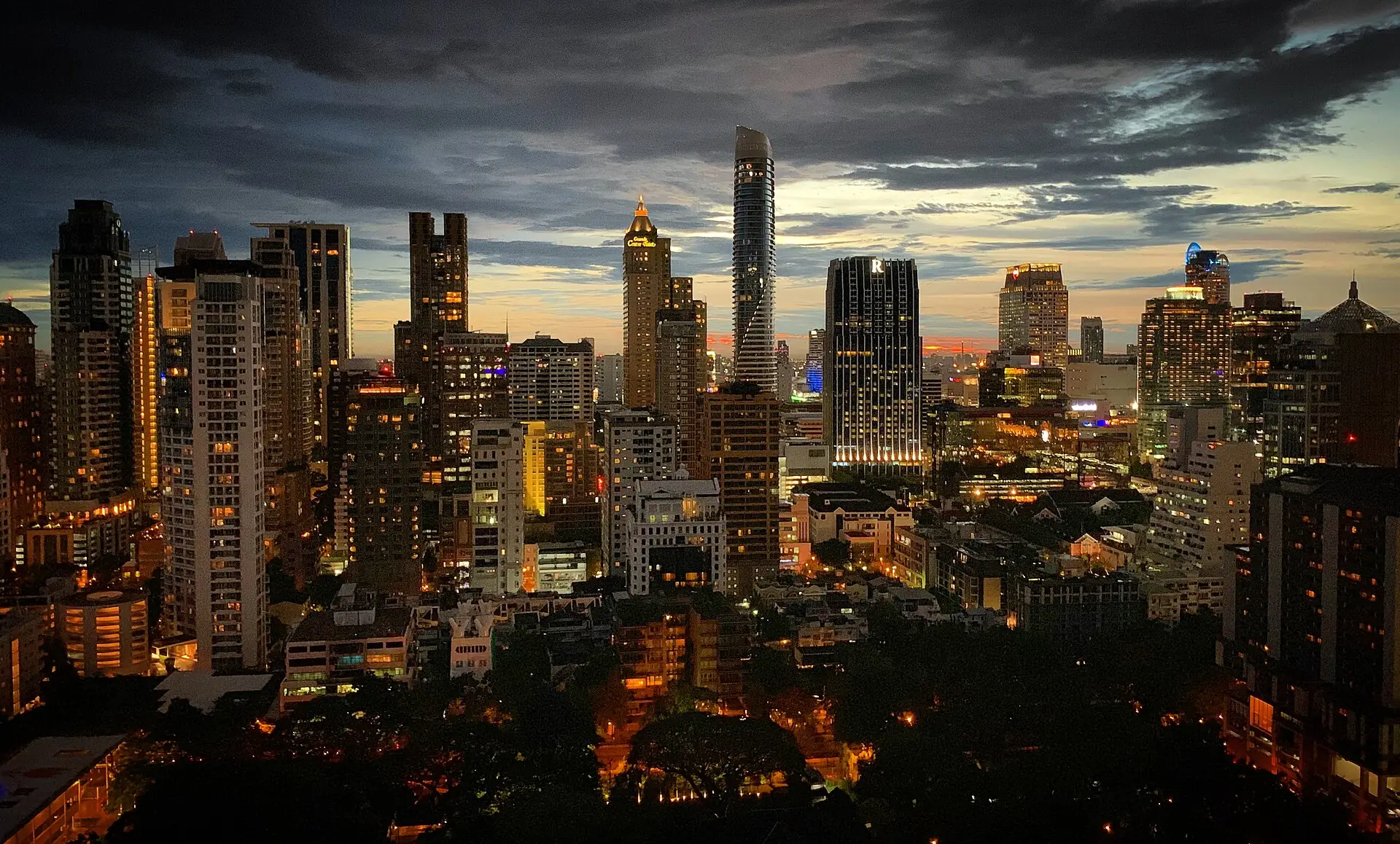
Start where Bloomberg starts: price per square meter. Bangkok central condos in the Sukhumvit, Sathorn, and Asoke corridors trade at 150,000 to 300,000+ THB per square meter. Chiang Mai central condos in Nimmanhaemin, the Old City moat, and the Suthep corridor trade roughly 60,000 to 90,000 THB per square meter for completed inventory with clean title. That is not a 20% gap. That is a 2 to 4x gap on the same physical asset class. A registered freehold condo unit, foreign quota intact, juristic-managed building. The Chiang Mai market read in full.
The Chiang Mai vs Bangkok investment debate usually stops here because it sounds too good. It is not too good. It is what the fieldwork confirms. Bangkok prices in liquidity, BTS proximity, and an institutional buyer pool that includes Hong Kong, Singapore, and mainland Chinese capital. Chiang Mai prices in a tenant pool dominated by digital nomads, remote workers on long-stay visas, Thai middle-class renters, and the seasonal high-yield retiree migration from November to March. Different tenant pool, different math. The Chiang Mai rental-yield data that decides this comparison.
What the marketing brochures globally do not show you: the holding cost gap. Bangkok common-area fees on a quality juristic-managed building run 60 to 100 THB per square meter per month. Chiang Mai equivalents in the same tier of building run 25 to 50 THB per square meter per month. On an 80m² unit, that is a 3,000 to 4,000 THB per month gap, every month, for the life of the asset. Compound that across 10 years. That is the difference between an investment that survives a 6-month vacancy and one that does not. The full Chiang Mai investment math behind one deal.
Bangkok or Chiang Mai for investment is also a question about secondary market liquidity. Bangkok has it. Chiang Mai has it more selectively. The 5-step framework I built was specifically designed to filter for the Chiang Mai units that do trade in a 90-to-180-day window on the secondary market, not the ones that sit listed for 18 months because the seller picked the wrong floor, the wrong tower, or the wrong building age.
The Tenant Pool Math: Who Actually Pays the Rent
In Bangkok the institutional pitch is corporate expats on housing allowances. That tenant pool exists. It has also shrunk every year since 2019 as multinationals localized hiring. The replacement tenant, Thai professionals and short-stay tourists, pays less per square meter than the previous corporate tenant did. The Bangkok rent comp sheet from 2018 is not the Bangkok rent comp sheet from 2026. Anyone showing you a 2018 comp is selling you 2018 reality.
In Chiang Mai the tenant pool is different and structurally growing. Digital nomads on the Destination Thailand Visa. Long-stay retirees on the O-A and LTR visas. Thai professionals relocating from Bangkok for cost-of-living reasons. University tenants near the Chiang Mai University corridor. Seasonal high-paying tenants in the cool-season window. These pools do not all overlap. A unit that prints rent in Nimmanhaemin to nomads will not print the same rent in Hang Dong to a Thai family. The Chiang Mai vs Bangkok property comparison breaks down the moment you treat either city as one market. It is six or seven sub-markets per city. The protocol exists to map them.
A Bangkok investor unit empty for 90 days costs you, on average, more in holding cost than a Chiang Mai unit empty for 180 days. The lower entry price and lower carrying cost in Chiang Mai is not just a "cheaper" story. It is a risk-asymmetry story. The downside scenario is survivable. That is what an underwriter looks for. That is not what a brochure shows you.
COMPARE UNITS, NOT CITIES
Case Study: Why I Closed in Chiang Mai, Not Bangkok
I had a Bangkok shortlist. I had flights booked. I had three brokers lined up. I cancelled the trip in week 14 of the research process because the math stopped justifying it. The three Bangkok units I was pre-screening required entry capital of 4.2M, 5.8M, and 7.1M THB respectively, all with juristic fees north of 80 THB per square meter per month, all in buildings with foreign quota already 41-46% full. Meaning the secondary buyer pool would be capped to Thai buyers only at exit, and quota-reverted stock trades into a different buyer pool at lower clearing prices.
Then in Chiang Mai, working through my own filter, the 82m² unit at 2.15M THB came up. Building 9 years old, juristic fee 35 THB per square meter per month, foreign quota at 23% (room for the next buyer to also be foreign, preserving exit liquidity), title clean, no encumbrances, no special assessments on the books, FET-eligible (cleared the $50,000 USD threshold for the FET certificate). The unit before that was the 3.4M THB walkout. Same Chiang Mai, same week, but the price addendum carried a 340,000 THB commission line my walkout math refused. Walked. Different unit. Different building. Same protocol caught both.
That is the real Chiang Mai vs Bangkok investment answer. It is not a city question. It is a unit-level question, filtered through a framework that catches the 8 out of 10 listings that fail before you waste a flight on them.
Practical Guidance: How to Actually Compare the Two
Stop comparing cities. Compare units. Bangkok has good units. Chiang Mai has good units. Both cities have more bad units than good ones. Build the filter first. Then let the filter tell you which city your capital should land in.
Three filter inputs that matter more than the city:
- Building age and juristic health. A 4-year-old building in either city with an organized juristic committee beats a 12-year-old building with arrears on the books, regardless of which city it is in.
- Foreign quota headroom. A building at 23% foreign quota gives you a future foreign buyer at exit. A building at 47% does not.
- Tenant-pool match. Map the unit to the tenant pool that physically exists within a 1.5km radius. If there is no tenant pool, there is no rent. The brochure does not tell you this.
If you are 80% certain Bangkok is correct because Bangkok has the brand, you have not done the work. If you are 80% certain Chiang Mai is correct because Chiang Mai is cheaper, you also have not done the work. The work is the spreadsheet.