The Listing — How It Surfaced
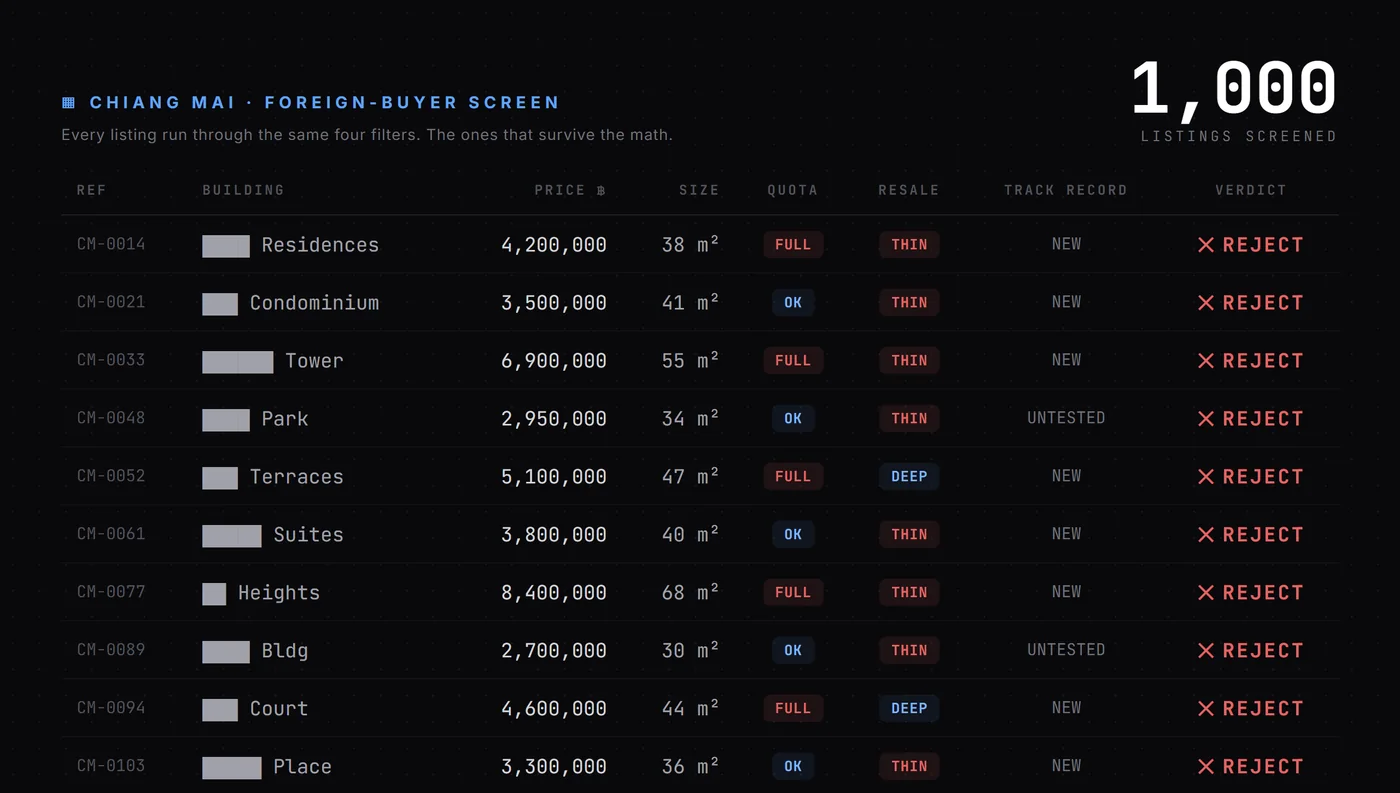
The Galaethong Alpha did not show up on a tour. It did not come from an agent's WhatsApp. It came out of a spreadsheet. 18 months of fieldwork. 1,000+ listings. Every one of them stripped to four columns: asking price, real rent, freehold flag, and exit pool. Almost every listing failed at column two.
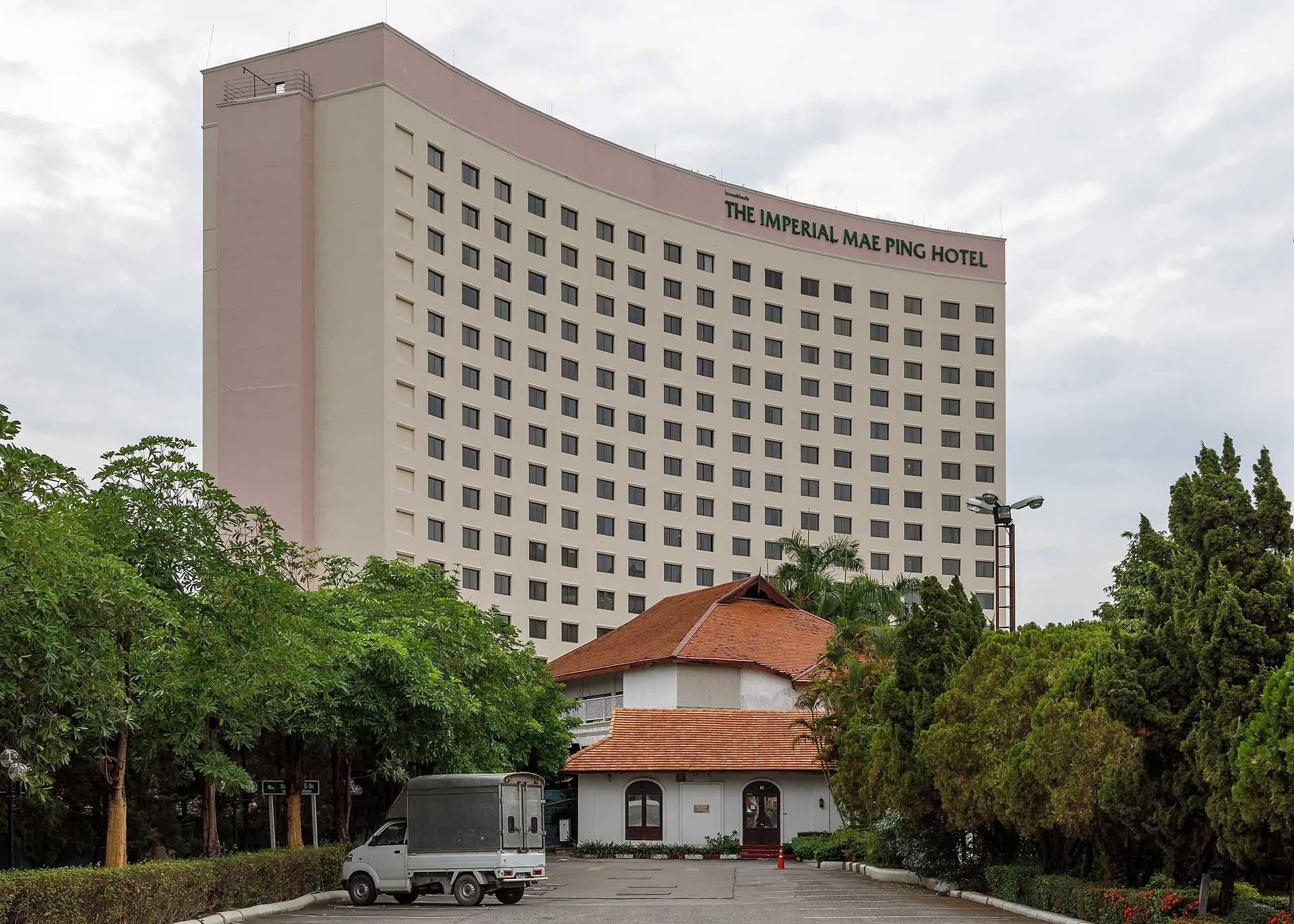
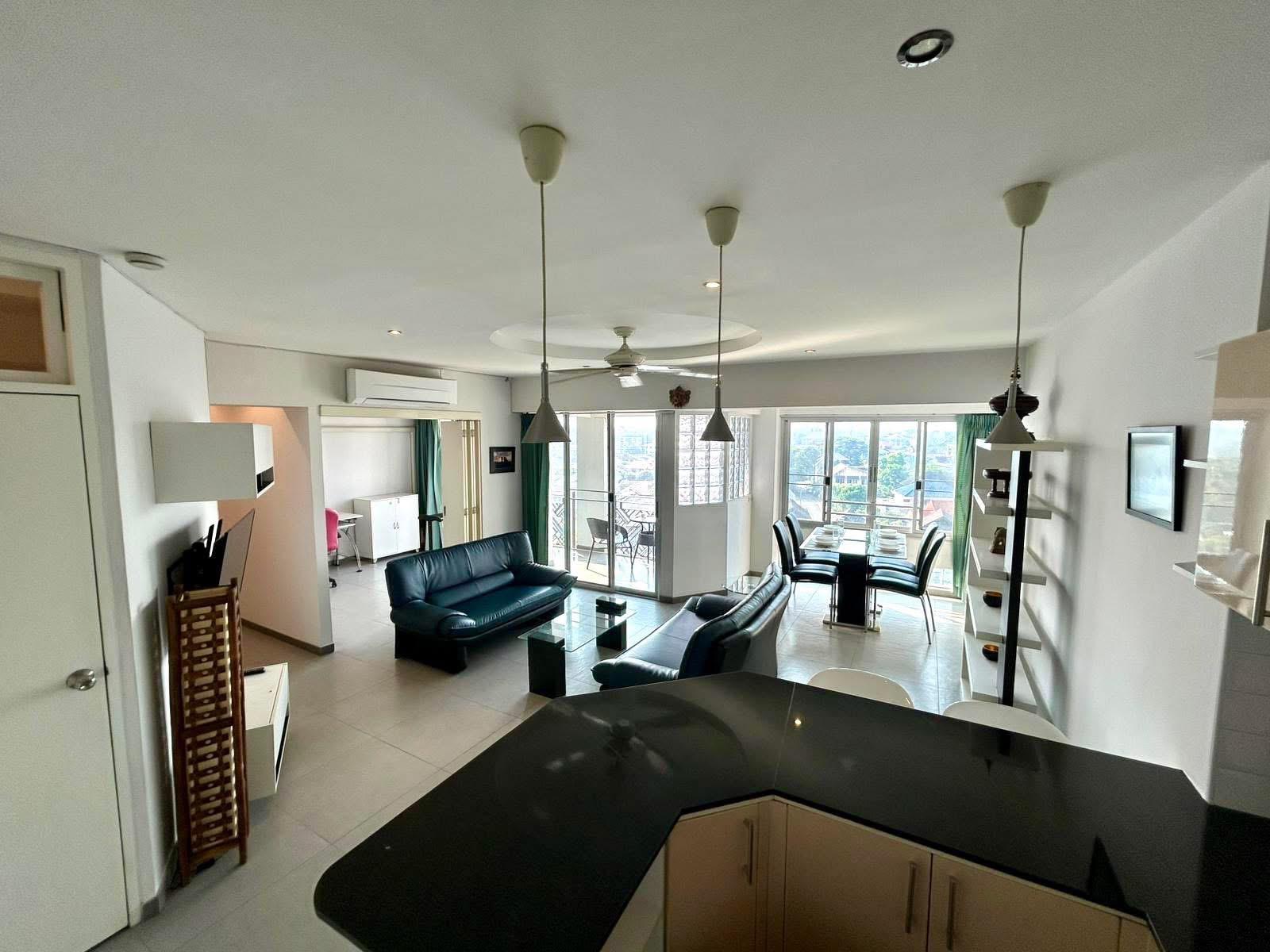
Galaethong is a tier-one Chiang Mai project I had already shortlisted as a building. The footprint, the tenant pool, and the actual rent comps from inside that exact compound were known. So when a unit dropped at 2,150,000 THB, I did not need to "feel it out." I needed to verify whether the seller's number matched the spreadsheet's number. That is the entire game. The listing is never the asset. The math is the asset.
The asking price was not aggressive for the building, but it was inside the band where the underwriting would still survive. That is the only reason I picked up the phone. I will not buy a unit that needs everything to go right. I will only buy a unit that survives if half of it goes wrong.
The Underwriting (Rent Comps, Fees, Vacancy)
Step one of the protocol is rent comps. Not asking rent — achieved rent. Two different things. I pulled signed rent agreements from inside the same project: 19,000 THB/month was the floor for a comparable furnished unit on a 12-month tenancy. Not the ceiling. The floor. So that is the number that goes into the model. 19,000 × 12 = 228,000 THB gross rent per year. Anything above that is luck, and I do not underwrite luck.
Step two is the fee stack the listing never shows. The CAM (common area maintenance) charge for this building runs to 12,000 THB/year. The standard agent placement charge in Chiang Mai is one month's rent — 19,000 THB. Tax and a maintenance buffer for a unit at this price tier comes in at 17,500 THB/year. Three line items. 48,500 THB gone before I see a baht. If you do not write those numbers down, your "yield" is fiction.
Step three is vacancy. I underwrite to a single empty month per year on the placement side and absorb the agent fee inside that. The buffer above covers small repairs and the annual property tax. If the tenant stays two years, the model gets better. If they leave at month thirteen, the model still works. Either way, I am not financing the seller's optimism.
Step four is exit liquidity. I will not buy a unit I cannot sell. For Galaethong I pulled twelve months of recorded transactions inside the same compound. Units at this size cleared inside ninety days, within five percent of listing. A working resale market, not a graveyard. Both yield and exit have to clear, or I do not wire.
The Negotiation — Transfer Fee Onto Seller
In Thailand the Land Department transfer fee is 2% of the appraised value, plus stamp duty and (depending on holding period) Specific Business Tax. By default the foreign buyer pays the lot. Default is for tourists.
I asked for the transfer fee onto the seller. Not split. Not "let's see at the office." Onto the seller. The pressure point was simple. The seller had two failed tours that month and was heading into the low season. I had cash. No bank, no broker chain, no contingency. The contract was either signed inside seven days at my number or I walked. They picked up the fee. That is a real saving in this stack — 0 THB instead of roughly 43,000 THB. It rolls straight into yield.
On the legal side, I paid 53,000 THB for a Thai property lawyer to run the title chain, audit the 49% Foreign Quota for the building, verify the chanote, and sit at the Land Department for the transfer. That is a mandatory line, not a luxury. The legal fee is the cheapest insurance you will ever buy on a freehold title.
The Capital Stack
Three lines. No mortgage. No co-investor. No lifestyle financing. This is what hit the wire:
| Line Item | THB |
|---|---|
| Unit purchase price | 2,150,000 |
| Legal fees (Thai property lawyer) | + 53,000 |
| Transfer fees | + 0 |
| Total capital deployed | 2,203,000 |
That is the denominator on the yield. 2,203,000 THB is the number every euro of net rent will be measured against. Not 2,150,000. Not "around 2.2M." The exact total of what left my account. A yield calculation that uses the asking price and ignores the fees is the same trick every listing in Thailand pulls. Do not run that trick on yourself.
The 5-Step Underwriting Protocol
Run This Math On Your Own Listing.
The full framework is the PDF. Filters, fee tables, rent-comp script, the legal checklist that gave me a 100% freehold title.
Unlock The Protocol $47 $20Instant PDF · 7-Day Guarantee
The Net Income
Gross is a story. Net is the receipt. Here is the receipt for year one.
| Income / Deduction | THB |
|---|---|
| Gross rent (19,000 × 12 months) | 228,000 |
| Minus: 1-month agent placement fee | − 19,000 |
| Minus: annual CAM fee | − 12,000 |
| Minus: tax & maintenance buffer | − 17,500 |
| True net income | 179,500 |
228,000 minus 19,000 minus 12,000 minus 17,500 = 179,500 THB per year. That is the cash. Not theoretical. Not before-fees. Not before agent. Cash that sits in the account at the end of twelve months if the rent comes in and the tenant stays. Most foreigner-facing yield numbers in Thailand stop at 228,000 and call it 10.6% gross. They do not show you the 48,500 THB that gets eaten on the way to net.
The True Net Yield: 8.15%
179,500 divided by 2,203,000 = 0.08148. Round to two decimals: 8.15% net. That is the headline. Verifiable, not vibey. Run the same arithmetic on a Bangkok tower at 3% gross and the net pencils out to about half of that after fees. Run it on a 30-year mortgaged Western flat and the cash-on-cash collapses. This is the entire reason I underwrote a tier-one Chiang Mai freehold instead of any of the alternatives that "everyone" told me to buy.
One number on a page. Every line item behind it on the same page. That is the standard. No off-spreadsheet handshake math. If you cannot show the deductions, you do not have a yield, you have a marketing claim.
Worth saying out loud: 8.15% is what this one asset prints. It is not a promise to anyone reading this page. It is the receipt for one unit, in one building, in one city, bought in one specific year, with one specific tenant placement. If the tenant leaves and rent comps slide, the number moves. If the CAM goes up, the number moves. The protocol is not a guarantee that you will reproduce 8.15%. The protocol is the framework that lets you check whether your number is real before you wire one baht.
For the deeper comparison — why Bangkok prints 3% and tier-one Chiang Mai holds 8%+, with the gross-vs-net trap in full — see the yield math behind it.
What The Protocol Actually Contains
The Galaethong Alpha is one asset. The Thailand Underwriting Protocol is the framework that found it. Same one. Repeatable. Boring. Built to be run on the next listing, and the one after that, before any baht moves.
Inside the PDF: the 5-step underwriting framework, exact rent-comp script, the fee table for Chiang Mai, the 49% Foreign Quota legal playbook for getting a real freehold title (not a 30-year lease in costume), and the Galaethong Alpha case study with every number you just read on this page. That is it. No coaching calls. No community. No upsell ladder. The 5-step protocol is the entire product.
If you have read this far, you already know whether the math is real. The question is whether you are willing to run it yourself before you wire money to a stranger in another country. The answer is in the PDF.
Stop Buying Like A Tourist.
Every receipt above came out of a 5-step protocol. The PDF gives you the protocol — framework, fee table, legal checklist, and the Galaethong Alpha line-by-line.
First 100 buyers
Instant PDF · 7-day satisfaction guarantee · Secure checkout via Gumroad