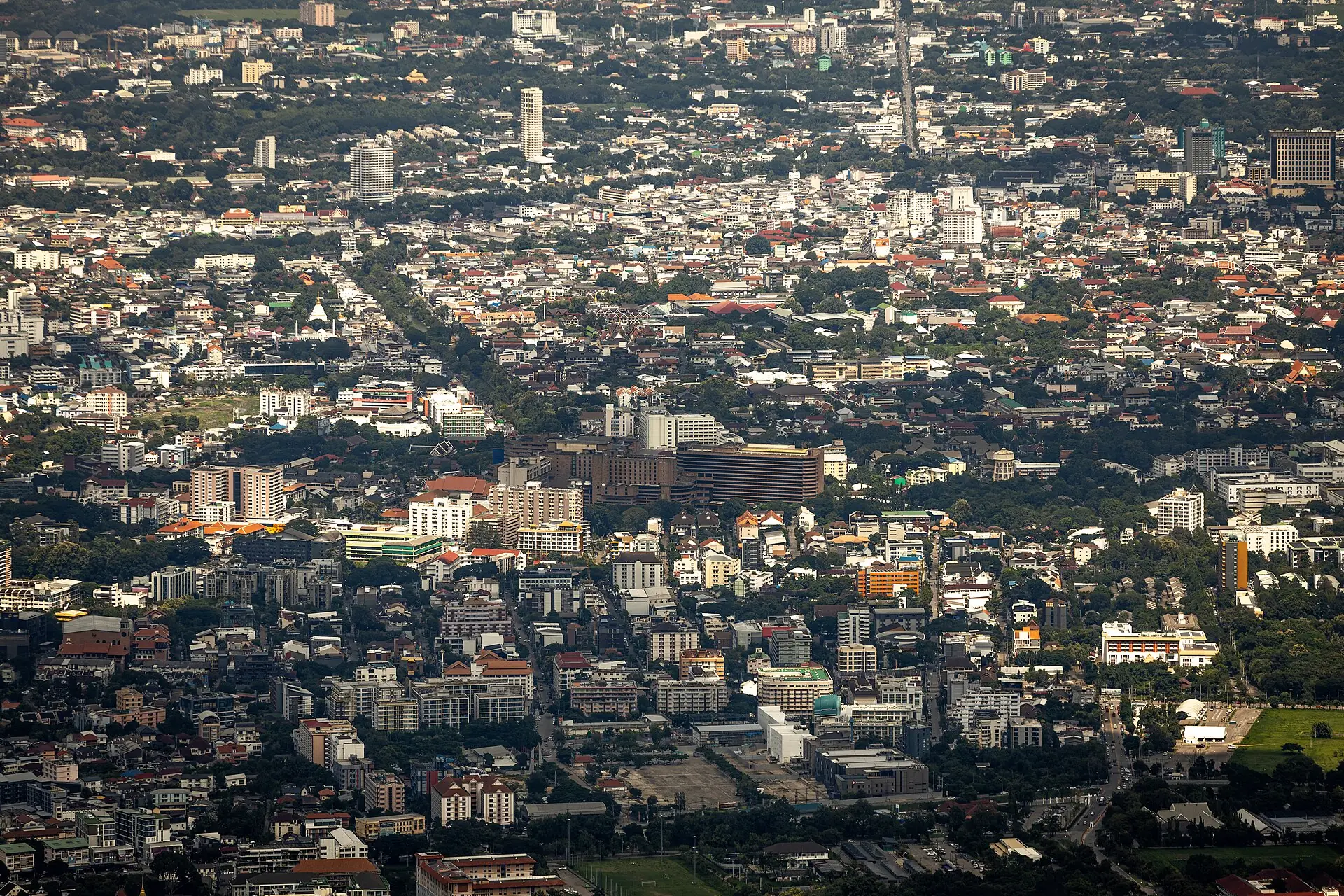
Chiang Mai Condo Buildings Ranked: The Variables That Actually Decide Value
After over 1,000 Chiang Mai property listings, I built a working ranking system for Chiang Mai condo buildings that has nothing to do with the categories the portals use. The international listing sites rank by price, photos, and "popularity." None of those variables predict whether a unit will be a clean exit in five years. The variables that do predict exit liquidity are juristic-person responsiveness, sinking-fund health, foreign freehold quota status, sub-district fundamentals, and closed-comparable depth. This page is the framework I now use to rank every building on my shortlist before any unit inside it earns a viewing.
Why "Best Condo Buildings in Chiang Mai" Lists Are Almost Always Wrong
Most published lists of Chiang Mai condo buildings are downstream of seller-side incentives. Developer-funded content. Agent-affiliate roundups. Portal-promoted listings dressed as recommendations. The criteria are aesthetic, not structural. They rank on photo quality, brochure language, and the size of the marketing budget behind the building. The Chiang Mai market read in full.
None of that predicts whether the building will be a place you can sell out of cleanly in five to seven years. A photogenic building with an unreachable juristic office is a worse buy than a plain building with a responsive juristic person and a healthy sinking fund. A trophy address with full foreign freehold quota is a worse buy for a foreign purchaser than a less famous building with quota headroom. The visible league table and the actual underwriting league table do not overlap. The rental-yield data that ranks these buildings.
The fieldwork version of "Chiang Mai condo buildings ranked" looks completely different. It does not name buildings. That would be promotional, and the rankings shift quarter to quarter as juristic-person staffing changes, sinking funds drain or refill, and quota slots open and close. What is stable is the framework that produces the ranking. That framework is what this page documents. The full investment math behind one ranked building.
The Five Variables That Actually Rank a Chiang Mai Condo Building
Juristic person responsiveness. Functional buildings have functional management. A juristic person who responds to written queries within 24 to 48 hours, produces documents on request, and can speak to the building's maintenance history is a leading indicator of every other variable. Buildings with unresponsive management leave your biggest questions unanswered, and unanswered questions price like problems. This is the single most predictive variable in the framework.
Sinking fund health. The capital reserve adequacy versus the next five years of scheduled major works. A building that can fund its next two scheduled works without a special assessment ranks high. A building that cannot ranks low, regardless of every other surface attribute. The sinking-fund check is documented in detail on the Chiang Mai sinking fund guide.
Foreign freehold quota status. For foreign buyers specifically, the 49% quota gate is binary. A building at quota cannot transfer further foreign freehold units without an existing foreign owner exiting to a Thai buyer. Buildings with quota headroom rank higher for foreign-buyer purposes simply because the transaction can complete.
Sub-district fundamentals. The building does not control its catchment. The catchment controls its tenant pool and resale liquidity. Nimman ranks high on tenant density of remote workers. Santitham ranks high on price-adjusted access. Old City ranks high on scarcity. Hang Dong and Mae Hia are different products entirely and need to be ranked against single-house comparables, not condo comparables.
Closed-comparable depth. A building with five or more closed transactions in the prior twelve months gives a foreign buyer real price discovery. A building with one or two closes per year is illiquid. Illiquid buildings rank lower because the next buyer's price is harder to model.
Combine those five and you have the underwriting league table. It does not match the brochure league table. It is the one that matters at the moment of exit.
RANK THE BUILDING BEFORE THE UNIT
Every building underwritten. The framework, public.
Browse The CatalogHow the Ranking Framework Killed the 3.4 Million THB Listing and Found the 2.15 Million THB Unit
When I walked into the 3.4 million THB listing, the building scored badly on three of the five variables before the 340,000 THB agency fee even surfaced. The juristic person took four days to return a basic email. The sinking-fund balance was not producible on a first request. The closed-comparable depth was thin. Two transactions in the prior eighteen months, both at headline prices no document corroborated. Quota was fine. Sub-district was fine. Three of five failed. The unit was dead before the deal sheet finished it off.
The 82-square-metre unit I eventually closed on at 2.15 million THB sat inside a building that scored cleanly on all five variables. Juristic person responded inside 24 hours, twice. Sinking-fund balance was producible in writing and adequate against the five-year schedule. Foreign quota had clear headroom. Sub-district was correct for the target tenant. Closed comparables were deep enough to model a credible exit. The unit-level decision was almost trivial once the building-level work was done.
That is the lesson the ranking framework codifies: the building decision is upstream of the unit decision. Most foreign buyers do these in the wrong order. They fall in love with a unit, then try to rationalise the building. The investor does the building first, then the unit drops out as a near-mechanical choice.
The full 5-step underwriting protocol, including the building-ranking framework in expanded form, is documented in the Thailand Underwriting Protocol PDF. The custom report product applies the framework to a specific buyer's shortlist as a done-for-you analysis.
How to Build Your Own Chiang Mai Condo Building Ranking in Two Weeks
A practical sequence for a foreign buyer with two weeks of fieldwork time.
Week 1, days 1-3. Define the sub-district shortlist. Pick two or three of Nimman, Santitham, Old City, Hang Dong, Mae Hia based on the tenant profile you can credibly serve. Stop trying to be in all of them.
Week 1, days 4-7. Pull the building list inside each chosen sub-district from multiple sources. Cross-reference. Discard any building under 30 saleable units. Too small for liquid resale. Discard any building over 25 years old without evidence of major refurbishment.
Week 2, days 1-3. Email the juristic person of each remaining building with a standardised query: current sinking-fund balance, five-year major-works schedule, current foreign quota status. Track response time. Buildings that do not respond within 72 hours go to the bottom of the ranking.
Week 2, days 4-5. Pull closed-transaction data from the responsive buildings. Three to five closes in the prior twelve months is the minimum for a credible exit model.
Week 2, days 6-7. Walk the top three ranked buildings. Common areas, rooftop if accessible, pool plant, parking. Confirm the physical condition matches the reported sinking-fund health. Any divergence drops the building.
At the end of two weeks you have a ranked shortlist of three to five buildings, in order, with documented reasons. Only then do unit-level viewings begin. This is how the ranking framework operationalises.